

In the realm of industrial operations, the integration of high accuracy flowmeters with control systems is a topic of increasing significance. As a supplier of High Accuracy Flowmeters, I have witnessed firsthand the transformative potential of this integration in various industries. This blog post aims to explore the feasibility, benefits, and challenges of integrating high accuracy flowmeters with control systems.
Feasibility of Integration
High accuracy flowmeters, such as Coriolis Flowmeter and Mass Flowmeter, are designed to provide precise measurements of fluid flow rates. These flowmeters utilize advanced technologies to ensure high levels of accuracy and reliability. On the other hand, control systems are used to monitor and regulate various processes in industrial settings. They receive input signals from sensors, such as flowmeters, and use this information to make adjustments to the process parameters.

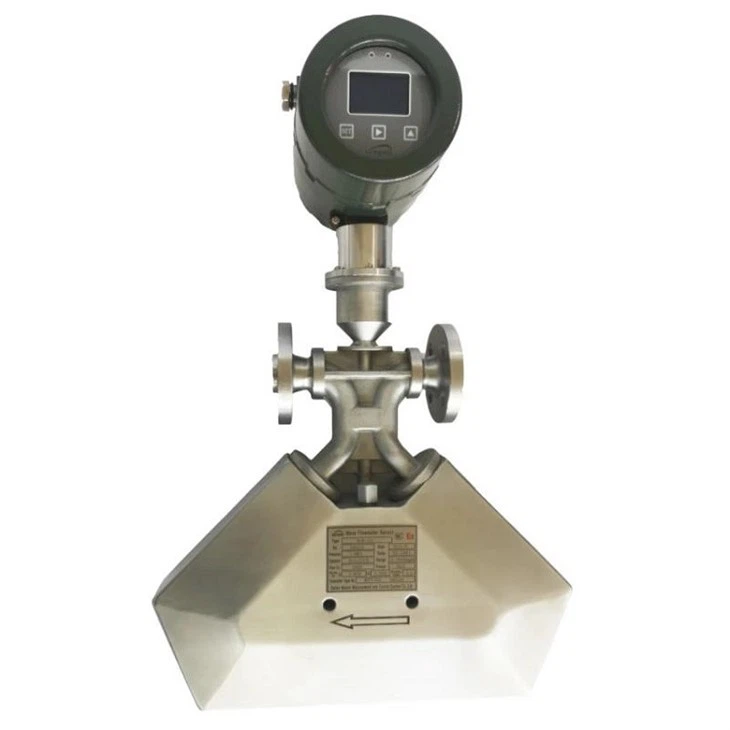
The integration of high accuracy flowmeters with control systems is indeed feasible. Most modern flowmeters are equipped with digital communication interfaces, such as Modbus, Profibus, or Ethernet. These interfaces allow the flowmeters to communicate with control systems seamlessly. The control system can then receive real-time flow rate data from the flowmeter and use it to make informed decisions about the process.
For example, in a chemical manufacturing plant, a high accuracy flowmeter can be used to measure the flow rate of a reactant. The control system can then adjust the flow rate of the reactant based on the desired reaction conditions. This ensures that the reaction proceeds efficiently and produces the desired product quality.
Benefits of Integration
The integration of high accuracy flowmeters with control systems offers several benefits. Firstly, it improves process efficiency. By providing real-time flow rate data, the control system can optimize the process parameters to ensure that the process operates at its maximum efficiency. This can lead to significant cost savings in terms of energy consumption, raw material usage, and production time.
Secondly, it enhances product quality. In many industries, such as food and beverage, pharmaceuticals, and electronics, the quality of the product is directly related to the flow rate of the fluids involved in the manufacturing process. By integrating high accuracy flowmeters with control systems, the flow rate can be precisely controlled, ensuring that the product meets the required quality standards.
Thirdly, it increases safety. In some industrial processes, such as oil and gas production, the flow rate of hazardous fluids needs to be carefully monitored and controlled. By integrating high accuracy flowmeters with control systems, any abnormal flow rate can be detected immediately, and the control system can take appropriate action to prevent accidents.
Challenges of Integration
While the integration of high accuracy flowmeters with control systems offers many benefits, it also presents some challenges. One of the main challenges is the compatibility between the flowmeter and the control system. Different flowmeters and control systems may use different communication protocols, which can make it difficult to establish a seamless connection between them.
Another challenge is the installation and calibration of the flowmeter. High accuracy flowmeters need to be installed correctly to ensure accurate measurements. They also need to be calibrated regularly to maintain their accuracy. This requires skilled technicians and specialized equipment.
In addition, the integration of high accuracy flowmeters with control systems requires a certain level of technical expertise. The control system needs to be programmed to interpret the flow rate data correctly and make appropriate decisions. This may require the involvement of control system engineers or automation experts.
Overcoming the Challenges
To overcome the compatibility challenge, it is important to choose a flowmeter and a control system that use the same communication protocol. Many flowmeter manufacturers offer flowmeters with multiple communication interfaces, which can increase the compatibility with different control systems.
To address the installation and calibration challenge, it is recommended to hire a professional installation and calibration service. These services have the necessary skills and equipment to ensure that the flowmeter is installed correctly and calibrated accurately.
To overcome the technical expertise challenge, it is advisable to provide training to the operators and maintenance personnel. This training can help them understand how to operate and maintain the integrated system effectively.
Conclusion
In conclusion, the integration of high accuracy flowmeters with control systems is not only feasible but also offers numerous benefits. It can improve process efficiency, enhance product quality, and increase safety. However, it also presents some challenges, such as compatibility, installation, and technical expertise. By choosing the right flowmeter and control system, hiring professional installation and calibration services, and providing training to the personnel, these challenges can be overcome.
As a supplier of High Accuracy Flowmeter, I am committed to helping our customers integrate our flowmeters with their control systems successfully. If you are interested in learning more about our high accuracy flowmeters or the integration process, please feel free to contact us. We look forward to discussing your specific needs and providing you with the best solutions.
References
- [1] Smith, J. (2018). Flowmeter Technology and Applications. Elsevier.
- [2] Johnson, R. (2019). Industrial Control Systems: Principles and Applications. McGraw-Hill.
- [3] Brown, A. (2020). Integration of Sensors and Control Systems in Industrial Automation. Springer.


