


Pressure Transmitter
HY Field Instrument Co., Ltd. has been focusing on field instruments for more than ten years. Our product lines include flowmeters, level meters, pressure transmitters, analytical instruments, etc. The main products include electromagnetic flowmeter, Coriolis mass flowmeter, vortex flowmeter, ultrasonic flowmeter; radar level meter, ultrasonic flowmeter, capacitive pressure transmitter, online density meter, etc.

Our Advantages
Advanced Production Equipment
Automatic welding machines, laser welding machines, argon arc welding machines, electric heating constant temperature ovens, spot welding machines, high and low temperature test chambers, calibration systems, etc. from well-known suppliers can ensure high-precision production of instruments.
Reliable Product Quality
Our company has passed ISO9001 certification, and our products have obtained CE, Exploreproof, Atex, and other certifications, with very high reliability.
Extensive Sales Market
Our products are exported to more than 80 countries and regions including the United States, Germany, France, Italy, Brazil, Chile, Vietnam, Saudi Arabia, and the United Arab Emirates, and have reached annual sales of more than 5 million US dollars.
Comprehensive Service
We provide professional product introduction, technical exchange, product design, troubleshooting, and other services. At the same time, technical and inspection personnel will conduct return visits to customers to continuously improve product experience.
-
![LT Pressure Level Transmitter]() LT Pressure Level TransmitterRead More
LT Pressure Level TransmitterRead More►Updating time of output current in 200 ms. ►Improved performance, increased accuracy and greater stability. ►Two years stability of 0.2%. ►0.075% accuracy
-
![Smart Differential Pressure Transmitter 4-20mA]() Smart Differential Pressure Transmitter 4-20mARead More
Smart Differential Pressure Transmitter 4-20mARead More►Updating time of output current in 200 ms. ►Improved performance, increased accuracy and greater stability. ►Two years stability of 0.2%. ►0.075% accuracy
-
![DP Transmitter]() DP TransmitterRead More
DP TransmitterRead More►Updating time of output current in 200 ms. ►Improved performance, increased accuracy and greater stability. ►Two years stability of 0.2%. ►0.075% accuracy
-
![DP Pressure Level Transmitter]() DP Pressure Level TransmitterRead More
DP Pressure Level TransmitterRead More►High stability. ►High performance, high accuracy. ►Two years stability of 0.2%. ►0.075% accuracy
-
![3051 Differential Pressure Transmitter]() 3051 Differential Pressure TransmitterRead More
3051 Differential Pressure TransmitterRead More►Updating time of output current in 200 ms. ►Improved performance, increased accuracy and greater stability. ►Two years stability of 0.2%. ►0.075% accuracy
-
![3051DP Transmitter]() 3051DP TransmitterRead More
3051DP TransmitterRead More►Updating time of output current in 200 ms. ►Improved performance, increased accuracy and greater stability. ►Two years stability of 0.2%. ►0.075% accuracy
-
![Smart Differential Pressure Transmitter]() Smart Differential Pressure TransmitterRead More
Smart Differential Pressure TransmitterRead More►Updating time of output current in 200 ms. ►Improved performance, increased accuracy and greater stability. ►Two years stability of 0.2%. ►0.075% accuracy
-
![3051 Transmitter]() 3051 TransmitterRead More
3051 TransmitterRead More►Updating time of output current in 200 ms. ►Improved performance, increased accuracy and greater stability. ►Two years stability of 0.2%. ►0.075% accuracy
-
![Pressure Transmitter Made in China]() Pressure Transmitter Made in ChinaRead More
Pressure Transmitter Made in ChinaRead More►Updating time of output current in 200 ms. ►Improved performance, increased accuracy and greater stability. ►Two years stability of 0.2%. ►0.075% accuracy
-
![High Temperature Diaphragm Sealed Differential Pressure Transmitter]() High Temperature Diaphragm Sealed Differential Pressure T...Read More
High Temperature Diaphragm Sealed Differential Pressure T...Read More►Updating time of output current in 200 ms. ►Improved performance, increased accuracy and greater stability. ►Two years stability of 0.2%. ►0.075% accuracy
-
![Smart Pressure Transmitter]() Smart Pressure TransmitterRead More
Smart Pressure TransmitterRead More►Updating time of output current in 200 ms. ►Improved performance, increased accuracy and greater stability. ►Two years stability of 0.2%. ►0.075% accuracy
-
![Gauge Pressure Transmitter for Gas Or Liquid]() Gauge Pressure Transmitter for Gas Or LiquidRead More
Gauge Pressure Transmitter for Gas Or LiquidRead More►Updating time of output current in 200 ms. ►Improved performance, increased accuracy and greater stability. ►Two years stability of 0.2%. ►0.075% accuracy


A pressure transmitter is a device capable of measuring applied pressure. The transmitter converts physical pressure into an electrical signal. A pressure transmitter, often called a pressure transducer or sensor, is a device used to measure and convert mechanical or hydraulic pressure into an electrical signal.

Main Types of Pressure Transmitters
Although there are many measurement principles for pressure sensors, there are 4 types of industrial pressure transmitters commonly used on the market. They are differentiated based on the type of pressure.
Standard Pressure Transmitters
They are compact, general-purpose devices designed for use in almost all industrial applications, with the primary purpose of measuring pressure ranges.
Hydrostatic Transmitter
Often called a liquid level transmitter due to its operating principle and ability to measure liquid level. Hydrostatic pressure sensors work on the principle that the pressure value increases with depth. These devices are submersible and can be used with liquids and gases.
Absolute Pressure Transmitter
Used where gas or liquid pressure is isolated from changes in atmospheric pressure. These pressure transmitters are used when the measured pressure is not affected by any changes, such as temperature.
Differential Pressure Transmitter
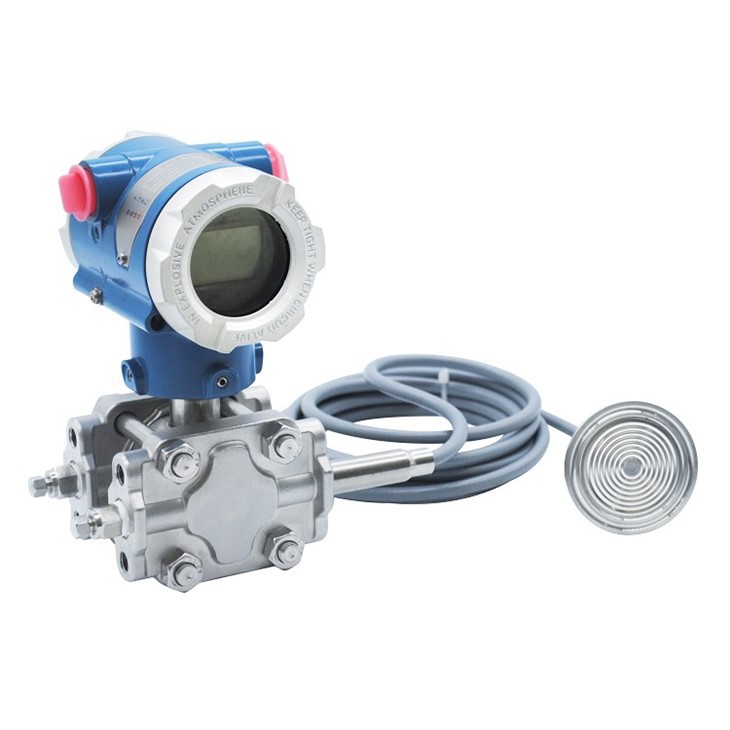
has two sensing diaphragms that measure the difference between two pressures. The differential pressure transmitter will then produce an output signal referenced to the calibrated pressure range. These devices are very commonly used to monitor various industrial processes.

Pressure transmitters are designed to accurately measure pressure in liquids, gases, and steam. This precise measurement makes it possible to control processes in a way that makes them more efficient and reduces the chance that they will fail. Pressure transmitters make it easier to control processes because they measure real-time pressure precisely. This better control can lead to more productivity, less downtime, and better-quality products. Pressure transmitters can be linked to remote monitoring systems to watch and control processes from afar. This can be especially helpful when process conditions are dangerous or when it's hard to get to a remote location. Pressure transmitters can be used to keep an eye on the amount of pressure in systems that could become dangerous. By keeping track of pressure in real-time, pressure transmitters can help prevent over-pressure situations, which can damage equipment and make things less safe. Pressure transmitters can be used to optimize processes by giving accurate measurements of pressure. This reduces the amount of energy used and helps lower energy costs.
Application of Pressure Transmitters



1. Flow Measurement
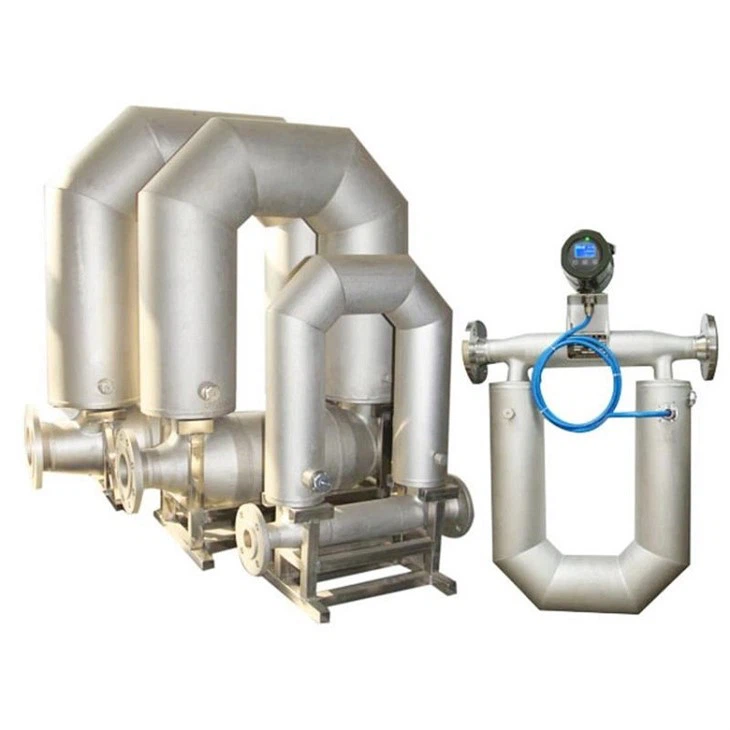
In the process industry, pressure transmitters, especially differential pressure transmitters, are used to measure the flow of liquid or gas through pipelines. Measuring the pressure drop across the orifice plate installed in a pipe is the most commonly used flow measurement method. An orifice plate is just a plate with a hole of a known size in the center. When liquid or gas passes through the orifice, a pressure drop will occur from upstream to downstream on the orifice plate. This pressure drop is proportional to the flow rate (flow rate proportional to the square root of Delta P), allowing the transmitter to calculate the flow rate in the processing pipeline in real-time.
2. Liquid Level Measurement
Pressure sensors can also be used to calculate the fluid level or height of fluid in the process tank. This technique is often used to measure the liquid level in storage tanks, such as water towers or sumps. For most practical applications, the liquid level is directly proportional to pressure. The pressure level sensor is an external or submersible pressure sensor, which is suitable for measuring the level of any fluid in a storage or process tank/reservoir. The level is indirectly measured by measuring the pressure at the bottom of the fluid in the tank. In order to achieve the excellent performance of the pressure transmitter, it is important to use chemically compatible materials. Also, it must be calibrated accurately for each application because each liquid has its own density/specific gravity. In addition, changes in process temperature can cause density/specific gravity to change, which should be taken into account when the pressure is converted to a level. These sensors can be designed to keep the diaphragm free from contamination or accumulation, thus ensuring correct operation and accurate hydrostatic pressure level measurement.
3. Water Pipeline Leakage Detection
To detect any leaks in the pipeline, there are many methods available, but we can also detect leaks in the pipeline through measuring the pressure. Pressure Reduction could point to pipe leakages. Fixed Pressure Transmitters mounted directly on the Pipeline at various intervals can pin-point the specific leakage point along any Pipe carrying any fluid/water. In such situations, such leakage points could result in waste-water entry into potable water lines resulting in water contamination & health hazards.
Working Principle of Pressure Transmitters
Process Control
Pressure transmitters are used to control processes in oil and gas, power generation, chemical, and water treatment industries, among others. They measure pressurSensing Elements
The sensing element detects the pressure and converts it into a measurable parameter. Common sensing elements include:
● Capacitive: Measures pressure-induced changes in capacitance between two conductive plates.
● Piezoresistive: Detects pressure-induced changes in the resistance of a strain-sensitive material.
● Strain gauge: Measures pressure-induced deformation of a metal or semiconductor material.
● Resonant: Monitors pressure-induced changes in the resonant frequency of a vibrating element.
Signal Conditioning
The signal conditioning stage processes and amplifies the raw signal from the sensing element, preparing it for transmission. This stage may include:
● Amplification: Increases the signal strength for further processing or transmission.
● Filtering: Removes noise and interference from the signal.
● Linearization: Adjusts the signal to ensure a linear relationship between pressure and output.
Output Signals
The pressure transmitter generates an output signal proportional to the measured pressure, which can be transmitted to a control system or monitoring device. Common output formats include:
● Current signals: 4-20 mA, 0-20 mA
● Voltage signals: 0-5 V, 0-10 V
● Digital signals: HART, Fieldbus, Modbus
What Kind of Pressure Is Measured
First determine the maximum value of the measured pressure in the system. Generally speaking, it is necessary to select a pressure transmitter with a pressure range that is about 1.5 times larger than the maximum value.
What Kind of Pressure Medium
Viscous liquids and mud will block the pressure port. Solvents or corrosive substances will not damage the materials in the transmitter that are in direct contact with these media. The above factors will determine whether to choose a direct isolation film and a material that is in direct contact with the medium.
Accuracy of Pressure Transmitter
The factors that determine the accuracy of pressure transmitters are nonlinearity, hysteresis, non-repeatability, temperature, zero offset scale, the influence of temperature, etc. The higher the accuracy, the higher the price.
Temperature Range of Pressure Transmitter
Usually a transmitter will calibrate two temperature ranges. One of the temperature ranges is the normal operating temperature, and the other is the temperature compensation range. The normal operating temperature range refers to the temperature range when the transmitter is not damaged under working conditions. It may not meet the performance specification of its application when the temperature compensation range is exceeded.
What Kind of Output Signal Needs to be Obtained
Digital output in mV, V, mA and frequency output. Which output to choose depends on many factors. Including the distance between the transmitter and the system controller or display. The presence of “noise” or other electronic interference signals. Whether an amplifier is required, amplifier location, etc. The most economical and effective solution is to use mA output transmitters for many OEM devices with short distances between transmitters and controllers. If the output signal needs to be amplified, it is best to use a transmitter with built-in amplification. For long-distance transmission or strong electronic interference signals, it is best to use mA level output or frequency output. If in an environment with high RFI or EMI indicators, in addition to selecting mA or frequency output, special protection or filters should also be considered.
What Kind of Excitation Voltage to Choose
The type of output signal determines what excitation voltage to choose. Many transmitters have built-in voltage regulation and therefore have a wide range of supply voltages. Some transmitters are configured quantitatively and require a stable working voltage. Therefore, the working voltage determines whether to use a sensor with a regulator. When selecting a transmitter, the working voltage and system cost should be considered comprehensively.
Do You Need an Interchangeable Pressure Transmitter?
Determine if the required pressure transmitter can accommodate multiple usage systems. This is important in general, especially for OEM products. Once the product is delivered to the customer, the customer’s cost for calibration is considerable. If the product has good interchangeability, even changing the pressure transmitter used will not affect the effect of the entire system.
The Stability of the Pressure Transmitter After Working Overtime
Most pressure transmitters will “drift” after overwork. Therefore, it is necessary to know the stability of the transmitter before purchasing. This kind of pre-work can reduce all kinds of troubles in future use.
Protection Level of Pressure Transmitter
The protection level of the pressure transmitter is often easily overlooked. However, this point will gradually expose its shortcomings in future use. When purchasing a transmitter, be sure to consider the working environment and humidity of the pressure transmitter in the future. How to install the transmitter. Will there be strong impact or vibration, etc.
What Kind of Connection is Used Between The Pressure Transmitter and Other Electronic Equipment
Including whether to use short-distance connection? For long-distance connections, do I need to use a connector? These must be considered clearly.
Maintenance Tips for Pressure Transmitters
Check the instrument indication for any abnormalities and see if it fluctuates within the specified range; Some transmitters do not have on-site indications, so you need to go to the control room to check their secondary readings. Whether there is debris around the instrument or whether there is dust on the surface of the instrument, it should be promptly removed and cleaned. There are errors, leaks, corrosion, etc. between the instrument and process interfaces, pressure pipes, and various valves.
(1) For some instruments that do not require daily inspection, regular inspections should be conducted at intervals. Regular zero-point inspection is convenient and does not require too much time as the transmitter has a secondary valve, three-valve group, or five-valve group. Regularly carry out sewage discharge, condensation discharge, and venting.
(2) Regularly purge and inject isolation fluid into the pressure pipes of easily clogged media.
(3) Regularly check that the transmitter components are intact and free from serious rust or damage; Nameplates and markings are clear and accurate; The fasteners should not be loose, the connectors should have good contact, and the terminal wiring should be firm.
(4) Regularly measure the circuit on site, including whether the input and output circuits are intact, whether the circuit is disconnected or short-circuited, and whether the insulation is reliable.
(5) When the transmitter is running, its casing needs to be well grounded. Transmitters used to protect the system should have measures to prevent power outages, short circuits, or output open circuits.
(6) During the winter season, the insulation and heat tracing of the instrument source pipeline should be checked to avoid damage to the source pipeline or the measuring components of the transmitter due to freezing.
Our Certificate
In order to ensure the quality of our products, our company has passed ISO9001 quality system certification, and our products have obtained CE, Exploreproof, Atex, and other certifications.


Our modern factory is equipped with multiple production lines. The flow meters, liquid level meters, pressure transmitters, temperature sensors, and transmitters we produce are widely used in the petrochemical industry, natural gas, environmental engineering, pharmaceutical engineering, food engineering, water treatment, Marine engineering, and other fields.
Ultimate FAQ Guide to Flowmeters
As one of the most professional pressure transmitter manufacturers and suppliers in China, we're featured by quality products and low price. Please rest assured to buy customized pressure transmitter from our factory. Contact us for pricelist and quotation.