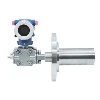
Hey there! As a supplier of High Accuracy Flowmeters, I often get asked about the maximum pressure these nifty devices can handle. It's a crucial question, especially for industries where precision and reliability under high - pressure conditions are non - negotiable. So, let's dive right in and explore this topic.
First off, what exactly are High Accuracy Flowmeters? Well, they're top - notch instruments designed to measure the flow rate of liquids or gases with extreme precision. Whether you're dealing with a chemical process, oil and gas production, or food and beverage manufacturing, having an accurate reading of the flow is essential. You can learn more about them on our High Accuracy Flowmeter page.
Now, let's talk pressure. The maximum pressure a high - accuracy flowmeter can withstand depends on several factors. One of the key factors is the type of flowmeter. There are different types out there, like Coriolis Flowmeter and Mass Flowmeter, each with its own pressure - handling capabilities.
Coriolis flowmeters, for example, are known for their high accuracy and ability to measure mass flow directly. They work based on the Coriolis effect, where the fluid flowing through vibrating tubes causes a phase shift that's proportional to the mass flow rate. In terms of pressure, Coriolis flowmeters can generally handle a wide range of pressures. Some industrial - grade Coriolis flowmeters can withstand pressures up to 10,000 psi (pounds per square inch). That's a whole lot of pressure! But it's important to note that the exact maximum pressure depends on the specific design and construction of the flowmeter.
Mass flowmeters, on the other hand, can also be quite robust when it comes to pressure. They measure the mass of the fluid flowing through them, which is crucial in many applications where the density of the fluid might vary. Mass flowmeters can typically handle pressures in the range of a few hundred to several thousand psi, depending on the model and its intended use.
Another factor that affects the maximum pressure a high - accuracy flowmeter can handle is the materials used in its construction. Flowmeters are often made from materials like stainless steel, which is strong and corrosion - resistant. Stainless steel can withstand high pressures and is commonly used in industrial applications where harsh conditions are the norm. However, the thickness of the material and the way it's fabricated also play a role. A well - designed flowmeter with a thick - walled stainless - steel housing will generally be able to handle higher pressures than one with a thinner wall.
The internal components of the flowmeter also matter. For instance, the sensors and diaphragms inside the flowmeter need to be able to function properly under high pressure. If these components are not designed to handle the pressure, they can fail, leading to inaccurate readings or even complete malfunction of the flowmeter.
In addition to the type of flowmeter and the materials used, the installation and operating conditions also impact the maximum pressure. If the flowmeter is installed in a way that creates additional stress or if the fluid flowing through it contains abrasive particles, the effective maximum pressure it can handle might be reduced. For example, if the fluid has a high concentration of sand or other solid particles, these particles can wear down the internal components of the flowmeter over time, making it more susceptible to pressure - related failures.
So, how do you know what maximum pressure is right for your application? Well, it all starts with understanding your process requirements. You need to know the maximum pressure that your system will reach during normal operation and also during any potential peak or emergency situations. Once you have this information, you can work with a flowmeter supplier (like us!) to select the right flowmeter for your needs.


We have a team of experts who can help you determine the best high - accuracy flowmeter for your specific application. We take into account all the factors we've discussed, including the type of fluid, the pressure range, and the operating conditions. We'll also make sure that the flowmeter is installed correctly and provide you with all the necessary support to keep it running smoothly.
If you're in an industry where high - pressure applications are common, such as the oil and gas industry or the chemical processing industry, having a high - accuracy flowmeter that can withstand these pressures is essential. An inaccurate flow measurement can lead to costly mistakes, such as over - or under - dosing of chemicals, inefficient production processes, or even safety hazards.
On the other hand, if you're in a less demanding application, like a small - scale food and beverage production line, you might not need a flowmeter that can handle extremely high pressures. In this case, you can choose a more cost - effective option that still provides the accuracy you need.
In conclusion, the maximum pressure that high - accuracy flowmeters can withstand varies depending on several factors, including the type of flowmeter, the materials used, the internal components, and the installation and operating conditions. By working with a knowledgeable supplier, you can ensure that you get the right flowmeter for your application, one that can handle the pressures you need while providing accurate and reliable measurements.
If you're interested in learning more about our high - accuracy flowmeters or have questions about which one is right for your application, don't hesitate to reach out. We're here to help you make the best choice for your business. Let's start a conversation and see how we can improve your flow measurement process with our top - quality flowmeters.
References
- "Flow Measurement Handbook: Industrial Designs and Applications" by Richard W. Miller
- "Coriolis Flowmeters: Fundamentals and Applications" by James E. Olin