

Hey there! As a supplier of High Accuracy Flowmeter, I'm super stoked to take you on a journey into how these nifty devices work. Flowmeters are like the unsung heroes of many industries, quietly doing their job to measure the flow of liquids or gases. And when it comes to high accuracy, well, that's where the magic really happens.
Let's start with the basics. A flowmeter, in simple terms, is a device that measures the volume or mass of a fluid moving through a pipe. High accuracy flowmeters, as the name suggests, are designed to do this with an extremely high degree of precision. This is crucial in industries where even the slightest error in flow measurement can lead to significant problems, like in chemical processing, oil and gas, and food and beverage production.
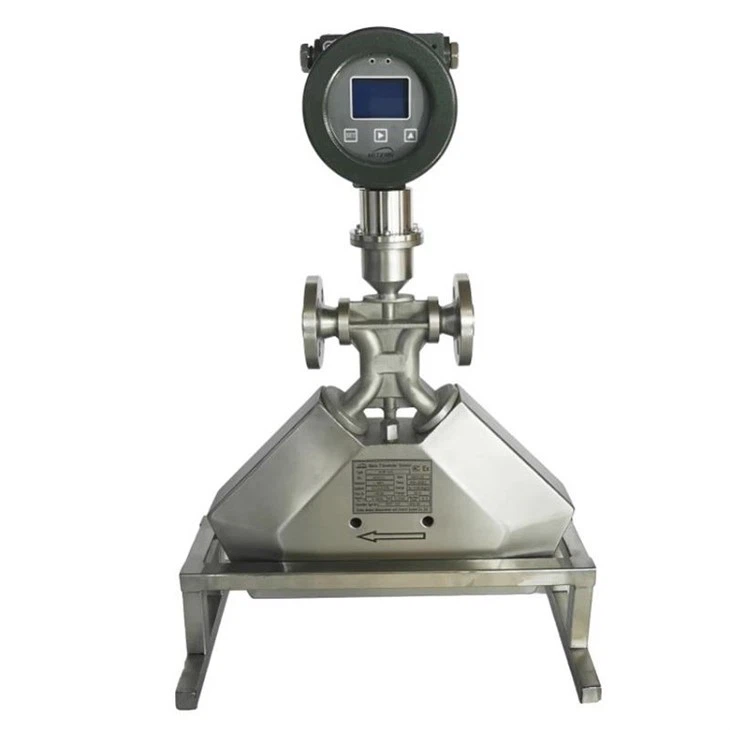
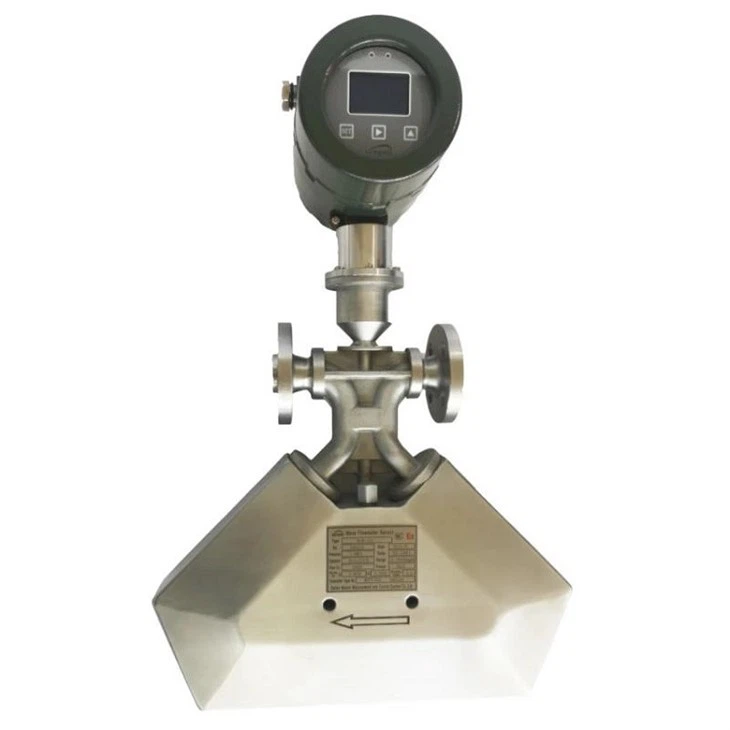
One of the most popular types of high accuracy flowmeters is the Coriolis Flowmeter. Coriolis flowmeters work on the principle of the Coriolis effect. You might remember learning about the Coriolis effect in geography class – it's what causes the rotation of weather systems on Earth. In a Coriolis flowmeter, the fluid flows through a vibrating tube. As the fluid moves through the tube, it experiences a Coriolis force that causes the tube to twist. The amount of twist is directly proportional to the mass flow rate of the fluid.
Here's a more detailed breakdown of how it works. The flowmeter has one or more tubes that are made to vibrate at their natural frequency. When there's no fluid flowing through the tube, the vibrations are symmetrical. But when fluid starts flowing, the Coriolis force comes into play. The fluid's inertia causes the tube to twist, and this twist is detected by sensors on the tube. These sensors send signals to a transmitter, which then calculates the mass flow rate based on the amount of twist.
The great thing about Coriolis flowmeters is their high accuracy. They can measure mass flow with an accuracy of up to 0.1% or even better in some cases. This is because they measure mass directly, rather than relying on other properties like volume or density. And since mass is a fundamental property of a fluid, it's not affected by changes in temperature, pressure, or viscosity. This makes Coriolis flowmeters very reliable in a wide range of applications.
Another type of high accuracy flowmeter is the Mass Flowmeter. Mass flowmeters can work in different ways, but one common method is the thermal mass flow measurement. In a thermal mass flowmeter, there are two sensors – a heated sensor and a reference sensor. The fluid flowing past the heated sensor cools it down, and the amount of cooling is related to the mass flow rate of the fluid.
The heated sensor is maintained at a constant temperature above the fluid temperature. As the fluid flows over the sensor, it takes away heat, and the power required to keep the sensor at the constant temperature is measured. The reference sensor, on the other hand, measures the temperature of the fluid. By comparing the power input to the heated sensor and the fluid temperature measured by the reference sensor, the mass flow rate can be calculated.
Thermal mass flowmeters are great for measuring the flow of gases. They're very accurate, especially for low flow rates. They also have a fast response time, which means they can quickly detect changes in flow rate. And like Coriolis flowmeters, they measure mass directly, so they're not affected by changes in pressure or temperature.
But how do we ensure that these high accuracy flowmeters stay accurate over time? Well, calibration is key. Calibration is the process of comparing the measurements of a flowmeter to a known standard. At our company, we have a state - of - the - art calibration facility where we calibrate our flowmeters before they leave the factory. We also offer calibration services to our customers to make sure their flowmeters are always performing at their best.
Regular maintenance is also important. Just like any other piece of equipment, flowmeters need to be taken care of. This includes checking for any signs of wear and tear, cleaning the sensors, and replacing any parts that are no longer working properly. We provide detailed maintenance guides to our customers, and we're always available to offer support if they have any questions.
Now, you might be wondering why you should choose our high accuracy flowmeters. Well, apart from the obvious high accuracy, our flowmeters are also very reliable. We use high - quality materials and the latest manufacturing techniques to ensure that our flowmeters can withstand the harsh conditions of industrial environments. They're also easy to install and operate, which can save you time and money.
If you're in an industry that requires precise flow measurement, whether it's chemical, pharmaceutical, or food and beverage, our high accuracy flowmeters are the perfect solution. They can help you improve the efficiency of your processes, reduce waste, and ensure the quality of your products.
So, if you're interested in learning more about our High Accuracy Flowmeter or have any questions about how they work, don't hesitate to reach out. We're always happy to have a chat and help you find the right flowmeter for your needs. Whether you're just starting to look into flowmeters or you're ready to make a purchase, we're here to assist you every step of the way.
In conclusion, high accuracy flowmeters are amazing devices that play a crucial role in many industries. Whether it's a Coriolis flowmeter or a mass flowmeter, they use innovative principles to measure flow with great precision. And as a supplier, we're committed to providing you with the best products and services to meet your flow measurement needs. So, why not get in touch today and see how our high accuracy flowmeters can make a difference in your operations?
References:
- "Flow Measurement Handbook: Industrial Designs and Applications" by Richard W. Miller
- "Coriolis Flowmeters: Fundamentals and Applications" by John C. Monzyk


