

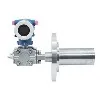

Pressure Sensor
HY Field Instrument Co., Ltd. has been focusing on field instruments for more than ten years. Our product lines include flowmeters, level meters, pressure transmitters, analytical instruments, etc. The main products include electromagnetic flowmeter, Coriolis mass flowmeter, vortex flowmeter, ultrasonic flowmeter; radar level meter, ultrasonic flowmeter, capacitive pressure transmitter, online density meter, etc.

Our Advantages
Advanced Production Equipment
Automatic welding machines, laser welding machines, argon arc welding machines, electric heating constant temperature ovens, spot welding machines, high and low temperature test chambers, calibration systems, etc. from well-known suppliers can ensure high-precision production of instruments.
Reliable Product Quality
Our company has passed ISO9001 certification, and our products have obtained CE, Exploreproof, Atex, and other certifications, with very high reliability.
Extensive Sales Market
Our products are exported to more than 80 countries and regions including the United States, Germany, France, Italy, Brazil, Chile, Vietnam, Saudi Arabia, and the United Arab Emirates, and have reached annual sales of more than 5 million US dollars.
Comprehensive Service
We provide professional product introduction, technical exchange, product design, troubleshooting, and other services. At the same time, technical and inspection personnel will conduct return visits to customers to continuously improve product experience.
-
![Capacitive Pressure Sensor]() Capacitive Pressure SensorRead More
Capacitive Pressure SensorRead MoreHigh stabilityImported diaphragmHigh accuracy can be 0.05%
-
![Multivariable Monocrystalline Silicon Differential Pressure Sensor]() Multivariable Monocrystalline Silicon Differential Pressu...Read More
Multivariable Monocrystalline Silicon Differential Pressu...Read MoreFeatures ■ Imported ultra-high stability differential pressure die■ High accuracy and excellentstability■ Static pressure error within±0.1%FS/10MPa■ Patented double overpressure protection diaphragm
-
![Monocrystalline Silicon Differential Pressure Sensor]() Monocrystalline Silicon Differential Pressure SensorRead More
Monocrystalline Silicon Differential Pressure SensorRead MoreApplications■Differential pressure transmitter core component■ Differential pressure flow transmitter core component
-
![Piezoresistive Silicon Pressure Sensor]() Piezoresistive Silicon Pressure SensorRead More
Piezoresistive Silicon Pressure SensorRead MoreFeatures ■ With constant current and constant voltage excitation options■ Imported highly reliablepressure die■ Wide temperature compensation■ Normalized output available■ Compensation board filled


Pressure sensors are measurement tools for detecting, monitoring, reading and displaying changes in applied pressure from a contained volume of liquid or gas. They can also be used with uncontained volumes, such as atmospheric pressure.

Types of Pressure Sensors
Aneroid Barometer Pressure Sensors
Aneroid barometer pressure sensors are purely mechanical devices to measure pressure. These types of pressure sensors are composed of a hollow, airtight metal casing with a flexible surface, resembling a capsule. Atmospheric changes cause the capsule to compress and expand, causing it to change shape in response to the surrounding pressure. The level of deformation can be measured and coupled to a dial that translates the pressurized deformation to a corresponding pressure reading. These sensors are compact and very durable, typically used to measure atmospheric pressure in aircraft and environmental applications. The only downfall to aneroid barometer pressure sensors is the mass of pressure sensing elements which usually limits the device’s response rate, therefore, making them less effective for dynamic pressure sensing applications.
Manometer Pressure Sensors
Manometer pressure sensors are glass tube, fluid-type pressure sensors that follow a simple design structure, however, they have an accuracy greater than aneroid barometer pressure sensors, which is impressive as they were one of the earliest devices invented to measure pressure. The movement of the liquid-filled tube compares the pressure difference between the two surfaces. The most common manometer sensor is U-shaped. Pressure is applied to one side of the glass tube, displacing the liquid inside, which causes a drop in the fluid level at one end of the tube and a rise at the other. The difference in height between the two ends of the tube indicates the pressure level, and a measurement is taken. They are commonly used to calibrate equipment in laboratory applications. However, manometers have a fairly slow response rate and a limited range of pressures, therefore they are inadequate for dynamic pressure-sensing applications.
Vacuum Pressure Sensors
The above pressure sensors generally work by measuring an applied force to a mechanical apparatus, however, when mechanical methods become complex and the pressure drops below atmospheric levels, pressure sensors that observe and measure the effects on the material are used. This is where vacuum pressure sensors come in. These types of pressure sensors measure the resistance of a heated sensor filament (typically made from thin tungsten, nickel, or platinum wire) inside the gauge chamber. As the gauge chamber becomes exposed to the surrounding vacuum pressure, gas molecules collide with the filament wire, and heat is transported from the sensor wire. The wire is connected to an electrical circuit from which, after calibration, the pressure reading is taken. At low pressures, the temperature drops, resulting in low thermal conductivity. At high pressures, the high gas density results in high thermal conductivity.
Sealed Pressure Sensors
Sealed pressure sensors are commonly used to measure atmospheric pressure at sea level on submersible vehicles to establish depth by measuring and comparing ambient pressure alongside available atmospheric pressure in the sealed device. The chamber maintains the same air pressure since it was sealed, which becomes the permanent internal reference pressure of the pressure sensor.
Piezoelectric Pressure Sensors
Piezoelectric sensors work by employing an electric charge as a response to physical changes to the material. The charge created from physical changes is directly proportional to the applied force. The piezoelectric pressure sensor measures and calibrates changes in the electrical charge, displaying a corresponding pressure measurement for the user to view. These types of pressure sensors have high frequency and rapid response times, yet they are very small, making them a perfect choice of pressure sensor for applications that have space constraints. They are mainly used for measuring dynamic pressure, for example in engine combustion applications.
Strain Gauge Pressure Sensors
When a force is applied, the spring element inside the strain gauge pressure sensor deforms. When pressure changes occur, the resistance fluctuates and voltage readings are recorded as electrical signals. These can then be converted to an equivalent pressure reading and displayed by the strain gauge sensor. Strain gauge pressure sensors are used for long-term monitoring tasks such as measuring residual stress, torque, compression, tension, bending, and deflection of vehicles, ship hulls, dams, and oil drilling platforms.
Benefits of Pressure Sensor
Improves Safety Measures
Pressure sensors play a key role in bolstering safety measures. They help detect any pressure changes in systems, alerting users to potential hazards or malfunctions.
Allows Precise Measurement
Precise measurement is another benefit. Pressure sensors provide accurate readings, enabling better control and management of systems.
Allows Precise Measurement
Precise measurement is another benefit. Pressure sensors provide accurate readings, enabling better control and management of systems.
Cost-Effective Solution
Being a cost-effective solution, pressure sensors reduce expenses. They prevent costly repairs or replacements by detecting issues early.
Supports Automation Processes
Lastly, pressure sensors are integral to automation processes. They provide real-time data, enabling automated systems to respond quickly to changes, enhancing efficiency and productivity.
Application of Pressure Sensor


Manufacturing Industry
Pressure sensor applications in the manufacturing industry continue to grow due to the demand for more tightly regulated processes and the accompanying quality control needs. The increased pressure and vacuum monitoring can detect the need for equipment repair before premature breakdowns create excessive downtime and raise manufacturing expenses. Pressure sensors are increasingly used in applications such as bottle and equipment leak detection, Variable Air Volume (VAV) systems, air blades, compressed air pressure monitoring, industrial flow monitoring, filter pressure monitoring, duct airflow, gas detection, pneumatic controls, mine safety instrumentation, industrial degassers, and suction check in pick and place applications such as the printed circuit boards and semiconductor process equipment.
Life-Saving Medical Applications
With the medical equipment market advancement, greater demands are placed on the usage of pressure sensors in the medical sector. Precision, reliability, stability, volume, and so on must be met. Hyperbaric treatment increases the air pressure in a sealed container enclosing a patient. It may be used to treat various medical ailments, including skin grafts, burn injuries, carbon monoxide poisoning, and decompression sickness in divers. Analogue pressure sensors have practical uses in catheter ablation and temperature sensor measurement. Thermodilution catheters, urethral catheters, oesophagal catheters, central venous catheters, and intracranial pressure vessels are all examples of catheters.
Water Treatment Pressure Sensors
In wastewater management and water treatment facilities, pressure measurement is employed in filtration, system pressure, flow, and levels. Pressure sensors in this business must deliver reliable readings in corrosive materials, effluents, solids, vibration, and pulsation-prone situations. They are utilised to monitor the system and offer vital information for proactive reaction to any odd situations that may emerge. Pressure sensors are essential in water supply and sewage treatment because they provide crucial control and monitoring for system protection and quality assurance. Pressure sensors are used in aeration basins, chemical feeds, chlorination, chlorine removal and distribution, flocculation, raw material inlets, mixing vessels, pumping stations, sedimentation operations, and storage activities. Products designed for this business must be accurate and dependable across multiple pressure cycles. They must be able to measure pressures ranging from vacuum to 1,000 bar or more.
Petrochemical Applications
The pressure sensor is one of the most often used measurement devices in the petrochemical sector for control. Almost all pressure sensor applications are included in large-scale chemical projects: differential pressure, absolute pressure, gauge pressure, high pressure, micro differential pressure, high temperature, low temperature, and remote transmission flange pressure sensors of various materials and special processing. Because of the way a refinery is structured, a pressure sensor may be hundreds of feet away from the control system to which it is connected, necessitating a long cable run to connect.
Working Principle of Pressure Sensor
Pressure sensors work by measuring a physical change that happens, as a reaction to pressure differences. After measuring these physical changes, the information is converted into electric signals. These signals can then be displayed as usable data that the team can then interpret. An example of this process will work in the following steps:
A Strain Gauge Converts Pressure to Electrical Signals
The most common type of pressure sensor uses a strain gauge. It is a mechanical apparatus that allows small expansions and contractions, as pressure is applied or relieved. The sensor measures and calibrates the physical deformations to show how much pressure is put on a piece of equipment or tank. Then, it converts these changes into voltages or electric signals.
Electric Signals are Measured and Recorded
Once the sensor produces an electrical signal, the device can record a pressure reading. These signals increase or decrease in intensity, depending on the pressure felt by the sensor. Depending on the signal frequency, pressure readings can be performed between very close time intervals.
CMMS Receives An Electric Signal
The electrical signals are now in the form of a pressure reading, in units such as pounds per square inch (psi) or Pascals (Pa). The sensors send out the readings, which are then received by your CMMS in real-time. With multiple sensors installed throughout various assets, a CMMS system acts as the central hub to keep track of the whole facility. CMMS providers can assist in ensuring the connectivity of all sensors.
CMMS Alerts Maintenance Teams
With sensors in place, your maintenance teams get alerted when a pressure measurement is too high or too low. Pressure ratings that are too high can indicate a risk of parts rupturing, or a chance of damaged equipment. On the other hand, a loss of pressure can be a sign of leakage, especially on pressure vessels. Real-time data, combined with mobile functionality, give your team a view of the state of the facility at all times.
Factors to Consider Before Choosing a Pressure Sensor
1. Materials
The sensor wetted material you choose must be compatible with your process media. If you are using the wrong materials, you may encounter instrument damage, failure or out-of-specification readings over time. For example, pressure sensors that are suitable for ultra-low-differential-pressure-based airflow measurements are very different than those for high-pressure hydrogen applications.
2. Shock and Hydraulic Effects
Shock is typically associated with mechanical shock on a piece of equipment or the pressure sensor itself and typically addressed on pressure sensor data sheets. In this case, we refer to hydraulic shock or water hammer, which can occur within fluid-based systems due to a fluid's incompressible nature. Hydraulic shock or water hammer is the pressure surge caused by a sudden change in the fluid velocity. This effect can be many times the system operating pressure and occur faster than the output can indicate, yet permanently damage the sensing diaphragm /element. Understanding whether this is possible in the system and, if necessary, address in the system or sensor design to ensure long-term reliable pressure sensor operation. Besides options in the sensor design, technology and calibration itself there are several accessories and other instruments that can help counteract these negative process effects, such as pressure snubbers, pulsation dampeners and capillary lines. If not properly addressed, this can result in what is seen as a pressure sensor overpressure failure (out of accuracy condition due to an offset of the zero pressure output reading or worse, diaphragm failure).
3. Pressure Reference
The pressure reference (gauge/vacuum, absolute or differential) is the first step in determining which transducer technologies can be used in a design. What pressure do you want to measure? Is the pressure reference to current atmospheric conditions (Gauge reference) or absolute zero pressure (Absolute reference)? This is particularly important when trying to measure below atmospheric pressure conditions while determining the amount of vacuum. It is critical to know whether the measurement is relative to the atmospheric condition or absolute zero pressure.
4. Accuracy
How a pressure sensor manufacturer publishes accuracy and performance specifications is often referred to as “Specmanship.” Without agreed-upon industry standards in many regions of the world, accuracy can be defined as BFSL, RSS, Terminal or End Point, Total Error Band, or Typical. With each of the above terms, a stated accuracy of 0.25% can translate differently in many ways. In critical applications, it may be important that Zero and Span output offsets be included in accuracy as the two can add up to an additional ±2% of inaccuracy in some products. Or, if the application is exposed to a wide operating temperature range, does the accuracy statement include the effects of temperature over that range? In some cases, if an accuracy statement is stated as typical, the question becomes: is it important that a specific accuracy be met or is typical good enough?
5. Pressure Sensor Interchangeability
Maintain your system’s performance as specified by the equipment manufacturer when replacing a pressure sensor in the field. This specifically relates to whether zero and span offset errors are either included in the manufacturer’s accuracy statements or are corrected during the initial equipment manufacturing process.
Tips for Pressure Sensors
1.Control Your Operating Temperature
It is paramount to understand that most electronic pressure sensors tend to lose their efficiency in environments with extreme temperatures. This loss of efficiency can significantly impact the accuracy of the readings. To overcome this, you should adjust the environmental temperature to an optimal and consistent level to achieve the best possible results. If your operations are in a setting where you cannot easily control the temperature extremes, it is worth investing in higher-performance, rugged sensors. These are specifically designed to withstand harsh working conditions, ensuring they maintain their performance and deliver accurate results, regardless of the surrounding temperature.
2.Utilize the Appropriate Pressure Sensor
The market offers a wide range of pressure sensors, including wired, wireless, submersible, high-performance, and low-cost options. Wired pressure sensors are traditional, reliable, and directly connected to your system. In contrast, wireless pressure sensors provide the flexibility of remote monitoring and eliminate the need for physical wiring. Submersible pressure sensors are ideal for deep-water applications or other liquid mediums. High-performance pressure sensors are designed to withstand harsh environments and extreme conditions, while low-cost pressure sensors provide a budget-friendly solution for simpler applications. Selecting the right pressure sensor that aligns with your specific application is crucial. This guarantees consistent and accurate data readings and measurements and ensures the sensor’s longevity and efficiency.
3.Order Your Transducers from a Reputable Manufacturer
The quality of your pressure sensors significantly influences their performance and reliability. Therefore, it is essential to source these devices from reputable, industry-leading manufacturers. With extensive knowledge, experience, and skills, we provide the most suitable sensing equipment tailored to your specific needs. Our support services ensure superior performance by providing guidance on installing, operating, and maintaining pressure sensors.
Our Certificate
In order to ensure the quality of our products, our company has passed ISO9001 quality system certification, and our products have obtained CE, Exploreproof, Atex, and other certifications.


Our modern factory is equipped with multiple production lines. The flow meters, liquid level meters, pressure transmitters, temperature sensors, and transmitters we produce are widely used in the petrochemical industry, natural gas, environmental engineering, pharmaceutical engineering, food engineering, water treatment, Marine engineering, and other fields.
Ultimate FAQ Guide to Flowmeters
As one of the most professional pressure sensor manufacturers and suppliers in China, we're featured by quality products and low price. Please rest assured to buy customized pressure sensor from our factory. Contact us for pricelist and quotation.
pressure sensor for orp measurement, pressure sensor for solar energy, oem pressure sensor