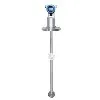
A variable area flowmeter, also known as a rotameter, is a simple and reliable device used to measure the flow rate of liquids and gases. As a flowmeter supplier, I have witnessed firsthand the effectiveness and versatility of these instruments in various industrial applications. In this blog post, I will delve into the working principles of variable area flowmeters, explore their advantages, and discuss their applications.
Working Principles of Variable Area Flowmeters
The basic principle behind a variable area flowmeter is straightforward. It consists of a tapered tube, typically made of glass or plastic, with a float inside. The tube is mounted vertically, and the fluid to be measured enters from the bottom and exits from the top. As the fluid flows through the tube, it exerts an upward force on the float. The float rises until the upward force exerted by the fluid is balanced by the downward force of gravity acting on the float.

The position of the float within the tapered tube is directly related to the flow rate of the fluid. As the flow rate increases, the upward force on the float increases, causing it to rise higher in the tube. Conversely, as the flow rate decreases, the upward force on the float decreases, and the float descends. The flow rate can be read directly from a scale marked on the outside of the tube, which indicates the corresponding flow rate at each position of the float.
The key to the operation of a variable area flowmeter is the tapered shape of the tube. The tube is wider at the top than at the bottom, which means that the cross-sectional area available for the fluid to flow through increases as the float rises. This increase in cross-sectional area compensates for the increase in flow rate, allowing the float to reach a stable position where the forces acting on it are balanced.
Advantages of Variable Area Flowmeters
Variable area flowmeters offer several advantages over other types of flowmeters, making them a popular choice in many industrial applications.
- Simplicity and Reliability: Variable area flowmeters are relatively simple devices with few moving parts, which makes them highly reliable and easy to maintain. They do not require external power sources or complex electronics, which reduces the risk of failure and makes them suitable for use in harsh environments.
- Wide Range of Applications: Variable area flowmeters can be used to measure the flow rate of a wide range of liquids and gases, including corrosive and viscous fluids. They are available in a variety of sizes and materials to suit different applications, and they can be used in both high and low flow rate applications.
- Direct Reading: Variable area flowmeters provide a direct visual indication of the flow rate, which makes them easy to read and interpret. The flow rate can be read directly from a scale marked on the outside of the tube, without the need for additional calculations or calibration.
- Low Cost: Variable area flowmeters are generally less expensive than other types of flowmeters, which makes them a cost-effective solution for many applications. They require minimal installation and maintenance, which further reduces the overall cost of ownership.
Applications of Variable Area Flowmeters
Variable area flowmeters are used in a wide range of industrial applications, including chemical processing, pharmaceuticals, food and beverage, water treatment, and HVAC systems. Some common applications of variable area flowmeters include:
- Flow Measurement in Chemical Processes: Variable area flowmeters are commonly used to measure the flow rate of chemicals in chemical processing plants. They can be used to monitor the flow of raw materials, intermediates, and finished products, ensuring that the correct amount of chemicals is being used in the process.
- Flow Control in Pharmaceutical Manufacturing: In pharmaceutical manufacturing, variable area flowmeters are used to control the flow rate of liquids and gases during the production process. They can be used to ensure that the correct amount of ingredients is being added to the batch, and to monitor the flow of solvents and other process fluids.
- Flow Monitoring in Food and Beverage Industry: Variable area flowmeters are used in the food and beverage industry to monitor the flow rate of liquids and gases during the production process. They can be used to measure the flow of water, milk, juice, and other beverages, as well as the flow of gases such as carbon dioxide and nitrogen.
- Flow Measurement in Water Treatment Plants: Variable area flowmeters are commonly used in water treatment plants to measure the flow rate of water and other fluids. They can be used to monitor the flow of raw water, treated water, and wastewater, ensuring that the treatment process is operating efficiently.
- Flow Control in HVAC Systems: In HVAC systems, variable area flowmeters are used to control the flow rate of air and water. They can be used to ensure that the correct amount of air is being supplied to the building, and to monitor the flow of water through the heating and cooling coils.
Complementary Technologies
While variable area flowmeters are effective in many applications, there are situations where they can be complemented by other technologies. For instance, the Rosemount 3051C Smart Pressure Transmitter can work in tandem with variable area flowmeters. In some complex industrial processes, the pressure information provided by the Rosemount 3051C can help in further understanding the fluid dynamics and optimizing the overall flow measurement system. This smart pressure transmitter offers high accuracy and reliability, which can enhance the precision of the flow measurement when used in conjunction with a variable area flowmeter.
Conclusion
Variable area flowmeters are simple, reliable, and cost-effective devices for measuring the flow rate of liquids and gases. Their working principle is based on the balance of forces acting on a float within a tapered tube, and they offer several advantages over other types of flowmeters. They are widely used in a variety of industrial applications, including chemical processing, pharmaceuticals, food and beverage, water treatment, and HVAC systems.
If you are in the market for a flowmeter for your industrial application, I encourage you to consider a variable area flowmeter. As a flowmeter supplier, I can provide you with a wide range of options to suit your specific needs and requirements. Whether you need a flowmeter for a small laboratory application or a large industrial process, I can help you find the right solution.
If you have any questions or would like to discuss your flow measurement needs further, please feel free to contact me. I would be happy to assist you in selecting the right flowmeter for your application and to provide you with any additional information you may need. Let's start a conversation about how we can work together to meet your flow measurement requirements.
References
- Spitzer, D. W. (2001). Flow Measurement: Practical Guides for Measurement and Control. ISA - The Instrumentation, Systems, and Automation Society.
- Miller, R. W. (1996). Flow Measurement Engineering Handbook. McGraw - Hill.