A mass flowmeter is a crucial instrument in various industries, playing a significant role in accurately measuring the mass flow rate of fluids or gases. As a professional mass flowmeter supplier, I have in - depth knowledge of these devices and their applications. In this blog, I will explain what a mass flowmeter is, how it works, its types, applications, and the advantages it offers.
What is a Mass Flowmeter?
A mass flowmeter is a device that measures the mass flow rate of a fluid or gas passing through it. Unlike volumetric flowmeters, which measure the volume of the substance flowing per unit time, mass flowmeters directly measure the mass of the substance flowing. This is important because the mass of a substance remains constant regardless of changes in temperature, pressure, or density, while the volume can vary significantly under different conditions.
How Does a Mass Flowmeter Work?
There are several technologies used in mass flowmeters, each with its own working principle. One of the most common types is the Coriolis mass flowmeter.
Coriolis Mass Flowmeter
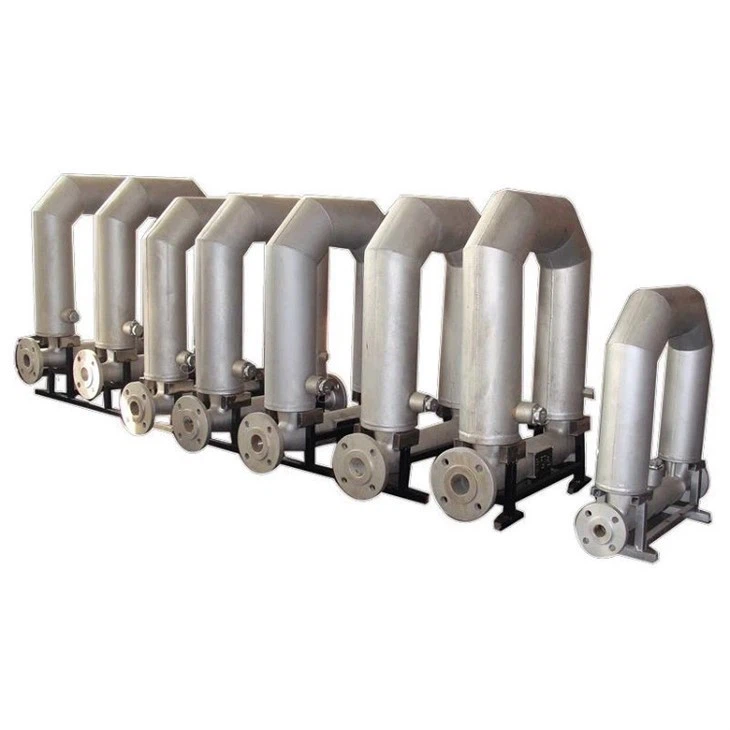
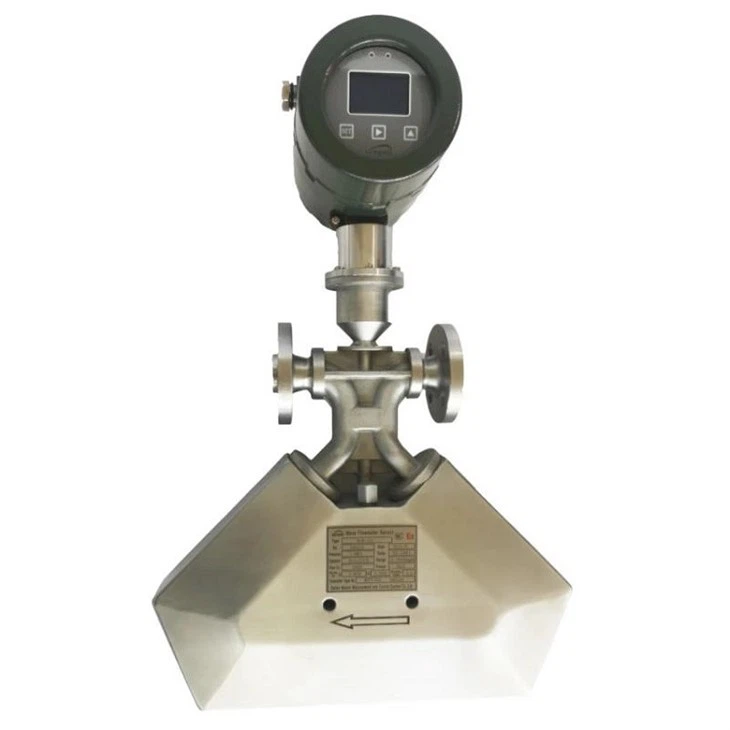
The Coriolis mass flowmeter operates based on the Coriolis effect. When a fluid or gas flows through a vibrating tube, the Coriolis force causes the tube to twist. The amount of twist is directly proportional to the mass flow rate of the substance passing through the tube. Sensors on the tube detect this twist and convert it into an electrical signal, which is then processed to provide an accurate measurement of the mass flow rate.
For example, in a Coriolis Flowmeter, the tube is made to vibrate at its natural frequency. As the fluid enters the tube and starts to flow, the Coriolis force acts on the fluid, causing a phase shift in the vibration of the tube. By measuring this phase shift, the mass flow rate can be determined precisely.
Types of Mass Flowmeters
Thermal Mass Flowmeters
Thermal mass flowmeters measure the mass flow rate of gases by using the principle of heat transfer. They typically consist of two temperature sensors and a heating element. One sensor measures the temperature of the gas, while the other is heated. As the gas flows past the heated sensor, it cools the sensor at a rate that is proportional to the mass flow rate of the gas. By measuring the temperature difference between the two sensors, the mass flow rate can be calculated.
Differential Pressure Mass Flowmeters
Differential pressure mass flowmeters work by creating a pressure drop across a flow - restricting element, such as an orifice plate or a venturi tube. The pressure drop is related to the mass flow rate of the fluid or gas passing through the element. By measuring the differential pressure and using the appropriate equations, the mass flow rate can be determined.
Applications of Mass Flowmeters
Chemical Industry
In the chemical industry, mass flowmeters are used to accurately measure the flow of raw materials, intermediates, and final products. This is crucial for ensuring the correct proportions of chemicals in a reaction, which can affect the quality and yield of the final product. For example, in the production of polymers, precise measurement of the monomer flow rate is essential for controlling the molecular weight and properties of the polymer.
Food and Beverage Industry
In the food and beverage industry, mass flowmeters are used for various applications, such as measuring the flow of ingredients in the production process. For instance, in the production of soft drinks, a Coriolis Mass Flowmeter for Drinking can be used to accurately measure the flow of water, sugar syrup, and flavorings, ensuring consistent product quality.
Oil and Gas Industry
In the oil and gas industry, mass flowmeters are used to measure the flow of crude oil, natural gas, and refined products. Accurate measurement of the mass flow rate is essential for custody transfer, where the quantity of oil or gas being transferred between parties needs to be precisely determined.
Advantages of Mass Flowmeters
High Accuracy
One of the main advantages of mass flowmeters is their high accuracy. They can provide accurate measurements even under varying conditions of temperature, pressure, and density. For example, a High Accuracy Flowmeter can measure the mass flow rate with an accuracy of up to ±0.1%, making it suitable for applications where precise measurement is critical.
Direct Mass Measurement
Since mass flowmeters directly measure the mass of the substance flowing, they eliminate the need for density compensation, which is often required in volumetric flowmeters. This simplifies the measurement process and reduces the potential for errors.
Wide Range of Applications
Mass flowmeters can be used to measure the flow of a wide range of fluids and gases, including corrosive and abrasive substances. They are also suitable for both liquid and gas applications, making them a versatile choice for many industries.
Why Choose Our Mass Flowmeters?
As a mass flowmeter supplier, we offer a wide range of high - quality mass flowmeters that are designed to meet the diverse needs of our customers. Our products are manufactured using the latest technology and materials, ensuring reliable and accurate performance.
We have a team of experienced engineers and technicians who can provide technical support and assistance to our customers. Whether you need help with installation, calibration, or troubleshooting, we are here to help.
In addition, we offer competitive pricing and excellent customer service. We understand that our customers' satisfaction is our top priority, and we strive to provide the best possible products and services.
Contact Us for Procurement
If you are interested in purchasing a mass flowmeter for your application, we encourage you to contact us. Our sales team will be happy to discuss your requirements and provide you with a detailed quote. We can also arrange for a demonstration of our products to show you their performance and capabilities.
Don't miss out on the opportunity to improve the accuracy and efficiency of your flow measurement processes. Contact us today to start the procurement process.
References
- Flow Measurement Handbook: Industrial Designs and Applications, by Richard W. Miller
- Instrumentation, Measurement, and Analysis, by Chester L. Dawes
- Mass Flow Measurement: Principles and Practice, by David W. Spitzer