Hey there! I'm a supplier of high accuracy flowmeters, and I often get asked by folks about how to choose the right one. So, I thought I'd share some tips based on my experience in the industry.
First off, let's talk about why high accuracy matters. In a lot of industries, getting an accurate reading of the flow rate is super important. Whether it's in chemical processing, food and beverage production, or water treatment, even a small error in the flow measurement can lead to big problems. For example, in a chemical plant, an inaccurate flowmeter could result in incorrect mixing of chemicals, which might affect the quality of the final product or even cause safety issues.
So, how do you start choosing a high accuracy flowmeter? Well, the first thing you need to consider is the type of fluid you'll be measuring. Different fluids have different properties, and these properties can have a big impact on the performance of the flowmeter.
Fluid Properties
-
Viscosity: If you're dealing with a highly viscous fluid, like honey or heavy oils, you'll need a flowmeter that can handle that. Some flowmeters, like Coriolis Flowmeters, are great for high - viscosity fluids because they measure the mass flow directly, and are less affected by changes in viscosity. On the other hand, if you're measuring a low - viscosity fluid like water, you have more options.
-
Density: The density of the fluid also matters. For fluids with varying densities, a flowmeter that measures mass flow rather than volumetric flow can be more accurate. Coriolis mass flowmeters are a good choice here because they measure mass flow, which is independent of density changes. For instance, in a drinking water supply system, a Coriolis Mass Flowmeter for Drinking can provide accurate measurements regardless of small density variations due to temperature or impurities.
-
Conductivity: If your fluid is conductive, electromagnetic flowmeters can be a good option. They work by measuring the voltage induced by the fluid as it passes through a magnetic field. However, if the fluid is non - conductive, you'll have to look at other types of flowmeters.
Flow Conditions
-
Flow Rate: You need to know the range of flow rates that your application will require. Some flowmeters are better suited for low - flow applications, while others can handle high - flow rates. Make sure the flowmeter you choose can accurately measure the flow rates you expect. For example, if you're measuring the flow of a small amount of a precious chemical in a laboratory setting, a flowmeter designed for low - flow rates would be ideal. On the other hand, in a large - scale industrial process with high - volume fluid flow, you'll need a flowmeter that can handle those high rates.
-
Flow Profile: The shape of the flow profile in your pipeline also matters. In some cases, the flow might be turbulent, while in others it could be laminar. Some flowmeters are more sensitive to flow profile changes than others. For example, turbine flowmeters work best in a well - developed, laminar flow. If your flow is turbulent, you might need to install flow conditioners or choose a flowmeter that is less affected by flow profile, like a Coriolis flowmeter.
Accuracy Requirements
-
Level of Accuracy: Different applications have different accuracy requirements. In some industries, like pharmaceutical manufacturing, a high level of accuracy is crucial. In other less - critical applications, a slightly lower level of accuracy might be acceptable. When choosing a flowmeter, make sure it can meet your specific accuracy requirements. For high - precision applications, a High Accuracy Flowmeter is the way to go.
-
Repeatability: Along with accuracy, repeatability is also important. A flowmeter that can consistently give the same measurement under the same conditions is more reliable. Look for flowmeters with high repeatability ratings.
Installation and Maintenance
-
Installation Requirements: Some flowmeters are easier to install than others. For example, some flowmeters require a certain length of straight pipe upstream and downstream to ensure accurate measurements. Make sure you have enough space in your pipeline for proper installation. Also, consider the orientation of the flowmeter. Some flowmeters need to be installed in a specific orientation to work correctly.
-
Maintenance: Maintenance is another important factor. Some flowmeters require regular calibration and maintenance to ensure accurate measurements. Others are more maintenance - free. Consider the maintenance requirements of the flowmeter in relation to your available resources and the impact on your operations. For example, if you have a busy production line and can't afford frequent downtime for maintenance, a low - maintenance flowmeter would be a better choice.
Cost
-
Purchase Cost: The initial cost of the flowmeter is obviously an important consideration. High - accuracy flowmeters can be more expensive, but you need to weigh the cost against the benefits. In some cases, the cost of an inaccurate measurement can far outweigh the cost of a more expensive, high - accuracy flowmeter.
-
Operating Cost: Don't forget about the operating cost. This includes things like power consumption, calibration costs, and maintenance costs. Over the long term, these operating costs can add up, so make sure you consider them when making your decision.
In conclusion, choosing a high accuracy flowmeter is not a one - size - fits - all process. You need to carefully consider the fluid properties, flow conditions, accuracy requirements, installation and maintenance needs, and cost. By taking all these factors into account, you can select the flowmeter that is best suited for your specific application.

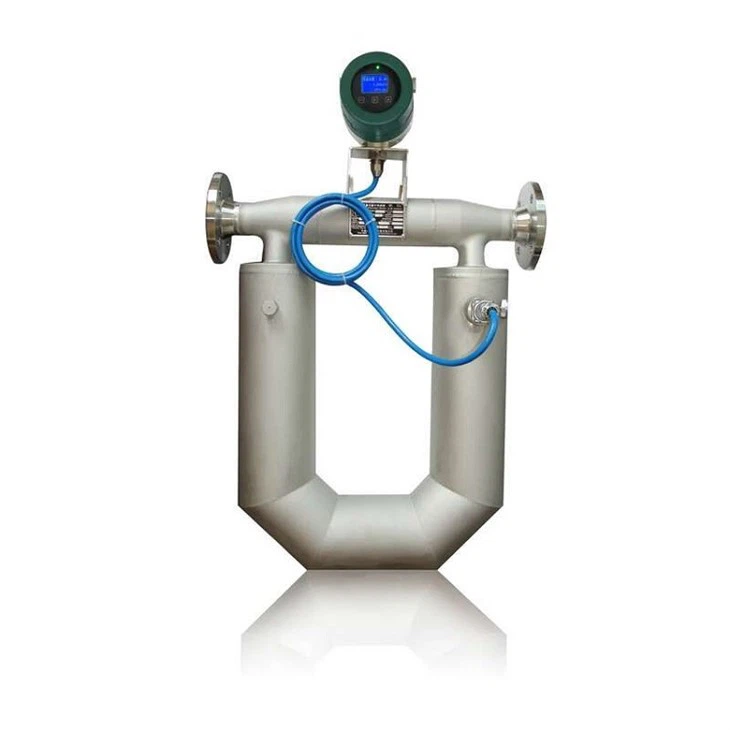
If you're still unsure about which high accuracy flowmeter is right for you, or if you want to learn more about our products, feel free to reach out. We're here to help you make the best choice for your business. Whether you're in a small - scale operation or a large - scale industrial plant, we have the expertise and the products to meet your needs. Let's start a conversation and find the perfect flowmeter for your application.
References
- Flow Measurement Handbook: Principles and Applications by Richard W. Miller
- Industrial Flow Measurement by Marcel Dorfmann