

Open - channel flow measurement is a crucial aspect in various industries such as water management, environmental monitoring, and hydropower generation. The ability to accurately measure the flow of water or other fluids in open - channels is essential for efficient operations, resource management, and compliance with regulatory standards. As a supplier of high - accuracy flowmeters, the question of whether our products can be used for open - channel flow measurement is one that we often encounter. In this blog post, we will explore this topic in depth, considering the characteristics of high - accuracy flowmeters and the challenges and requirements of open - channel flow measurement.
Understanding High - Accuracy Flowmeters
High - accuracy flowmeters are designed to provide precise and reliable measurements of fluid flow. These devices utilize advanced technologies and engineering to minimize measurement errors and ensure consistent performance. There are several types of high - accuracy flowmeters available in the market, each with its own unique principles and applications.
One of the most popular types of high - accuracy flowmeters is the Mass Flowmeter. Mass flowmeters measure the mass flow rate of a fluid, which is independent of the fluid's density, temperature, and pressure. This makes them highly accurate and suitable for a wide range of applications, including chemical processing, food and beverage production, and oil and gas refining.
Another type is the Coriolis Mass Flowmeter for Drinking. These flowmeters are specifically designed for measuring the flow of drinking water. They offer high accuracy and reliability, and are often used in water treatment plants, distribution systems, and industrial facilities where clean water is required.
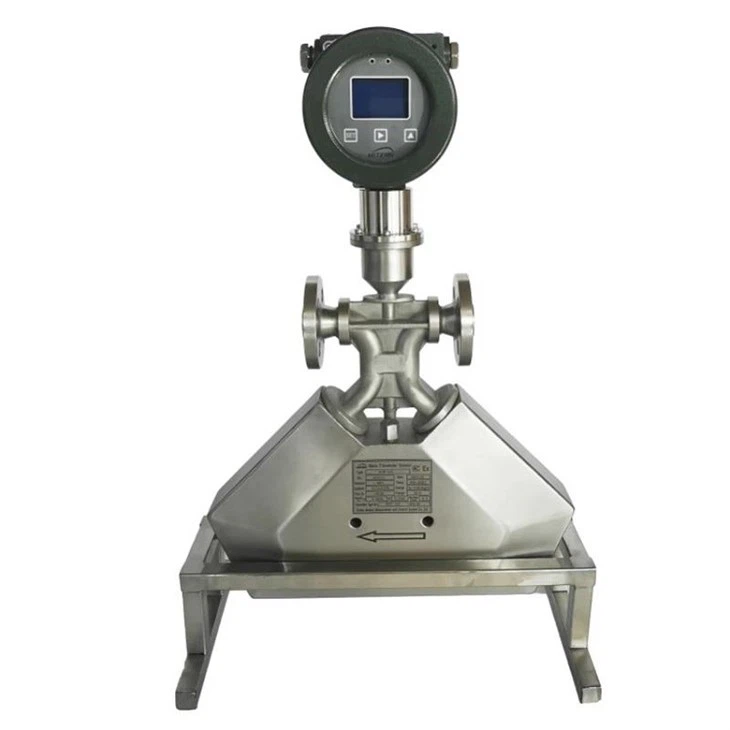
The Coriolis Flowmeter is also a well - known high - accuracy flowmeter. It operates based on the Coriolis effect, which causes a vibrating tube to twist when a fluid flows through it. By measuring the degree of twist, the flowmeter can accurately determine the mass flow rate of the fluid. Coriolis flowmeters are known for their high accuracy, wide turndown ratio, and ability to measure a variety of fluids, including liquids, gases, and slurries.
Challenges in Open - Channel Flow Measurement
Open - channel flow measurement presents several challenges that need to be addressed for accurate and reliable results. Unlike closed - pipe flow, where the fluid is confined within a pipe, open - channel flow is subject to various factors such as the shape and slope of the channel, the presence of sediment and debris, and the influence of external forces like wind and waves.
One of the main challenges is the variability of the flow profile. In open - channels, the velocity of the fluid is not uniform across the cross - section of the channel. The velocity is typically higher near the center of the channel and lower near the banks and the bottom. This non - uniform flow profile makes it difficult to obtain an accurate measurement of the total flow rate.
Another challenge is the presence of air bubbles and foam in the fluid. Air bubbles can cause errors in flow measurement, especially in flowmeters that rely on the measurement of the fluid's velocity or volume. Foam can also interfere with the operation of some flowmeters, such as ultrasonic flowmeters, by reflecting or absorbing the ultrasonic waves.
The condition of the channel itself can also affect the accuracy of flow measurement. Channels that are lined with rough materials or have irregular shapes can cause turbulence and eddies, which can lead to inaccurate flow measurements. Additionally, the growth of algae and other biological organisms on the channel walls can change the hydraulic characteristics of the channel and affect the flow rate.
Can High - Accuracy Flowmeters be Used for Open - Channel Flow Measurement?
The answer to whether high - accuracy flowmeters can be used for open - channel flow measurement is yes, but with some limitations and considerations. While traditional high - accuracy flowmeters like mass flowmeters and Coriolis flowmeters are primarily designed for closed - pipe applications, there are ways to adapt them for open - channel use.
Some high - accuracy flowmeters can be used in combination with other devices to measure open - channel flow. For example, an ultrasonic flowmeter can be used to measure the velocity of the fluid in the open - channel, and a level sensor can be used to measure the depth of the fluid. By combining these two measurements, the flow rate can be calculated using the Manning's equation or other hydraulic formulas.

However, it is important to note that the accuracy of the measurement will depend on several factors, such as the installation location, the calibration of the flowmeter, and the stability of the flow conditions. The flowmeter should be installed in a location where the flow is relatively uniform and free from turbulence. It should also be properly calibrated to account for the specific characteristics of the open - channel, such as the shape and slope of the channel.
In some cases, custom - designed high - accuracy flowmeters may be required for open - channel flow measurement. These flowmeters are specifically engineered to address the challenges of open - channel flow, such as the non - uniform flow profile and the presence of air bubbles. They may incorporate advanced technologies like multi - path ultrasonic sensors or laser Doppler velocimetry to obtain more accurate measurements.
Advantages of Using High - Accuracy Flowmeters in Open - Channel Flow Measurement
Despite the challenges, there are several advantages to using high - accuracy flowmeters in open - channel flow measurement.
Firstly, high - accuracy flowmeters can provide more precise and reliable measurements compared to traditional open - channel flow measurement methods, such as weirs and flumes. This can lead to better management of water resources, more accurate billing for water usage, and improved compliance with regulatory requirements.
Secondly, high - accuracy flowmeters can offer real - time data on the flow rate, which is essential for monitoring and controlling open - channel systems. Real - time data allows operators to make timely decisions and take corrective actions in case of any abnormalities in the flow.
Finally, high - accuracy flowmeters can be integrated with other monitoring and control systems, such as SCADA (Supervisory Control and Data Acquisition) systems. This integration enables remote monitoring and control of the open - channel flow, improving the efficiency and effectiveness of the overall system.
Conclusion
In conclusion, while high - accuracy flowmeters were originally designed for closed - pipe applications, they can be used for open - channel flow measurement with proper adaptation and consideration of the specific challenges. The use of high - accuracy flowmeters in open - channel flow measurement offers several advantages, including more precise measurements, real - time data, and integration with other systems.
As a supplier of high - accuracy flowmeters, we are committed to providing our customers with the best solutions for their open - channel flow measurement needs. Our team of experts can help you select the most suitable flowmeter for your application, and provide installation, calibration, and maintenance services to ensure accurate and reliable performance.
If you are interested in learning more about our high - accuracy flowmeters and their suitability for open - channel flow measurement, or if you would like to discuss your specific requirements, please do not hesitate to contact us. We look forward to the opportunity to work with you and help you achieve accurate and efficient open - channel flow measurement.
References
- Chow, V. T. (1959). Open - Channel Hydraulics. McGraw - Hill.
- Bos, M. G. (1976). Discharge Measurement Structures. IHE Delft Institute for Water Education.
- Sturm, T. W. (2001). Open Channel Flow. McGraw - Hill.


