What is the hysteresis of the 3051DP Transmitter?
As a supplier of the 3051DP Transmitter, I am often asked about the concept of hysteresis in relation to this device. Hysteresis is an important characteristic that can significantly impact the performance and accuracy of a differential pressure transmitter like the 3051DP. In this blog post, I will delve into what hysteresis is, how it affects the 3051DP Transmitter, and why it matters in various applications.
Understanding Hysteresis
Hysteresis is a phenomenon that occurs when the output of a system does not return to its original value when the input is reversed. In the context of a differential pressure transmitter, hysteresis refers to the difference in output readings for the same differential pressure value, depending on whether the pressure is increasing or decreasing.
To illustrate this, imagine a scenario where you are gradually increasing the differential pressure applied to a 3051DP Transmitter. As the pressure rises, the transmitter will provide an output signal that corresponds to the increasing pressure. Now, if you start to decrease the pressure back to its original value, the output signal may not return exactly to the same value it was at when the pressure was initially at that level. This difference in output values is the hysteresis.
Mathematically, hysteresis is typically expressed as a percentage of the full-scale output of the transmitter. For example, if a 3051DP Transmitter has a full-scale output of 4 - 20 mA and a hysteresis of 0.1%, it means that the difference in output between the increasing and decreasing pressure cycles can be up to 0.1% of the 16 mA span (20 mA - 4 mA), or 0.016 mA.

Causes of Hysteresis in the 3051DP Transmitter
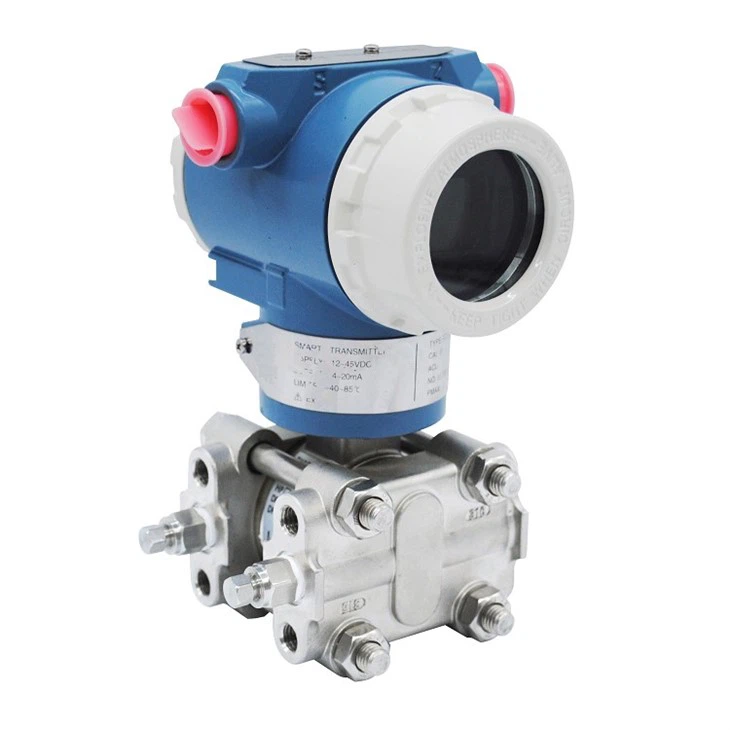
There are several factors that can contribute to hysteresis in the 3051DP Transmitter. One of the primary causes is the mechanical properties of the sensing element. The 3051DP Transmitter uses a diaphragm as its sensing element, which deforms in response to changes in differential pressure. When the pressure is applied, the diaphragm stretches or compresses, and this deformation is converted into an electrical signal.
However, the diaphragm may not return to its exact original shape when the pressure is removed. This is due to factors such as material fatigue, creep, and internal friction within the diaphragm. These mechanical effects can cause the diaphragm to have a slightly different response to the same pressure depending on whether it is increasing or decreasing, resulting in hysteresis.
Another factor that can contribute to hysteresis is the electrical components of the transmitter. The signal conditioning circuitry and the analog-to-digital converter (ADC) used in the 3051DP Transmitter can introduce small errors and non-linearities. These errors can accumulate over time and cause the output signal to deviate slightly between the increasing and decreasing pressure cycles.
Impact of Hysteresis on the Performance of the 3051DP Transmitter
Hysteresis can have a significant impact on the performance and accuracy of the 3051DP Transmitter. In applications where precise measurements are required, such as in industrial process control or laboratory experiments, even a small amount of hysteresis can lead to errors in the measured values.
For example, in a flow measurement application, the differential pressure across an orifice plate is used to calculate the flow rate. If the 3051DP Transmitter has a significant amount of hysteresis, the measured differential pressure may be different depending on whether the flow is increasing or decreasing. This can result in inaccurate flow rate calculations and lead to process inefficiencies or product quality issues.
In addition to affecting the accuracy of the measurements, hysteresis can also impact the stability and repeatability of the transmitter. If the output signal varies significantly between the increasing and decreasing pressure cycles, it can be difficult to obtain consistent and reliable measurements. This can make it challenging to control processes and ensure the quality of products.
Minimizing Hysteresis in the 3051DP Transmitter
As a supplier of the 3051DP Transmitter, we take several steps to minimize hysteresis and ensure the high performance and accuracy of our products. One of the key measures is the use of high-quality materials for the sensing element. We carefully select the diaphragm material to ensure that it has excellent mechanical properties, such as low creep and high elasticity. This helps to reduce the mechanical effects that can contribute to hysteresis.
In addition, we use advanced manufacturing techniques to ensure the precise construction of the sensing element. This includes tight control of the diaphragm thickness, shape, and surface finish. By maintaining strict manufacturing tolerances, we can minimize the variability in the diaphragm's response to pressure changes and reduce hysteresis.
We also employ sophisticated signal conditioning and calibration algorithms to compensate for any remaining hysteresis in the transmitter. These algorithms analyze the output signal and adjust it to account for the differences between the increasing and decreasing pressure cycles. This helps to improve the accuracy and repeatability of the measurements.
Applications of the 3051DP Transmitter and the Importance of Hysteresis
The 3051DP Transmitter is widely used in a variety of applications, including industrial process control, HVAC systems, and environmental monitoring. In each of these applications, the accuracy and reliability of the measurements are crucial.
In industrial process control, the 3051DP Transmitter is used to measure the differential pressure across various components, such as valves, filters, and heat exchangers. Accurate differential pressure measurements are essential for ensuring the proper operation of the process and maintaining product quality. Hysteresis can introduce errors in these measurements, which can lead to process inefficiencies, equipment damage, and safety hazards.
In HVAC systems, the 3051DP Transmitter is used to measure the pressure difference across air filters, fans, and ducts. This information is used to control the airflow and ensure the proper ventilation of the building. If the transmitter has a significant amount of hysteresis, it can lead to inaccurate airflow measurements and result in poor indoor air quality.
In environmental monitoring, the 3051DP Transmitter is used to measure the pressure difference across particulate filters and other air pollution control devices. Accurate measurements are necessary for assessing the effectiveness of these devices and ensuring compliance with environmental regulations. Hysteresis can affect the accuracy of these measurements and lead to incorrect assessments of air quality.
Conclusion
In conclusion, hysteresis is an important characteristic of the 3051DP Transmitter that can significantly impact its performance and accuracy. Understanding what hysteresis is, how it affects the transmitter, and how to minimize it is crucial for ensuring the reliable operation of the device in various applications.
As a supplier of the 3051 Transmitter, we are committed to providing high-quality products with low hysteresis and excellent performance. Our 3051 Differential Pressure Transmitter and Smart Differential Pressure Transmitter are designed to meet the demanding requirements of industrial and commercial applications.
If you are interested in learning more about our 3051DP Transmitter or have any questions about hysteresis or other technical aspects of the device, please feel free to contact us. We would be happy to discuss your specific needs and provide you with the information and support you need to make an informed decision.
References
- Emerson, "Rosemount 3051 Pressure Transmitter Product Manual"
- Honeywell, "Differential Pressure Transmitter Technical Guide"
- Siemens, "Pressure Transmitter Application Handbook"