

When it comes to the installation of a mass flowmeter, understanding the orientation requirements is crucial for achieving accurate and reliable flow measurement. As a leading supplier of mass flowmeters, we have extensive experience in providing high - quality flow measurement solutions, and we are here to share with you the key aspects of mass flowmeter installation orientation.
General Principles of Mass Flowmeter Installation Orientation
The installation orientation of a mass flowmeter can significantly affect its performance. Mass flowmeters, such as Coriolis flowmeters, operate based on the Coriolis effect. The fluid flowing through the vibrating tubes of the flowmeter causes a phase shift, which is then measured to determine the mass flow rate.
Proper orientation helps ensure that the fluid flows smoothly through the flowmeter, minimizing the impact of factors like air bubbles, sediment, and gravity on the measurement. Generally, the flowmeter should be installed in a way that allows the fluid to enter and exit the meter with minimal turbulence.
Horizontal Installation
Horizontal installation is a common choice for many mass flowmeters. When installing a mass flowmeter horizontally, it is essential to ensure that the flowmeter is level. A non - level installation can cause uneven distribution of the fluid in the measuring tubes, leading to inaccurate measurements.
For liquid applications, horizontal installation can help prevent the accumulation of air bubbles in the measuring tubes. Air bubbles can disrupt the flow pattern and cause fluctuations in the measurement. In addition, horizontal installation is often more convenient for maintenance and inspection. You can easily access the flowmeter for calibration, cleaning, or replacement of components.
Our High Accuracy Flowmeter is designed to perform well in horizontal installations. It has advanced sensors and signal processing technology that can compensate for minor variations in the flow pattern, ensuring accurate measurement even in less - than - ideal installation conditions.
Vertical Installation
Vertical installation is also a viable option, especially for applications where the fluid contains a significant amount of solid particles or where there is a risk of air entrapment. When installing a mass flowmeter vertically, the flow direction is critical.
If the fluid is flowing upwards, it can help prevent the settling of solid particles in the measuring tubes. This is particularly important for applications such as wastewater treatment or mining, where the fluid may carry a large amount of sediment. On the other hand, if the fluid is flowing downwards, it can help remove air bubbles from the measuring tubes more effectively.
Our Coriolis Flowmeter is suitable for vertical installations. Its robust design and high - precision sensors can accurately measure the mass flow rate of fluids in both upward and downward flow directions.
Special Considerations for Different Fluids
The type of fluid being measured also plays a role in determining the installation orientation. For example, when measuring drinking water, the orientation should be chosen to minimize the risk of contamination. Our Coriolis Mass Flowmeter for Drinking is designed with hygienic standards in mind. A horizontal installation may be preferred to ensure that the fluid contacts all parts of the measuring tubes evenly, reducing the potential for stagnant areas where bacteria could grow.
For high - viscosity fluids, such as oil or syrup, horizontal installation may be more suitable. High - viscosity fluids tend to flow more slowly, and a horizontal orientation can help maintain a more stable flow pattern. In addition, it can be easier to clean the measuring tubes in a horizontal installation, which is important for preventing the buildup of viscous materials.
Impact of Pipe Layout on Installation Orientation
The layout of the pipes connected to the mass flowmeter can also affect its performance. In general, the pipes upstream and downstream of the flowmeter should be straight and have a sufficient length. A straight pipe section upstream of the flowmeter helps to straighten the flow and reduce turbulence. A recommended length for the upstream straight pipe section is at least 10 times the pipe diameter, while the downstream straight pipe section should be at least 5 times the pipe diameter.

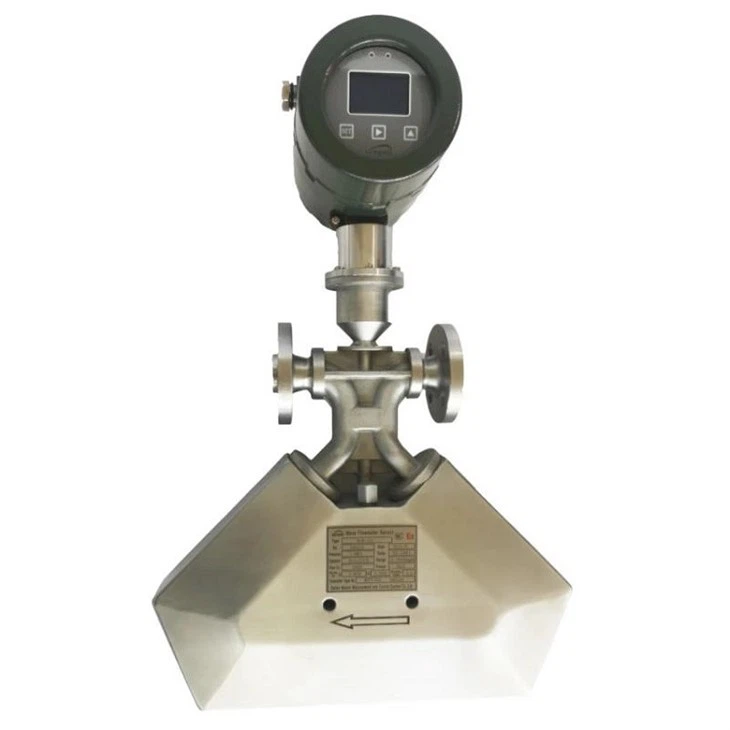
Bends, valves, or other fittings near the flowmeter can cause turbulence, which can disrupt the flow pattern and affect the measurement accuracy. If it is not possible to have a long straight pipe section, flow conditioners can be installed to help improve the flow profile.
Installation Orientation and Calibration
The installation orientation can also have an impact on the calibration of the mass flowmeter. When calibrating the flowmeter, it is important to ensure that the installation conditions are consistent with the conditions under which the calibration was performed. Any changes in the installation orientation, such as a change from horizontal to vertical, may require re - calibration of the flowmeter.
Calibration is a critical step in ensuring the accuracy of the mass flowmeter. Our company provides professional calibration services to ensure that our flowmeters are accurately calibrated according to international standards.
Conclusion
In conclusion, the installation orientation of a mass flowmeter is a critical factor that can significantly affect its performance. Whether you choose horizontal or vertical installation depends on various factors, such as the type of fluid, the presence of solid particles or air bubbles, and the pipe layout.
As a trusted mass flowmeter supplier, we offer a wide range of high - quality flowmeters that are suitable for different installation orientations. Our flowmeters are designed with advanced technology and high - quality materials to ensure accurate and reliable measurement.
If you are considering purchasing a mass flowmeter or need advice on the installation orientation, please feel free to contact us. Our team of experts is ready to assist you in selecting the right flowmeter for your application and providing professional installation and calibration services.
References
- ISO 10790:2007, “Measurement of fluid flow in closed conduits - Installation requirements for electromagnetic flowmeters with particular reference to circular cross - section conduits”.
- “Flow Measurement Handbook: Industrial Designs and Applications” by Richard W. Miller.
- Technical documents provided by the mass flowmeter manufacturers.


