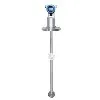
As a supplier of Oval Gear Flowmeters, I often get asked about the energy consumption of these devices. Understanding the energy consumption of an Oval Gear Flowmeter is crucial for both end - users and those involved in system design. It impacts operational costs, system efficiency, and overall sustainability.
How Oval Gear Flowmeters Work
Before delving into energy consumption, let's briefly understand how Oval Gear Flowmeters operate. Oval Gear Flowmeters are positive displacement flowmeters. They consist of two oval - shaped gears that mesh together within a chamber. As the fluid (such as diesel oil) enters the flowmeter, it causes the gears to rotate. Each rotation of the gears corresponds to a fixed volume of fluid passing through the meter. The number of gear rotations is then translated into a flow rate measurement.
Energy Consumption Factors
The energy consumption of an Oval Gear Flowmeter is influenced by several factors:
1. Fluid Viscosity
Fluid viscosity plays a significant role in the energy requirements of an Oval Gear Flowmeter. Higher - viscosity fluids, like heavy oils, require more energy to move the gears. The internal friction between the fluid and the gears, as well as the shear forces within the fluid itself, increase as viscosity rises. This means that the flowmeter has to work harder to rotate the gears, leading to higher energy consumption. For example, when measuring a high - viscosity lubricating oil compared to a low - viscosity diesel fuel, the energy needed to drive the gears of the flowmeter will be substantially greater.
2. Flow Rate
The flow rate of the fluid also affects energy consumption. At low flow rates, the gears rotate slowly, and the energy required to overcome the friction and inertia of the system is relatively low. However, as the flow rate increases, the gears rotate faster. This results in higher kinetic energy of the rotating parts and increased frictional forces between the gears and the housing. Consequently, more energy is needed to maintain the rotation of the gears and accurately measure the flow.


3. Pressure Drop
Pressure drop across the flowmeter is another important factor. When fluid passes through an Oval Gear Flowmeter, there is a certain pressure loss due to the resistance offered by the gears and the internal structure of the meter. A higher pressure drop requires more energy from the upstream pumping system to maintain the desired flow rate. In some industrial applications, where large - scale fluid transfer is involved, minimizing the pressure drop across the flowmeter can lead to significant energy savings.
Energy Consumption in Different Applications
Let's consider some common applications of Oval Gear Flowmeters and how energy consumption varies in each case.
Diesel Oil Measurement
Oval Gear Flowmeters are widely used for measuring diesel oil in various applications, such as fuel dispensing at gas stations, diesel engine fuel consumption monitoring, and industrial diesel storage and transfer systems. Diesel oil has a relatively low viscosity compared to some other petroleum products. This means that the energy consumption of an Oval Gear Flowmeter for diesel oil is generally lower than for high - viscosity fluids.
For example, in a fuel dispensing system at a gas station, the flow rate is usually moderate. The Oval Gear Flowmeter can accurately measure the amount of diesel being dispensed with relatively low energy consumption. The low - viscosity nature of diesel allows the gears to rotate smoothly with minimal resistance. You can find more information about Oval Gear Flowmeter for Diesel Oil and Oval Gear Flow Meter For Diesel on our website.
High - Viscosity Fluid Measurement
In applications where high - viscosity fluids are being measured, such as in the chemical or food industries, the energy consumption of Oval Gear Flowmeters is much higher. For instance, when measuring thick syrups or heavy lubricants, the flowmeter has to overcome the high internal resistance of the fluid. This often requires additional power to ensure accurate measurement. In some cases, heating the fluid may be necessary to reduce its viscosity and lower the energy consumption of the flowmeter.
Measuring and Reducing Energy Consumption
Measuring the energy consumption of an Oval Gear Flowmeter can be challenging. It typically involves monitoring the power input to the associated pumping system and factoring in the pressure drop and flow rate across the flowmeter. Some advanced flowmeters come with built - in sensors that can provide data on power consumption and efficiency.
To reduce energy consumption, several strategies can be employed:
1. Proper Sizing
Selecting the right - sized Oval Gear Flowmeter for the application is crucial. An oversized flowmeter may lead to inefficient operation and higher energy consumption, as the gears may not be operating at their optimal speed. On the other hand, an undersized flowmeter can cause excessive pressure drop and increased energy requirements.
2. Regular Maintenance
Regular maintenance of the flowmeter is essential to ensure smooth operation. This includes cleaning the gears, checking for wear and tear, and lubricating the moving parts if necessary. A well - maintained flowmeter will have lower frictional losses, resulting in reduced energy consumption.
3. System Optimization
Optimizing the overall fluid - handling system can also lead to energy savings. This may involve reducing the length of the piping, minimizing bends and restrictions, and ensuring proper alignment of the flowmeter in the system. By reducing the overall resistance in the system, the energy required to pump the fluid through the flowmeter can be decreased.
Conclusion
The energy consumption of an Oval Gear Flowmeter is influenced by factors such as fluid viscosity, flow rate, and pressure drop. Understanding these factors is essential for end - users and system designers to make informed decisions about flowmeter selection and system operation. By carefully considering these factors and implementing strategies to reduce energy consumption, significant cost savings and improved system efficiency can be achieved.
If you are interested in our Oval Gear Flowmeters and want to discuss your specific application requirements, we invite you to contact us for a detailed procurement discussion. Our team of experts will be happy to assist you in finding the most suitable flowmeter for your needs.
References
- "Flow Measurement Handbook: Industrial Designs and Applications" by Ralph W. Miller
- "Positive Displacement Flowmeters: Principles and Applications" by various authors in the field of flow measurement.