Hey there! As a supplier of Turbine Flowmeters, I've seen firsthand how crucial repeatability is in these devices. Repeatability refers to the ability of a flowmeter to provide the same measurement results under the same operating conditions over time. In this blog, I'll dive into the factors that can affect the repeatability of a Turbine Flowmeter.
Fluid Properties
One of the most significant factors influencing the repeatability of a Turbine Flowmeter is the properties of the fluid being measured. Different fluids have varying viscosities, densities, and temperatures, all of which can impact the performance of the flowmeter.
Viscosity
Viscosity is a measure of a fluid's resistance to flow. High - viscosity fluids, like heavy oils, can cause more friction on the turbine blades of the flowmeter. This increased friction can slow down the rotation of the turbine, leading to inaccurate flow measurements. On the other hand, low - viscosity fluids, such as water, flow more easily and cause less resistance to the turbine. If the viscosity of the fluid changes during the measurement process, it can disrupt the repeatability of the flowmeter. For example, if a process starts with a low - viscosity fluid and then switches to a high - viscosity one without proper calibration, the flowmeter readings will be inconsistent.
Density
The density of the fluid also plays a role. A denser fluid exerts more force on the turbine blades as it flows through the meter. If the density of the fluid varies, the force acting on the turbine will change, which can affect the rotation speed and ultimately the flow measurement. For instance, in a chemical process where the composition of the fluid changes, leading to a density variation, the Turbine Flowmeter may not provide repeatable results.
Temperature
Temperature can have a dual effect on fluid properties and the flowmeter itself. As the temperature of a fluid increases, its viscosity generally decreases, and its density may also change. These changes in fluid properties can impact the turbine's rotation. Additionally, temperature can affect the mechanical components of the flowmeter. For example, thermal expansion or contraction of the turbine blades or the housing can alter the clearances within the flowmeter, leading to inconsistent readings.
Mechanical Wear and Tear
Over time, the mechanical components of a Turbine Flowmeter can experience wear and tear, which can significantly affect its repeatability.
Turbine Blades
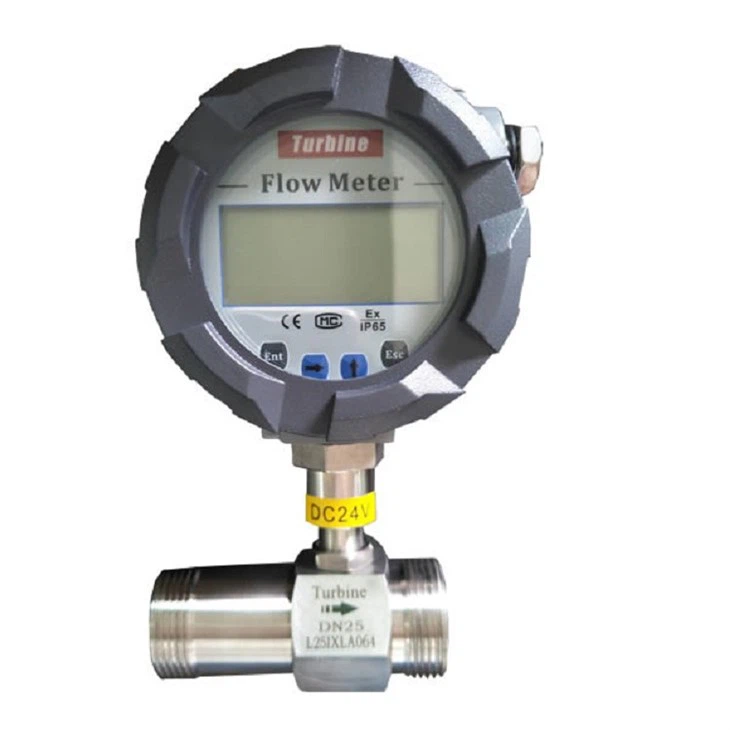
The turbine blades are the heart of the flowmeter. They are constantly in contact with the flowing fluid, and this continuous interaction can cause erosion or damage to the blades. If the blades become worn or damaged, their shape and surface characteristics change. This alteration can affect the way the fluid interacts with the blades, leading to inconsistent rotation speeds and inaccurate flow measurements. For example, a small chip on a blade can disrupt the smooth flow of the fluid around it, causing fluctuations in the turbine's rotation.

Bearings
The bearings that support the turbine shaft are also prone to wear. As the turbine rotates, the bearings experience friction, which can cause them to degrade over time. Worn bearings can introduce additional resistance to the rotation of the turbine, leading to changes in the rotation speed and reduced repeatability. Moreover, if the bearings become misaligned due to wear, it can further disrupt the smooth operation of the turbine.
Installation and Mounting
Proper installation and mounting of a Turbine Flowmeter are essential for ensuring its repeatability.
Pipe Conditions
The condition of the pipes where the flowmeter is installed can have a significant impact. If the pipes are not straight upstream and downstream of the flowmeter, it can cause turbulent flow. Turbulent flow can disrupt the uniform flow pattern that the turbine requires for accurate measurements. For example, bends, elbows, or valves close to the flowmeter can create eddies and swirls in the fluid, which can make the turbine rotate erratically. It is recommended to have a certain length of straight pipe upstream and downstream of the flowmeter to allow the fluid to develop a laminar flow profile.
Mounting Orientation
The orientation of the flowmeter during installation is also crucial. Turbine Flowmeters are designed to operate in a specific orientation. If they are installed in the wrong orientation, the fluid may not flow through the meter as intended. For instance, if a flowmeter that is designed for horizontal installation is installed vertically, the gravitational force acting on the turbine and the fluid flow pattern can change, leading to inconsistent readings.
Electrical and Electronic Components
In modern Turbine Flowmeters, electrical and electronic components are used to convert the mechanical rotation of the turbine into an electrical signal for measurement and display.
Sensor Malfunction
The sensor that detects the rotation of the turbine is a critical component. If the sensor malfunctions, it can provide inaccurate signals. For example, a dirty or damaged sensor may not be able to detect the turbine's rotation correctly, leading to inconsistent flow measurements. Additionally, electromagnetic interference can also affect the sensor's performance. If there are other electrical devices nearby that generate strong electromagnetic fields, they can disrupt the sensor's operation and cause the flowmeter to give non - repeatable results.
Signal Processing
The signal processing unit that converts the sensor's signal into a flow rate reading also needs to be reliable. If there are issues with the signal processing algorithms or if the unit has a software glitch, it can lead to inconsistent flow rate calculations. For example, a problem with the calibration settings in the signal processing unit can cause the flowmeter to display incorrect readings, even if the turbine is rotating correctly.
Calibration and Maintenance
Regular calibration and maintenance are vital for the repeatability of a Turbine Flowmeter.
Calibration
Calibration ensures that the flowmeter is providing accurate and repeatable measurements. If a flowmeter is not calibrated correctly or if the calibration is not updated regularly, its readings will be unreliable. For example, as the Turbine Flowmeter experiences wear and tear or is exposed to different fluid conditions, its performance can change. A calibration process involves comparing the flowmeter's readings with a known standard flow rate. If the calibration is not done at appropriate intervals, the flowmeter may deviate from its accurate measurement range, leading to non - repeatable results.
Maintenance
Proper maintenance can prevent many of the issues mentioned above. Regular inspection of the mechanical components, such as the turbine blades and bearings, can help detect wear and tear early. Cleaning the flowmeter to remove any debris or deposits can also improve its performance. Additionally, checking the electrical and electronic components for proper functioning and replacing any faulty parts can ensure the repeatability of the flowmeter.
At our company, we offer a range of Turbine Flowmeters, including Sanitary Turbine Flowmeter, Tri - clamp Turbine Flowmeter, and Explore Proof Turbine Flowmeter. These flowmeters are designed to minimize the impact of the factors affecting repeatability. However, it's important to consider these factors during installation, operation, and maintenance to ensure the best performance.
If you're in the market for a reliable Turbine Flowmeter or need help with improving the repeatability of your existing flow measurement system, we're here to assist you. Contact us for more information and to discuss your specific requirements. We can provide you with expert advice and solutions tailored to your needs.
References
- "Flow Measurement Handbook: Industrial Designs and Applications" by Richard W. Miller
- "Principles of Flow Measurement" by Richard C. Baker