Yo! As a supplier of Ultrasonic Level Meters, I often get asked about the differences between an Ultrasonic Level Meter and a float level switch. So, I thought I'd break it down for you in this blog post.
Let's start with the basics. A float level switch is a pretty simple device. It consists of a float that rises and falls with the liquid level. Inside the float, there's a switch that gets triggered when the float reaches a certain position. This switch can then be used to turn on or off a pump, activate an alarm, or perform other control functions.
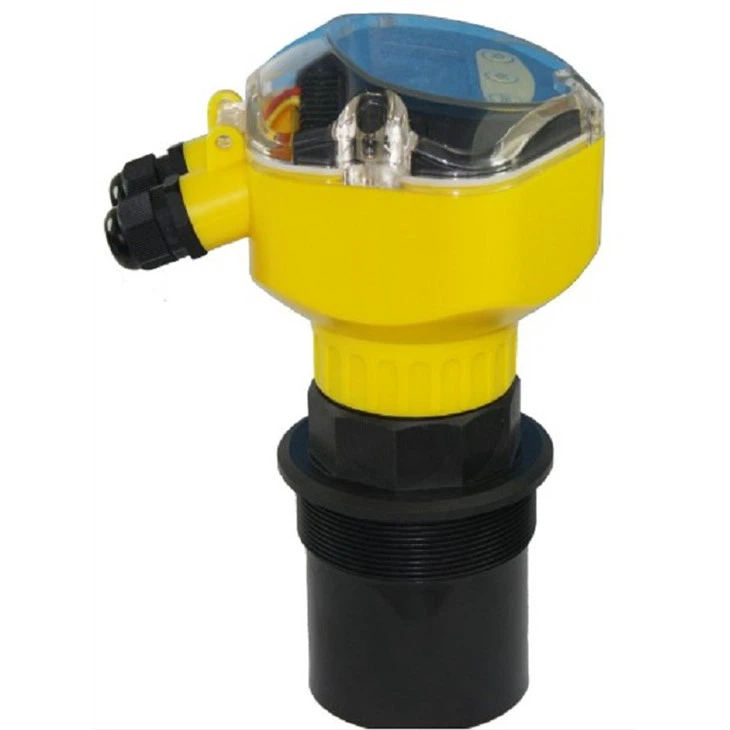
On the other hand, an Ultrasonic Level Meter is a more advanced and high - tech solution. It uses ultrasonic waves to measure the distance between the sensor and the liquid surface. The meter emits ultrasonic pulses, and when these pulses hit the liquid surface, they bounce back to the sensor. By measuring the time it takes for the pulses to return, the meter can calculate the distance and thus determine the liquid level.

Accuracy
One of the major differences between the two is accuracy. Float level switches are relatively less accurate. They work on a binary principle, meaning they can only tell you if the liquid level is above or below a certain point. They're great for simple on - off control applications where you just need to know when the tank is full or empty. For example, in a small household water tank, a float level switch can be used to turn off the water pump when the tank is full.
Ultrasonic level meters, however, offer much higher accuracy. They can provide continuous level measurements with a high degree of precision. This is crucial in industrial applications where even small variations in liquid level can have a significant impact on the process. For instance, in a chemical processing plant, accurate level measurement is essential to ensure the correct mixing of chemicals and prevent over - filling or under - filling of tanks.
Installation and Maintenance
Installation of a float level switch is usually straightforward. You just need to mount it in the tank at the desired level. It doesn't require any complex calibration or power supply in most cases. However, float level switches can be prone to mechanical failures. The float can get stuck or damaged over time, especially in harsh environments with debris or high - viscosity liquids. This can lead to inaccurate readings or even complete failure of the switch.
Installing an ultrasonic level meter is a bit more involved. You need to make sure the sensor is properly aligned and mounted at the right height above the liquid surface. You also need to connect it to a power source and a control system. But once it's installed, ultrasonic level meters are generally more reliable. They have no moving parts, which means there's less wear and tear. Maintenance mainly involves keeping the sensor clean and checking the calibration periodically.
Application Range
Float level switches are best suited for simple applications where the liquid is relatively clean and the level control requirements are basic. They're commonly used in domestic water tanks, small oil storage tanks, and simple sump pumps.
Ultrasonic level meters, on the other hand, have a much wider application range. They can be used in various industries such as oil and gas, chemical, food and beverage, and wastewater treatment. They can measure the level of liquids, slurries, and even some solids. For example, in a wastewater treatment plant, an ultrasonic level meter can be used to monitor the level of sludge in a settling tank.
Cost
Cost is always a factor when choosing a level measurement device. Float level switches are generally cheaper. They have a lower upfront cost and are easy to install, so you don't have to spend a lot on installation and setup. This makes them a popular choice for small - scale applications with a tight budget.
Ultrasonic level meters are more expensive. The initial purchase price is higher, and the installation and setup can also add to the cost. However, when you consider the long - term benefits such as higher accuracy, reliability, and wider application range, the investment in an ultrasonic level meter can pay off, especially in large - scale industrial applications.
Environmental Considerations
Float level switches can be affected by the properties of the liquid. For example, if the liquid is highly viscous, the float may not move freely, leading to inaccurate readings. Also, if the liquid contains a lot of debris, the float can get clogged.
Ultrasonic level meters are more versatile in different environments. They can operate in harsh conditions, including high - temperature and high - pressure environments. They're also not affected by the chemical properties of the liquid, as long as the ultrasonic waves can travel through the medium.
In conclusion, both float level switches and ultrasonic level meters have their own pros and cons. If you have a simple application with basic level control requirements and a limited budget, a float level switch might be a good choice. But if you need high - accuracy continuous level measurements, wide application range, and long - term reliability, then an Ultrasonic Level Meter is the way to go.
If you're in the market for an Ultrasonic Level Meter or have any questions about level measurement, feel free to reach out. We're here to help you choose the right solution for your specific needs. Let's start a conversation about your project and see how our Ultrasonic Level Meters can make a difference.
References
- "Process Instrumentation and Control Handbook" by Bela G. Liptak
- "Measurement and Instrumentation Principles" by Alan S. Morris