In the realm of industrial instrumentation, gas flowmeters play a crucial role in accurately measuring the flow rate of gases in various applications. Among the different types of gas flowmeters available in the market, slight gas flowmeters and regular gas flowmeters stand out, each with its own set of characteristics, advantages, and suitable use - cases. As a supplier of Slight Gas Flowmeter, I am well - versed in the nuances between these two types of flowmeters, and in this blog, I will delve into the key differences.
1. Measurement Range
One of the most significant differences between a slight gas flowmeter and a regular gas flowmeter lies in their measurement ranges. A slight gas flowmeter is specifically designed to measure very low gas flow rates. These flowmeters can accurately detect and quantify gas flows in the range of a few milliliters per minute to a few liters per minute. This makes them ideal for applications where only small amounts of gas are involved, such as in laboratory settings for gas analysis, medical equipment for precise gas delivery, and certain types of semiconductor manufacturing processes.
On the other hand, regular gas flowmeters are built to handle a much wider range of flow rates. They can measure gas flows from relatively low rates up to very high rates, sometimes reaching hundreds or even thousands of cubic meters per hour. Regular flowmeters are commonly used in large - scale industrial applications, such as natural gas distribution networks, chemical processing plants, and power generation facilities, where large volumes of gas need to be monitored and controlled.

2. Accuracy and Sensitivity
Accuracy is a critical factor in gas flow measurement, and both slight and regular gas flowmeters are engineered to provide reliable readings. However, slight gas flowmeters tend to have a higher level of sensitivity and accuracy when it comes to measuring low flow rates. This is because they are optimized to detect the subtle changes in gas flow at these low levels. For example, in a research laboratory where precise gas dosing is required for chemical reactions, a slight gas flowmeter can provide readings with a high degree of accuracy, often within ± 1% or even better.
Regular gas flowmeters, while also accurate, may not have the same level of sensitivity for low flow rates. Their design is more focused on providing accurate measurements across a broad range of flow rates. In high - flow applications, regular flowmeters can achieve an accuracy of around ± 2 - 3%. When the flow rate is extremely low, the relative error of a regular flowmeter may increase, making it less suitable for applications that demand high precision at low flows.
3. Construction and Design
The construction and design of slight and regular gas flowmeters also differ significantly. Slight gas flowmeters are typically more compact and lightweight. Their small size is a necessity for applications where space is limited, such as in portable gas detection devices or miniaturized laboratory equipment. The internal components of a slight gas flowmeter are designed to minimize the pressure drop across the flowmeter, as even a small pressure drop can have a significant impact on the low - flow gas systems.
Regular gas flowmeters, in contrast, are often larger and more robust. They need to be able to withstand the high pressures and flow rates associated with large - scale industrial applications. The construction materials of regular flowmeters are chosen for their durability and resistance to corrosion, as they may be exposed to harsh chemicals and environmental conditions. For instance, in a natural gas pipeline, the flowmeter needs to be made of materials that can withstand the high - pressure gas and potential contaminants in the gas stream.
4. Operating Principles
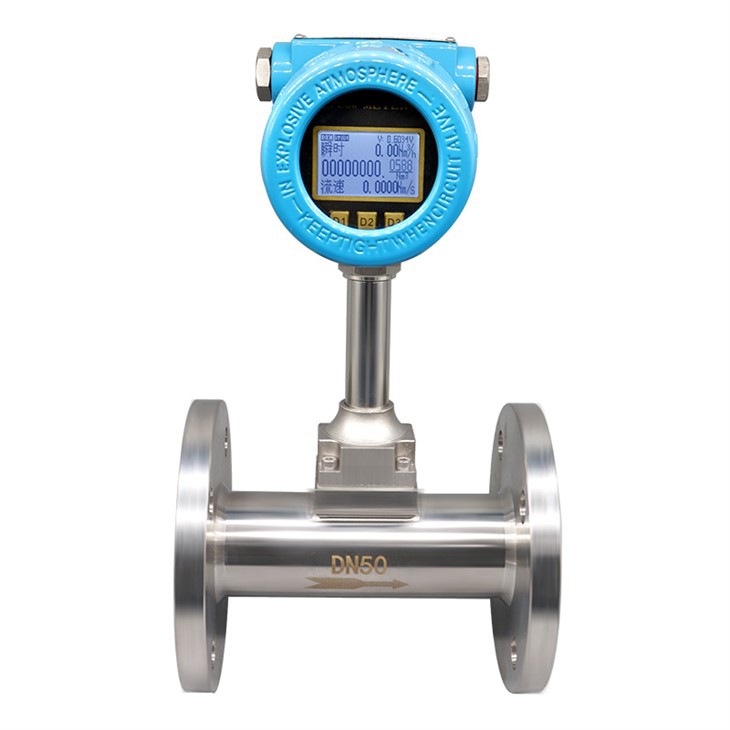
Different operating principles are employed by slight and regular gas flowmeters to measure gas flow. Many slight gas flowmeters utilize thermal mass flow measurement principles. In a thermal mass gas flowmeter, the heat transfer from a heated sensor to the flowing gas is measured. Since the rate of heat transfer is directly related to the mass flow rate of the gas, the flow rate can be accurately determined. This principle is well - suited for measuring low - flow gases because it is highly sensitive to small changes in gas flow. For more information on this type of flowmeter, you can refer to our Thermal Mass Gas Flowmeter For Biogas.
Regular gas flowmeters can use a variety of operating principles, depending on the specific application. Some common principles include differential pressure, turbine, and ultrasonic. Differential pressure flowmeters measure the pressure difference across an obstruction in the gas flow path to calculate the flow rate. Turbine flowmeters use a rotating turbine that spins at a speed proportional to the gas flow rate. Ultrasonic flowmeters measure the time difference of ultrasonic signals traveling upstream and downstream in the gas flow. These principles are more suitable for measuring a wide range of flow rates and are commonly used in large - scale industrial applications.
5. Cost and Maintenance
Cost is an important consideration for any instrumentation purchase. Slight gas flowmeters, due to their specialized design and high - precision components, can be relatively expensive. However, the cost is often justified by their high accuracy and suitability for specific low - flow applications. The maintenance of slight gas flowmeters is generally less complex, as they have fewer moving parts and are less likely to be exposed to harsh operating conditions. Regular calibration is usually the main maintenance requirement for slight gas flowmeters.
Regular gas flowmeters can have a wide range of costs, depending on their size, operating principle, and the level of accuracy required. In general, large - scale industrial flowmeters can be quite expensive due to their robust construction and advanced technology. Maintenance of regular gas flowmeters can be more involved, especially for those with moving parts like turbine flowmeters. They may require periodic cleaning, lubrication, and replacement of worn - out components.
Applications
The differences in the characteristics of slight and regular gas flowmeters lead to distinct application areas. Slight gas flowmeters are widely used in:
- Laboratory Research: For gas chromatography, where precise gas flow control is essential for accurate separation and analysis of chemical compounds.
- Medical Devices: In anesthesia machines, respirators, and oxygen concentrators to ensure the correct delivery of gases to patients.
- Semiconductor Manufacturing: To control the flow of process gases during the fabrication of microchips and other semiconductor components.
Regular gas flowmeters are commonly used in:
- Energy Sector: In natural gas pipelines, refineries, and power plants to measure and monitor the flow of gas for billing, process control, and safety purposes.
- Chemical Industry: To control the flow of reactant gases in chemical reactors and to ensure the proper mixing of gases in various chemical processes.
- Environmental Monitoring: To measure the emission of gases from industrial sources and to monitor air quality.
Conclusion
In conclusion, the differences between a slight gas flowmeter and a regular gas flowmeter are significant and are determined by their measurement ranges, accuracy, construction, operating principles, cost, and maintenance requirements. Understanding these differences is crucial for selecting the right flowmeter for a specific application.
If you are in need of a high - precision gas flow measurement solution for low - flow applications, our Slight Gas Flowmeter is an excellent choice. We also offer Thermal Gas Mass Flowmeter with Digit Display for more advanced measurement needs. Whether you are in a laboratory, medical, or industrial setting, we can provide you with the right gas flowmeter to meet your requirements. If you have any questions or would like to discuss your specific needs, please feel free to contact us for a detailed consultation and procurement discussion.
References
- "Flow Measurement Handbook: Industrial Designs and Applications" by Richard W. Miller.
- "Gas Flow Measurement: Principles and Applications" by Ralph A. Dick.