

What is the accuracy class of a Turbine Flowmeter?
As a dedicated supplier of turbine flowmeters, I often encounter inquiries regarding the accuracy class of these essential measuring devices. Turbine flowmeters are widely used in various industries for their reliability, durability, and ability to provide accurate flow measurements. In this blog post, I will delve into the concept of accuracy class, its significance, and how it pertains to turbine flowmeters.
Understanding Accuracy Class
Accuracy class is a standardized way to express the maximum allowable error of a measuring instrument under specified operating conditions. It provides a clear indication of the instrument's precision and reliability, allowing users to select the most suitable device for their applications. In the case of turbine flowmeters, the accuracy class is typically defined as a percentage of the measured value or a fixed value within a specified flow range.
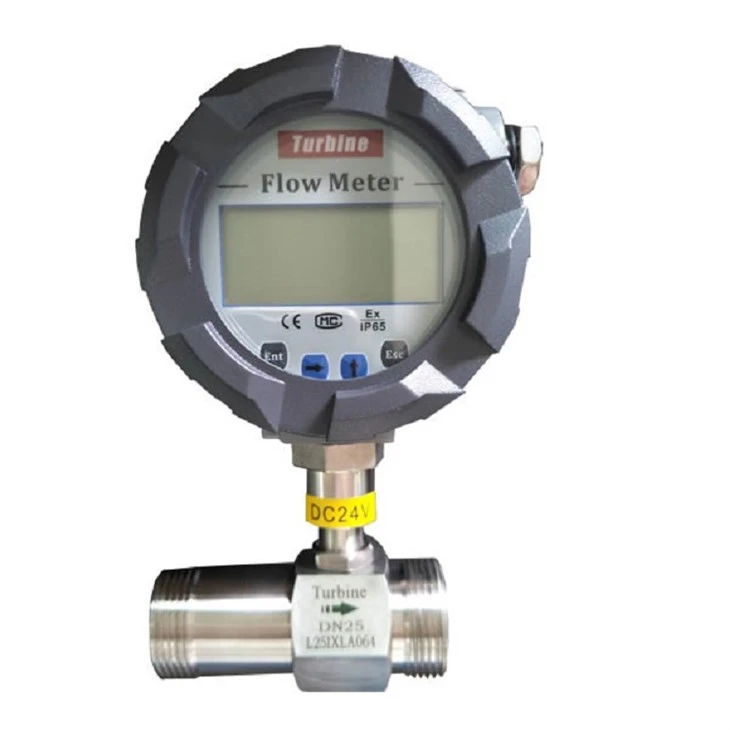

For example, a turbine flowmeter with an accuracy class of ±0.5% means that the measured value can deviate by a maximum of 0.5% from the true value. This level of accuracy is suitable for many industrial applications where precise flow measurements are required. However, in some cases, higher accuracy classes may be necessary, such as in custody transfer applications where financial transactions are based on the measured flow.
Factors Affecting Accuracy
Several factors can affect the accuracy of a turbine flowmeter, including:
- Flow Profile: The flow profile of the fluid passing through the flowmeter can have a significant impact on its accuracy. A uniform and fully developed flow profile is ideal for accurate measurements. Any disturbances in the flow, such as bends, valves, or fittings upstream of the flowmeter, can cause uneven flow distribution and affect the accuracy of the measurement.
- Fluid Properties: The properties of the fluid being measured, such as viscosity, density, and temperature, can also affect the accuracy of the turbine flowmeter. Changes in these properties can alter the performance of the turbine rotor and cause errors in the measurement. For example, a high-viscosity fluid may cause the turbine rotor to rotate more slowly, resulting in a lower flow rate reading.
- Installation Conditions: Proper installation of the turbine flowmeter is crucial for accurate measurements. The flowmeter should be installed in a straight section of pipe with sufficient upstream and downstream straight pipe lengths to ensure a uniform flow profile. Additionally, the flowmeter should be installed in a location where it is not subject to vibration, temperature variations, or other external factors that could affect its performance.
- Calibration: Regular calibration of the turbine flowmeter is essential to maintain its accuracy. Calibration involves comparing the output of the flowmeter with a known standard and adjusting the flowmeter's settings to ensure that it provides accurate measurements. The frequency of calibration depends on the application and the manufacturer's recommendations.
Types of Accuracy Classes
Turbine flowmeters are available in a range of accuracy classes to meet the needs of different applications. The most common accuracy classes for turbine flowmeters are:
- ±0.5%: This is a standard accuracy class for many industrial applications. Turbine flowmeters with this accuracy class are suitable for general-purpose flow measurements where a moderate level of accuracy is required.
- ±0.2%: This is a higher accuracy class that is typically used in applications where more precise flow measurements are required, such as in chemical processing, pharmaceutical manufacturing, and food and beverage production.
- ±0.1%: This is the highest accuracy class available for turbine flowmeters. Turbine flowmeters with this accuracy class are typically used in custody transfer applications where financial transactions are based on the measured flow.
Selecting the Right Accuracy Class
When selecting a turbine flowmeter, it is important to consider the accuracy requirements of your application. The accuracy class of the flowmeter should be selected based on the level of precision required for your specific application. In general, it is recommended to select a flowmeter with an accuracy class that is slightly higher than the minimum requirements of your application to ensure reliable and accurate measurements.
In addition to accuracy, other factors to consider when selecting a turbine flowmeter include:
- Flow Range: The flow range of the flowmeter should be selected based on the expected flow rate of the fluid being measured. The flowmeter should be able to measure the flow rate accurately over the entire range of operation.
- Fluid Compatibility: The flowmeter should be compatible with the fluid being measured. This includes considering the chemical composition, temperature, and pressure of the fluid.
- Output Signal: The flowmeter should provide an output signal that is compatible with the control system or data acquisition system being used. Common output signals include analog signals (such as 4-20 mA) and digital signals (such as pulse output).
- Cost: The cost of the turbine flowmeter is also an important consideration. While higher accuracy classes may provide more precise measurements, they also tend to be more expensive. It is important to balance the accuracy requirements of your application with the cost of the flowmeter.
Our High-Quality Turbine Flowmeters
As a leading supplier of turbine flowmeters, we offer a wide range of high-quality flowmeters with different accuracy classes to meet the needs of various applications. Our flowmeters are designed and manufactured to the highest standards of quality and reliability, ensuring accurate and consistent flow measurements.
Some of our popular turbine flowmeters include:
- High Accuracy Gas Turbine Flowmeter: This flowmeter is designed for accurate measurement of gas flow in various industrial applications. It features a high accuracy class of ±0.5% and a wide flow range, making it suitable for a variety of gas flow measurement applications.
- Milk Turbine Flowmeter: This flowmeter is specifically designed for the measurement of milk and other dairy products. It is made of food-grade materials and features a hygienic design to ensure compliance with strict food safety standards. The flowmeter has an accuracy class of ±0.5% and is suitable for use in dairy processing plants, milk bottling plants, and other food and beverage applications.
- Explore Proof Turbine Flowmeter: This flowmeter is designed for use in hazardous environments where explosive gases or vapors may be present. It is certified to meet the requirements of various explosion-proof standards and features a robust construction to ensure reliable operation in harsh conditions. The flowmeter has an accuracy class of ±0.5% and is suitable for use in oil and gas, chemical, and other industries.
Contact Us for Your Turbine Flowmeter Needs
If you are in need of a high-quality turbine flowmeter for your application, we would be happy to assist you. Our team of experienced engineers and sales representatives can help you select the right flowmeter based on your specific requirements and provide you with detailed technical information and support.
Contact us today to discuss your turbine flowmeter needs and learn more about our products and services. We look forward to working with you to provide you with the best flow measurement solutions for your application.
References
- ISO 9951:2019, “Measurement of fluid flow in closed conduits - Turbine meters”
- API MPMS Chapter 5.6, “Turbine Meters”
- AGA Report No. 7, “Measurement of Gas by Turbine Meters”


