

As a supplier of Slight Gas Flowmeters, I've had the privilege of witnessing firsthand the critical role these devices play in various industries. The accuracy of a slight gas flowmeter is paramount, as it directly impacts the efficiency, safety, and cost - effectiveness of numerous processes. In this blog, I'll delve into the key factors that can affect the accuracy of a slight gas flowmeter.
Gas Composition
The composition of the gas being measured is one of the most significant factors influencing the accuracy of a slight gas flowmeter. Different gases have distinct physical properties such as density, viscosity, and heat capacity. For instance, a flowmeter calibrated for nitrogen may yield inaccurate readings when measuring a gas mixture containing hydrogen, which has a much lower density.
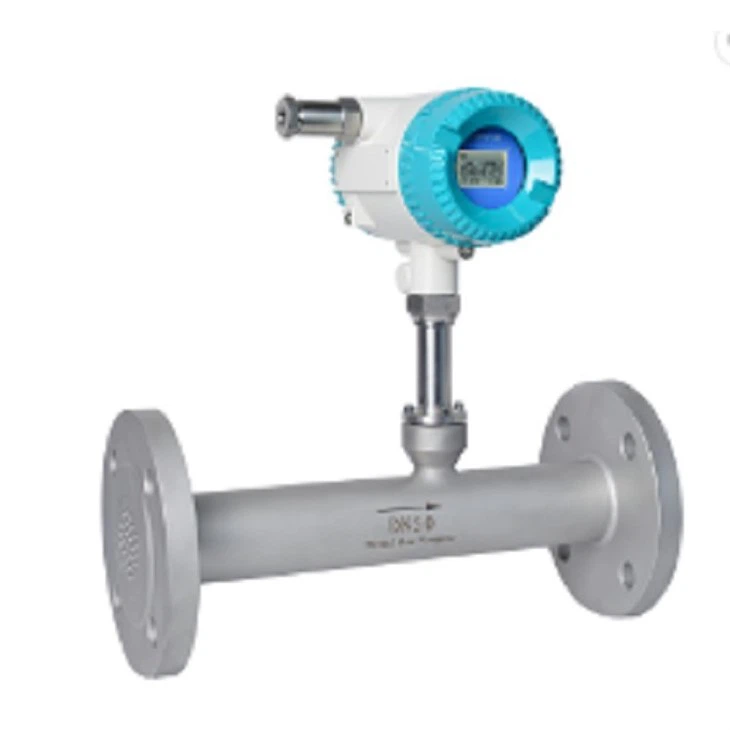
The thermal conductivity of the gas is also crucial, especially for thermal - based flowmeters. Thermal gas mass flowmeters, like our Thermal Gas Mass Flowmeter with Digit Display, rely on the transfer of heat between the sensor and the gas. If the gas composition changes, the heat transfer characteristics will vary, leading to measurement errors.
In applications where the gas composition is likely to change, such as in biogas production, it's essential to use a flowmeter that can adapt to these variations. Our Thermal Mass Gas Flowmeter For Biogas is specifically designed to handle the complex and variable gas mixtures found in biogas, ensuring accurate measurements even as the composition fluctuates.
Flow Profile
The flow profile of the gas within the pipeline can have a substantial impact on the accuracy of a slight gas flowmeter. An ideal flow profile is fully developed and symmetrical, with a uniform velocity distribution across the pipe cross - section. However, in real - world applications, flow profiles are often disrupted by factors such as pipe fittings, valves, bends, and changes in pipe diameter.
When the flow is turbulent or has a non - uniform velocity distribution, the flowmeter may not accurately measure the average flow rate. For example, if the flowmeter is installed too close to a bend in the pipe, the gas velocity near the outer wall of the bend will be higher than near the inner wall. This can cause the flowmeter to overestimate or underestimate the actual flow rate.
To minimize the effects of flow profile on measurement accuracy, it's recommended to install the flowmeter in a straight section of the pipe with sufficient upstream and downstream straight runs. The exact length of these straight runs depends on the type of flowmeter and the severity of the flow disturbances. In general, a longer straight run will provide a more stable and uniform flow profile, improving the accuracy of the measurement.
Temperature and Pressure
Temperature and pressure are two fundamental physical parameters that can significantly affect the accuracy of a slight gas flowmeter. Gas volume is directly proportional to temperature and inversely proportional to pressure, according to the ideal gas law (PV = nRT). Therefore, any changes in temperature or pressure will cause the gas volume to change, which can lead to measurement errors if not properly accounted for.
Most flowmeters are calibrated at a specific temperature and pressure. If the operating conditions deviate from these calibration values, the measured flow rate will need to be corrected. For example, if the gas temperature increases, the gas will expand, and the volume flow rate will appear to be higher than the actual mass flow rate. To obtain an accurate measurement of the mass flow rate, the flowmeter must either be temperature - and pressure - compensated or the measured values must be corrected using appropriate equations.
Our Slight Gas Flowmeter is equipped with advanced sensors and algorithms that can automatically compensate for temperature and pressure variations. This ensures that the flowmeter provides accurate mass flow measurements regardless of the operating conditions.
Sensor Calibration and Drift
The calibration of the flowmeter sensor is a critical step in ensuring accurate measurements. During the calibration process, the flowmeter is exposed to a known flow rate of a reference gas, and the sensor output is adjusted to match the actual flow rate. However, over time, the sensor may experience drift due to factors such as sensor aging, contamination, or mechanical stress.
Sensor drift can cause the flowmeter to provide inaccurate readings, even if the operating conditions remain constant. To maintain measurement accuracy, it's essential to perform regular calibration checks and recalibrate the flowmeter as needed. The frequency of calibration depends on the type of flowmeter, the application, and the environmental conditions.
In addition to regular calibration, proper maintenance of the flowmeter is also crucial to prevent sensor drift. This includes keeping the sensor clean, protecting it from mechanical damage, and ensuring that the electrical connections are secure.
Installation and Mounting
The way the flowmeter is installed and mounted can also affect its accuracy. Incorrect installation can lead to issues such as improper alignment, vibration, and leakage, all of which can compromise the measurement accuracy.
When installing the flowmeter, it's important to follow the manufacturer's instructions carefully. This includes ensuring that the flowmeter is installed in the correct orientation, with the flow direction matching the arrow on the flowmeter body. The flowmeter should also be securely mounted to prevent vibration, which can cause the sensor to produce erratic readings.

Leakage around the flowmeter can also affect the measurement accuracy. Any gas leakage upstream or downstream of the flowmeter can cause a change in the gas flow rate and pressure, leading to inaccurate measurements. Therefore, it's essential to use proper gaskets and seals during installation to prevent leakage.
Environmental Factors
Environmental factors such as humidity, dust, and electromagnetic interference can also have an impact on the accuracy of a slight gas flowmeter. High humidity can cause corrosion of the sensor and electrical components, leading to sensor drift and measurement errors. Dust and particulate matter in the gas can accumulate on the sensor surface, affecting the heat transfer or flow characteristics and reducing the measurement accuracy.
Electromagnetic interference (EMI) from nearby electrical equipment can also disrupt the normal operation of the flowmeter. EMI can cause noise in the sensor signal, leading to inaccurate readings. To protect the flowmeter from environmental factors, it's recommended to use a flowmeter with a suitable enclosure and to install it in a clean, dry, and shielded environment.
In conclusion, the accuracy of a slight gas flowmeter is influenced by a variety of factors, including gas composition, flow profile, temperature and pressure, sensor calibration and drift, installation and mounting, and environmental factors. As a supplier of Slight Gas Flowmeter, we understand the importance of these factors and have designed our flowmeters to minimize their effects and provide accurate and reliable measurements.
If you're in need of a high - accuracy slight gas flowmeter for your application, we'd be more than happy to discuss your specific requirements and provide you with the best solution. Whether you're dealing with complex gas mixtures, challenging flow conditions, or strict accuracy requirements, our team of experts can help you select the right flowmeter and ensure its proper installation and operation. Contact us today to start the procurement discussion and take your gas flow measurement to the next level.
References
- Holman, J. P. (2009). Thermodynamics. McGraw - Hill.
- Miller, R. W. (1996). Flow measurement engineering handbook. McGraw - Hill.
- Spitzer, D. W. (2003). Flow measurement: practical guides for measurement and control. ISA - The Instrumentation, Systems, and Automation Society.


