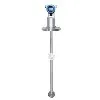
Hey there! As a supplier of mass flowmeters, I've seen firsthand how crucial these devices are in various industries. But with great power comes great responsibility, right? That's why today, I want to chat about the safety considerations when using a mass flowmeter.
1. Installation Safety
First things first, getting the installation right is super important. You don't want to mess this up because a poorly installed flowmeter can lead to all sorts of problems.
Correct Placement
When you're putting in a mass flowmeter, you need to make sure it's in the right spot. For instance, it should be installed away from sources of vibration. Vibration can mess with the accuracy of the flowmeter and even cause damage over time. Think about it like trying to measure something precisely while your hand is shaking – it's just not going to work well.
Also, avoid areas with extreme temperatures. Most mass flowmeters are designed to work within a certain temperature range. If it's too hot or too cold, the materials inside the flowmeter can expand or contract, affecting its performance. For example, if you're using a Coriolis Mass Flowmeter for Drinking in a beverage production plant, you need to keep it in an environment where the temperature is stable.
Proper Mounting
Proper mounting is another key aspect. The flowmeter should be mounted securely to prevent any movement during operation. Loose mounting can cause inaccurate readings and might even lead to the flowmeter falling off, which could be dangerous. Make sure to follow the manufacturer's instructions for mounting. Some flowmeters need to be mounted horizontally, while others can be mounted vertically. You wouldn't want to mount a vertical - only flowmeter horizontally and end up with wrong measurements, would you?
2. Electrical Safety
Most mass flowmeters these days are electronic devices, which means electrical safety is a big deal.
Grounding
Grounding the flowmeter is essential. It helps protect against electrical shocks and reduces the risk of electrical interference. A good ground connection provides a safe path for electrical current in case of a fault. Without proper grounding, you could be at risk of getting shocked when you touch the flowmeter, and the readings might also be affected by electrical noise.
Wiring
The wiring of the flowmeter should be done correctly. Use the right type of cables and make sure all connections are tight. Loose connections can cause short circuits or intermittent electrical problems. Also, keep the wiring away from sources of electromagnetic interference, like motors or transformers. If you're using a High Accuracy Flowmeter, any electrical interference can mess up its high - precision measurements.


3. Fluid Compatibility
The fluid that flows through the mass flowmeter needs to be compatible with the materials of the flowmeter.
Chemical Compatibility
Different fluids have different chemical properties. Some fluids are corrosive, and if the flowmeter is made of materials that aren't resistant to corrosion, it can get damaged. For example, if you're measuring a highly acidic fluid with a flowmeter made of a metal that's easily corroded by acid, the flowmeter will start to deteriorate over time. This not only affects the accuracy of the readings but can also lead to leaks, which can be a safety hazard.
Physical Compatibility
The physical properties of the fluid, such as its viscosity and density, also matter. Some flowmeters are designed for specific viscosity ranges. If you use a flowmeter with a fluid that has a much higher or lower viscosity than it's designed for, the flowmeter might not work properly. For instance, a flowmeter designed for low - viscosity fluids might struggle to measure a thick, syrupy fluid accurately.
4. Pressure and Flow Rate Safety
Monitoring the pressure and flow rate is crucial for the safe operation of a mass flowmeter.
Pressure Limits
Every mass flowmeter has a maximum pressure limit. Exceeding this limit can cause the flowmeter to fail. It could lead to leaks, or in extreme cases, the flowmeter could burst. This is extremely dangerous, especially if you're dealing with hazardous fluids. Always make sure the pressure in the system is within the flowmeter's specified range.
Flow Rate Limits
Similarly, there are flow rate limits. If the flow rate is too high, it can cause excessive wear and tear on the flowmeter components. On the other hand, if the flow rate is too low, the flowmeter might not be able to measure accurately. For example, a Coriolis Flowmeter has a certain range of flow rates it can handle effectively. Staying within this range ensures both accurate measurements and the longevity of the flowmeter.
5. Maintenance and Inspection
Regular maintenance and inspection are vital for the safety and proper functioning of a mass flowmeter.
Cleaning
Over time, debris and contaminants can build up inside the flowmeter. This can affect its accuracy and even cause blockages. Cleaning the flowmeter at regular intervals is necessary. However, make sure to use the right cleaning agents and follow the manufacturer's instructions. Using the wrong cleaning agents can damage the flowmeter.
Calibration
Calibration is another important part of maintenance. A flowmeter needs to be calibrated periodically to ensure accurate measurements. Inaccurate measurements can lead to incorrect process control, which can have safety implications. For example, in a chemical manufacturing process, if the flowmeter gives wrong readings, it could result in the wrong amount of chemicals being mixed, which could be dangerous.
6. Operator Training
Last but not least, proper operator training is essential.
Understanding the Flowmeter
Operators should have a good understanding of how the mass flowmeter works. They need to know how to read the measurements correctly and how to troubleshoot common problems. Without proper training, operators might misinterpret the readings or make mistakes when operating the flowmeter.
Safety Procedures
Operators should also be trained on safety procedures. This includes knowing what to do in case of an emergency, such as a leak or a power failure. They should be aware of the potential hazards associated with the flowmeter and how to prevent accidents.
In conclusion, using a mass flowmeter safely involves a combination of proper installation, electrical safety, fluid compatibility, pressure and flow rate monitoring, maintenance, and operator training. By keeping these safety considerations in mind, you can ensure the reliable and safe operation of your mass flowmeter.
If you're in the market for a high - quality mass flowmeter or have any questions about safety or operation, don't hesitate to reach out. We're here to help you make the right choice and ensure that your flow measurement needs are met safely and efficiently.
References
- Manufacturer's manuals for mass flowmeters
- Industry standards for flow measurement and safety
- Technical papers on mass flowmeter operation and safety