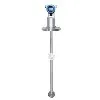
Hey there! As a supplier of Turbine Flowmeters, I've seen firsthand how various flow disturbances can mess with these nifty devices. Turbine flowmeters are pretty awesome - they measure the flow rate of a fluid by spinning a turbine rotor, and the speed of that spin is directly related to the fluid's velocity. But just like anything else, they're not immune to problems caused by flow disturbances.
Vortex Shedding
One of the most common flow disturbances is vortex shedding. When fluid flows past an obstacle, like a pipe fitting or a valve, it can create swirling vortices. These vortices can cause the turbine rotor to spin erratically, leading to inaccurate flow measurements. Think of it like trying to ride a bike through a windy area with gusts coming from all directions - it's hard to keep a steady pace.
Vortex shedding usually happens when the fluid flow is turbulent. Turbulence can be caused by a variety of factors, such as high flow rates, rough pipe surfaces, or sudden changes in pipe diameter. To minimize the effects of vortex shedding, it's important to install the turbine flowmeter in a section of pipe where the flow is as smooth as possible. That might mean placing it a certain distance away from valves or other fittings.

Cavitation
Cavitation is another pesky flow disturbance that can affect turbine flowmeters. It occurs when the pressure of the fluid drops below its vapor pressure, causing vapor bubbles to form. These bubbles then collapse when they reach an area of higher pressure, creating shockwaves that can damage the turbine rotor and other components of the flowmeter.
Cavitation is often a problem in systems where there are high flow velocities or large pressure drops. For example, if a pump is pushing fluid through a narrow pipe at a high speed, the pressure in the pipe can drop significantly, leading to cavitation. To prevent cavitation, it's important to make sure that the fluid pressure remains above its vapor pressure at all times. This might involve adjusting the pump settings or using larger diameter pipes.
Flow Pulsation
Flow pulsation is yet another flow disturbance that can throw off the accuracy of a turbine flowmeter. Pulsations occur when the flow rate of the fluid varies over time, creating a series of pressure waves. These pressure waves can cause the turbine rotor to oscillate, rather than spin smoothly, which can lead to inaccurate flow measurements.
Flow pulsation can be caused by a variety of factors, such as reciprocating pumps, compressors, or even the opening and closing of valves. To reduce the effects of flow pulsation, it's often necessary to install a pulsation dampener in the system. A pulsation dampener is a device that absorbs the pressure waves and smooths out the flow, allowing the turbine flowmeter to take more accurate measurements.

Entrained Air or Gas
If there's air or gas entrained in the fluid being measured, it can also cause problems for a turbine flowmeter. Air or gas bubbles can disrupt the flow of the fluid and cause the turbine rotor to spin irregularly. This can lead to inaccurate flow measurements, especially if the amount of entrained air or gas is significant.

Entrained air or gas can enter the system in a number of ways, such as through leaks in the pipes or during the filling process. To prevent this from happening, it's important to make sure that the system is properly sealed and that any air or gas is removed before the fluid is measured. This might involve using a degassing unit or simply allowing the fluid to sit for a while to let the bubbles rise to the surface.
Pipe Fittings and Bends
The presence of pipe fittings and bends can also cause flow disturbances that affect the accuracy of a turbine flowmeter. When fluid flows through a pipe fitting or a bend, it can create turbulence and change the direction of the flow. This can cause the turbine rotor to spin unevenly, leading to inaccurate flow measurements.
To minimize the effects of pipe fittings and bends, it's important to install the turbine flowmeter in a straight section of pipe. The general rule of thumb is to have at least 10 pipe diameters of straight pipe upstream and 5 pipe diameters of straight pipe downstream of the flowmeter. This allows the flow to become more uniform before it reaches the flowmeter and reduces the chances of turbulence affecting the measurements.
Impact on Different Types of Turbine Flowmeters
Now, let's talk about how these flow disturbances can affect different types of turbine flowmeters. We offer a range of turbine flowmeters, including Milk Turbine Flowmeter, Tri-clamp Turbine Flowmeter, and Sanitary Turbine Flowmeter.
The Milk Turbine Flowmeter is designed specifically for measuring the flow of milk and other dairy products. These products can be sensitive to flow disturbances, especially cavitation and entrained air. Cavitation can damage the delicate components of the flowmeter and affect the quality of the milk, while entrained air can cause inaccurate measurements. That's why it's crucial to ensure that the system is properly designed to minimize these issues when using a Milk Turbine Flowmeter.
The Tri-clamp Turbine Flowmeter is commonly used in industries where quick and easy installation and removal are required. However, the presence of the tri-clamp fittings can create flow disturbances, such as turbulence and vortex shedding. To get accurate measurements with a Tri-clamp Turbine Flowmeter, it's important to follow the installation guidelines carefully and make sure that the flow is as smooth as possible.
The Sanitary Turbine Flowmeter is used in applications where hygiene is a top priority, such as in the food and beverage industry. Flow disturbances can not only affect the accuracy of the measurements but also increase the risk of contamination. For example, cavitation can create areas where bacteria can grow, and entrained air can carry contaminants into the system. Therefore, it's essential to take steps to prevent flow disturbances when using a Sanitary Turbine Flowmeter.
How to Minimize Flow Disturbances
As a supplier, we understand the importance of minimizing flow disturbances to ensure accurate and reliable flow measurements. Here are some tips that we often share with our customers:
- Proper Installation: Make sure to install the turbine flowmeter in a straight section of pipe with the recommended upstream and downstream straight pipe lengths. Avoid installing it near valves, elbows, or other fittings that can cause flow disturbances.
- System Design: Consider the overall design of the system, including the pipe diameter, flow rate, and pressure. Make sure that the system is designed to minimize turbulence and pressure drops.
- Use of Accessories: Install accessories such as pulsation dampeners, degassing units, and flow straighteners to reduce the effects of flow disturbances.
- Regular Maintenance: Regularly inspect and maintain the turbine flowmeter and the entire system to ensure that everything is working properly. This includes checking for leaks, cleaning the flowmeter, and replacing any worn or damaged components.
Conclusion
In conclusion, flow disturbances can have a significant impact on the accuracy and reliability of turbine flowmeters. Vortex shedding, cavitation, flow pulsation, entrained air or gas, and pipe fittings and bends are all common flow disturbances that can cause problems. However, by understanding these issues and taking the appropriate steps to minimize them, you can ensure that your turbine flowmeter provides accurate and consistent flow measurements.
If you're in the market for a turbine flowmeter or have any questions about how to deal with flow disturbances, don't hesitate to reach out. We're here to help you find the right solution for your specific application and ensure that your flow measurement needs are met.
References
- "Flow Measurement Handbook: Industrial Designs and Applications" by Richard W. Miller
- "Instrumentation Reference Book" by Ronald A. Duffy