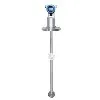
Hey there! As a supplier of Gas Flowmeters, I often get asked about the installation orientation requirements for these nifty devices. In this blog post, I'm gonna break it down for you in simple terms and explain why it matters.
First off, let's understand what a Gas Flowmeter is. It's a device that measures the flow rate of gas in a pipeline. There are different types of gas flowmeters out there, like the Roots Flowmeter for Gas and the Gas Roots Flowmeter, but the basic principle remains the same - to accurately measure how much gas is passing through.
Now, onto the installation orientation. The way you install a gas flowmeter can have a big impact on its performance. Most gas flowmeters are designed to work optimally in a specific orientation, and deviating from this can lead to inaccurate readings or even damage to the device.

Horizontal Installation
One of the most common installation orientations for gas flowmeters is horizontal. When installed horizontally, the flowmeter is in line with the pipeline, and the gas flows straight through it. This orientation is often preferred because it allows for a more uniform flow of gas, which can lead to more accurate measurements.
However, there are a few things to keep in mind when installing a gas flowmeter horizontally. First, make sure the flowmeter is level. Any tilt can cause the gas to flow unevenly, which can affect the accuracy of the readings. You can use a spirit level to ensure the flowmeter is perfectly horizontal.
Second, consider the location of the pressure and temperature sensors. These sensors are usually located on the side of the flowmeter, and they need to be installed in a way that allows them to accurately measure the pressure and temperature of the gas. Make sure there are no obstructions or disturbances near the sensors that could affect their readings.
Vertical Installation
In some cases, a vertical installation may be more suitable for a gas flowmeter. This is often the case when there is limited space or when the pipeline is already installed vertically. When installing a gas flowmeter vertically, there are a few additional considerations.
First, make sure the gas is flowing upwards through the flowmeter. This helps to prevent any liquid or debris from accumulating in the flowmeter, which can affect its performance. If the gas is flowing downwards, there is a risk of liquid or debris getting trapped in the flowmeter, which can cause blockages or inaccurate readings.

Second, pay attention to the location of the drain valve. If there is a drain valve on the flowmeter, it should be located at the lowest point to allow for easy drainage of any liquid or debris that may accumulate.
Upstream and Downstream Requirements
In addition to the installation orientation, there are also upstream and downstream requirements that need to be considered. Upstream refers to the section of the pipeline before the flowmeter, and downstream refers to the section after the flowmeter.
For accurate measurements, it's important to have a certain amount of straight pipe upstream and downstream of the flowmeter. This helps to ensure a uniform flow of gas and reduces the impact of any disturbances or turbulence in the pipeline. The exact amount of straight pipe required depends on the type of flowmeter and the specific application, but as a general rule, you should aim for at least 10 to 20 pipe diameters upstream and 5 to 10 pipe diameters downstream.
Impact of Installation Orientation on Accuracy
The installation orientation of a gas flowmeter can have a significant impact on its accuracy. If the flowmeter is not installed correctly, it can lead to errors in the measurements, which can have serious consequences in applications where accurate flow measurement is critical.
For example, in industrial processes where the amount of gas used directly affects the production output, inaccurate flow measurements can result in over- or under-usage of gas, which can lead to increased costs and reduced efficiency. In addition, inaccurate flow measurements can also affect the safety of the system, especially in applications where the gas is flammable or toxic.
Maintenance and Calibration
Once the gas flowmeter is installed, it's important to perform regular maintenance and calibration to ensure its continued accuracy. Maintenance tasks may include cleaning the flowmeter, checking for any leaks or damage, and replacing any worn or damaged parts.
Calibration is the process of adjusting the flowmeter to ensure that it is providing accurate readings. This should be done at regular intervals, depending on the specific application and the manufacturer's recommendations. Calibration can be done using a calibration device or by comparing the readings of the flowmeter with a known standard.

Conclusion
In conclusion, the installation orientation of a gas flowmeter is an important factor that can affect its performance and accuracy. Whether you choose to install the flowmeter horizontally or vertically, it's important to follow the manufacturer's recommendations and ensure that the flowmeter is installed correctly.
By paying attention to the upstream and downstream requirements, performing regular maintenance and calibration, and choosing the right installation orientation, you can ensure that your gas flowmeter provides accurate and reliable measurements for years to come.
If you're in the market for a Gas Flowmeter, Roots Flowmeter for Gas, or Gas Roots Flowmeter, and you have any questions about installation orientation or other aspects of these devices, don't hesitate to reach out. We're here to help you make the right choice and ensure that your flow measurement needs are met.
References
- Flow Measurement Handbook: Principles and Applications, by Richard W. Miller
- Gas Flow Measurement: A Practical Guide, by Paul E. Parker