As a supplier of vortex flowmeters, I've been asked countless times about how fluid viscosity affects the measurement of these devices. Vortex flowmeters are pretty cool gadgets. They work on the principle of the von Kármán vortex street. When a fluid flows past a bluff body (a non - streamlined object) inside the flowmeter, it creates alternating vortices on either side of the bluff body. The frequency of these vortices is directly proportional to the flow velocity of the fluid, and that's how we measure the flow rate.
Now, let's talk about viscosity. Viscosity is basically a measure of a fluid's resistance to flow. Think of it like this: honey has a high viscosity because it flows slowly, while water has a low viscosity as it flows easily. When it comes to vortex flowmeters, viscosity can have a significant impact on their performance.
Low - Viscosity Fluids
Low - viscosity fluids, like water or some light oils, are ideal for vortex flowmeters. The vortices are formed cleanly and regularly around the bluff body. The relationship between the vortex frequency and the flow velocity remains stable and linear. This means that the flowmeter can accurately measure the flow rate with a high degree of precision.
In these cases, the fluid moves smoothly around the bluff body, and the vortices are well - defined. The flowmeter can easily detect the frequency of these vortices, and convert it into an accurate flow measurement. For low - viscosity fluids, our LUGB Flowmeter works like a charm. It's designed to handle these types of fluids efficiently and provide reliable measurements.
High - Viscosity Fluids
On the other hand, high - viscosity fluids pose a challenge. When a high - viscosity fluid flows past the bluff body, it doesn't form vortices as cleanly as a low - viscosity fluid. The fluid tends to stick to the bluff body, and the vortices are less distinct. This can lead to a distorted relationship between the vortex frequency and the flow velocity.
The higher the viscosity, the more the fluid resists the formation of the vortices. As a result, the flowmeter may not be able to accurately measure the flow rate. The frequency of the vortices may be affected by the viscous drag, and the readings can become less reliable.
In some extreme cases, the high - viscosity fluid may even dampen the vortices to the point where they are hardly detectable. This can cause the flowmeter to under - report or over - report the flow rate, depending on the specific conditions.
Impact on Accuracy
The accuracy of a vortex flowmeter is directly related to the ability to accurately detect the vortex frequency. As viscosity increases, the accuracy of the flowmeter decreases. For high - accuracy applications, this can be a major problem.
Let's say you're in an industrial process where precise flow measurements are crucial. If you're using a vortex flowmeter with a high - viscosity fluid, you may get inaccurate readings. This can lead to inefficiencies in the process, increased costs, and even safety risks in some cases.
However, it's not all bad news. There are ways to mitigate the effects of viscosity on vortex flowmeter measurements. One approach is to use a different type of flowmeter that is more suitable for high - viscosity fluids. Another option is to modify the design of the vortex flowmeter.
Design Modifications
Some vortex flowmeters are designed with features that can help reduce the impact of viscosity. For example, the shape and size of the bluff body can be optimized. A larger bluff body may be more effective in creating vortices in high - viscosity fluids.
The sensor technology used in the flowmeter can also be improved. More sensitive sensors can detect weaker vortices, which can be beneficial when dealing with high - viscosity fluids. Our Inteligent Vortex Flowmeter incorporates advanced sensor technology that can provide more accurate measurements even in challenging viscosity conditions.
Temperature and Viscosity
It's important to note that viscosity is also affected by temperature. In general, the viscosity of a fluid decreases as the temperature increases. So, if you're dealing with a high - viscosity fluid, you may be able to improve the performance of the vortex flowmeter by increasing the temperature of the fluid.
However, this approach has its limitations. Not all fluids can tolerate high temperatures, and there may be safety and operational issues associated with heating the fluid.
Application - Specific Considerations
Different applications have different requirements when it comes to flow measurement. In some cases, a small amount of inaccuracy due to viscosity may be acceptable. For example, in a less critical process where approximate flow measurements are sufficient, a vortex flowmeter may still be a viable option even with a high - viscosity fluid.

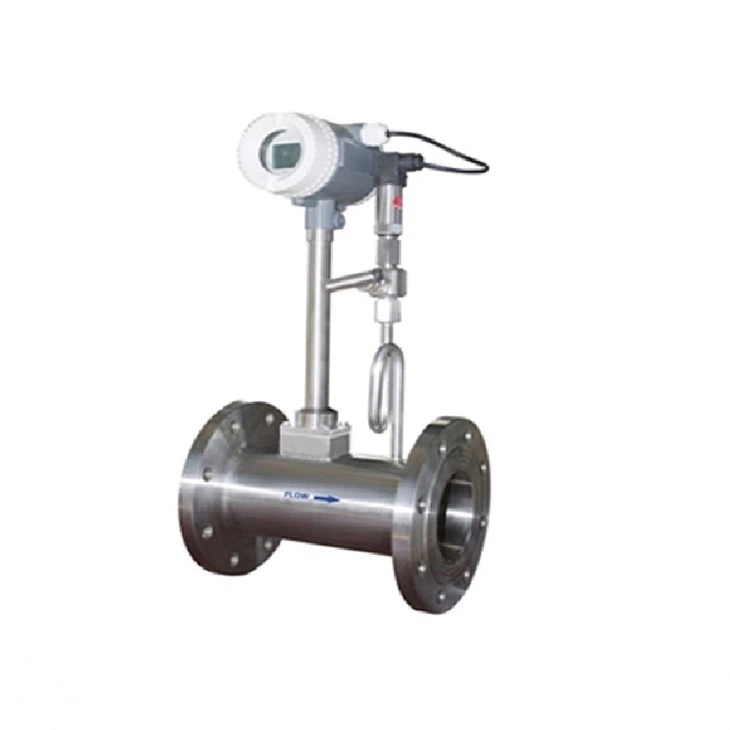
On the other hand, in applications such as chemical dosing or fuel metering, high accuracy is essential. In these cases, careful consideration must be given to the viscosity of the fluid and the suitability of the vortex flowmeter. Our Lugb Vortex Flowmeter For Gas, Liquid And Steam can be customized to meet the specific needs of different applications, taking into account factors like viscosity.
Conclusion
In conclusion, fluid viscosity has a significant impact on the measurement of a vortex flowmeter. Low - viscosity fluids are ideal for accurate measurements, while high - viscosity fluids can cause problems with vortex formation and frequency detection. However, with proper design modifications and application - specific considerations, it's possible to use vortex flowmeters effectively even with high - viscosity fluids.
If you're in the market for a vortex flowmeter and are concerned about the viscosity of your fluid, don't hesitate to reach out. We have a team of experts who can help you choose the right flowmeter for your specific application. Whether it's a low - viscosity or high - viscosity fluid, we have solutions that can provide accurate and reliable flow measurements. Contact us today to start the procurement process and let's work together to find the best flowmeter for your needs.
References
- White, F. M. (1999). Fluid Mechanics. McGraw - Hill.
- Streeter, V. L., & Wylie, E. B. (1985). Fluid Mechanics. McGraw - Hill.