

Hey there! As a supplier of Ultrasonic Level Meters, I've seen firsthand how the density of the medium can really throw a wrench in the works when it comes to accurate measurements. In this blog, I'll break down how medium density affects these nifty devices and what you can do to ensure you're getting the most reliable readings.
Let's start with the basics. An Ultrasonic Level Meter works by sending out ultrasonic waves that bounce off the surface of the liquid or solid material in a tank or container. The time it takes for these waves to travel to the surface and back is used to calculate the distance, which then gives us the level of the substance. But here's the catch: the speed of sound, which is crucial for these calculations, changes depending on the density of the medium the waves are traveling through.
When we talk about density, we're referring to how much mass is packed into a given volume. A denser medium has more particles per unit volume, which means the ultrasonic waves have to interact with more stuff as they travel. This interaction can slow down the waves, kind of like trying to run through a crowd instead of an empty hallway.
So, how does this slowdown affect the measurement? Well, the Ultrasonic Level Meter assumes a certain speed of sound based on the typical conditions of the medium it's designed for. If the actual density of the medium is different from what's expected, the meter will calculate the distance incorrectly. For example, if the medium is denser than normal, the ultrasonic waves will travel slower. But the meter still thinks they're moving at the standard speed, so it'll calculate a shorter distance than the actual one. This leads to an underestimation of the level.
On the flip side, if the medium is less dense, the waves will travel faster. The meter, not knowing this, will calculate a longer distance, resulting in an overestimation of the level. This can be a big problem, especially in industries where precise level measurements are critical, like chemical processing, food and beverage production, and wastewater management.
Let's take a look at some real - world scenarios. In the chemical industry, different chemicals have different densities. If you're using an Ultrasonic Level Meter to measure the level of a highly concentrated acid, which is denser than water, the meter might give you a reading that's lower than the actual level. This could lead to under - filling or over - emptying of tanks, which can be dangerous and costly.
In the food and beverage industry, the density of products can vary depending on factors like temperature, sugar content, and the presence of solids. For instance, a thick syrup will be denser than a thin juice. If an Ultrasonic Level Meter isn't calibrated correctly for these density differences, it can cause inaccurate inventory management and production scheduling.
So, what can you do to deal with these density - related issues? First of all, calibration is key. Most modern Ultrasonic Level Meters allow for calibration to account for the specific density of the medium. You can do a manual calibration by measuring the actual level of the substance using a different method (like a dipstick) and then adjusting the meter's settings accordingly. Some advanced meters even have built - in sensors that can detect changes in density and automatically adjust the speed of sound used in the calculations.
Another option is to use a temperature compensation feature. Temperature can also affect the density of a medium, so by measuring the temperature and adjusting the speed of sound based on it, you can get more accurate readings. This is especially useful in environments where the temperature fluctuates.
It's also important to choose the right Ultrasonic Level Meter for the job. Some meters are better suited for measuring substances with a wide range of densities. Look for models that have a high level of accuracy and flexibility in calibration.
Now, I know all this technical stuff can be a bit overwhelming. But don't worry! As a supplier of Ultrasonic Level Meters, we're here to help. Our team of experts can assist you in choosing the right meter for your specific application, and we'll provide all the support you need for calibration and maintenance.
If you're facing issues with inaccurate level measurements due to medium density or if you're just looking to upgrade your current system, don't hesitate to reach out. We're always ready to have a chat and find the best solution for you. Whether it's a small - scale operation or a large industrial facility, we've got the products and knowledge to ensure you get the most accurate and reliable level measurements.

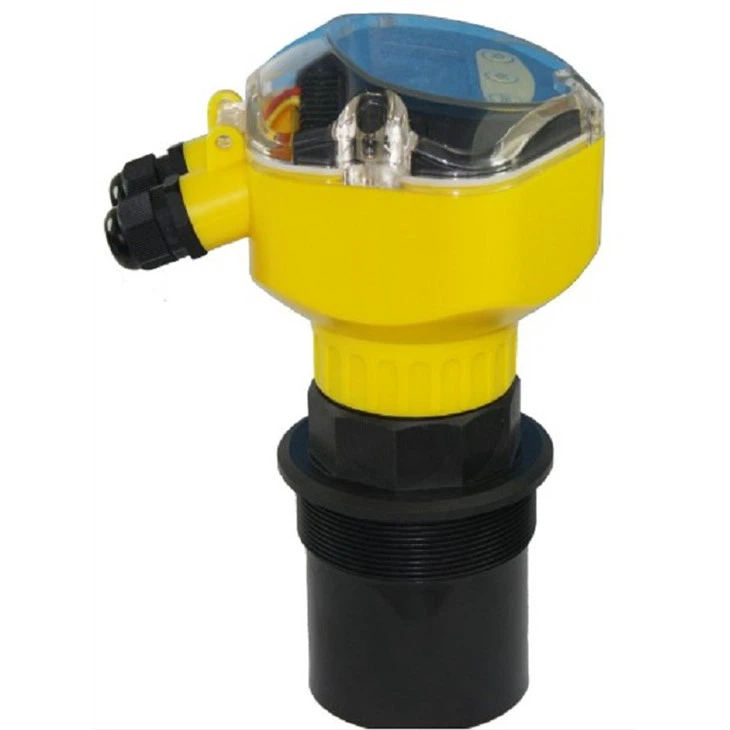
In conclusion, the density of the medium can have a significant impact on the measurement of an Ultrasonic Level Meter. But with the right approach, including proper calibration, temperature compensation, and choosing the right equipment, you can overcome these challenges and get the precise readings you need. So, if you're in the market for an Ultrasonic Level Meter or need help with your existing one, give us a shout. We're here to make your level measurement tasks a whole lot easier.
References
- Principles of Ultrasonic Level Measurement, Industrial Instrumentation Handbook
- Effects of Medium Properties on Ultrasonic Wave Propagation, Journal of Acoustics Research


