

Can a Coriolis flowmeter be used in polymer processing applications?
As a supplier of Coriolis flowmeters, I often get asked about the suitability of our products in various industrial applications. One area that has seen increasing interest is polymer processing. In this blog post, I'll explore whether a Coriolis Flowmeter can be effectively used in polymer processing applications.
Understanding Polymer Processing
Polymer processing involves the transformation of raw polymer materials into useful products. This can include processes such as extrusion, injection molding, blow molding, and fiber spinning. During these processes, precise control of the polymer flow rate is crucial for ensuring product quality, consistency, and efficiency.
The Working Principle of Coriolis Flowmeters
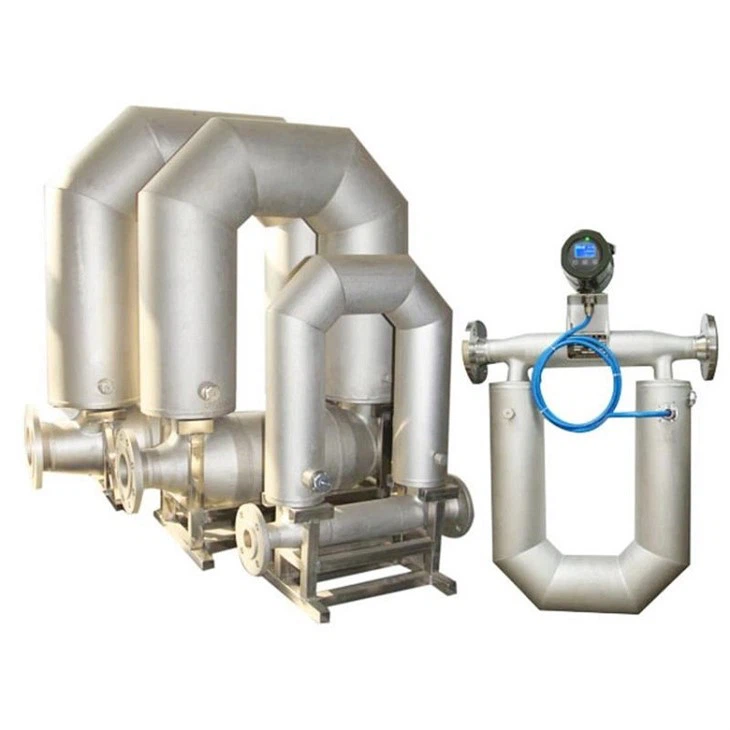
Coriolis flowmeters operate based on the Coriolis effect, which causes a vibrating tube to twist when a fluid (in this case, a polymer melt) flows through it. The amount of twist is directly proportional to the mass flow rate of the fluid. By measuring this twist, Coriolis flowmeters can accurately determine the mass flow rate of the polymer melt.
Advantages of Using Coriolis Flowmeters in Polymer Processing
- High Accuracy
One of the key advantages of High Accuracy Flowmeter is their high accuracy. In polymer processing, even small variations in the flow rate can have a significant impact on the final product quality. Coriolis flowmeters can provide accurate measurements within a very narrow range, typically ±0.1% to ±0.5% of the measured value. This high level of accuracy ensures that the polymer is processed at the correct flow rate, resulting in consistent product quality. - Direct Mass Flow Measurement
Coriolis flowmeters measure the mass flow rate directly, without the need for additional density or viscosity compensation. This is particularly important in polymer processing, as the density and viscosity of polymers can vary significantly depending on factors such as temperature, pressure, and polymer composition. By measuring the mass flow rate directly, Coriolis flowmeters eliminate the errors associated with density and viscosity variations, providing more reliable and accurate measurements. - Wide Range of Applications
Coriolis flowmeters can be used in a wide range of polymer processing applications, including both low and high viscosity polymers. They can handle polymer melts with viscosities ranging from a few centipoise to several million centipoise. This versatility makes Coriolis flowmeters suitable for a variety of polymer processing operations, from the production of thin films to the manufacturing of large plastic parts. - Multivariable Measurement
In addition to measuring the mass flow rate, Coriolis flowmeters can also provide information about other process variables, such as density and temperature. This multivariable measurement capability allows for better process control and optimization. For example, by monitoring the density of the polymer melt, operators can detect changes in the polymer composition or the presence of impurities, which can affect the product quality. - Low Maintenance
Coriolis flowmeters have a simple and robust design, with no moving parts in contact with the fluid. This results in low maintenance requirements and a long service life. In polymer processing, where downtime can be costly, the low maintenance nature of Coriolis flowmeters is a significant advantage.
Challenges and Considerations
While Coriolis flowmeters offer many advantages in polymer processing, there are also some challenges and considerations that need to be taken into account.
- High Viscosity Polymers
Although Coriolis flowmeters can handle high viscosity polymers, the accuracy and performance of the flowmeter may be affected by the high viscosity. In some cases, the high viscosity of the polymer melt can cause the vibrating tube to dampen, reducing the sensitivity of the flowmeter. To overcome this challenge, special designs and configurations may be required, such as using larger diameter tubes or higher frequency vibrations. - Temperature and Pressure Effects
Polymer processing often involves high temperatures and pressures. The performance of Coriolis flowmeters can be affected by these extreme conditions. High temperatures can cause the materials of the flowmeter to expand, which can affect the accuracy of the measurements. Similarly, high pressures can cause the vibrating tube to deform, leading to measurement errors. To ensure accurate measurements in high temperature and pressure environments, Coriolis flowmeters need to be designed and calibrated to withstand these conditions. - Installation and Mounting
Proper installation and mounting of the Coriolis flowmeter are crucial for its accurate operation. In polymer processing, the flowmeter needs to be installed in a location where the polymer melt flows smoothly and evenly. Any turbulence or pulsation in the flow can affect the accuracy of the measurements. Additionally, the flowmeter needs to be mounted securely to prevent vibration and movement, which can also cause measurement errors.
Case Studies
To illustrate the effectiveness of Coriolis flowmeters in polymer processing applications, let's look at a few case studies.
- Extrusion Process
A plastics extrusion company was experiencing problems with inconsistent product quality due to variations in the polymer flow rate. They installed a Coriolis flowmeter in their extrusion line to monitor and control the flow rate of the polymer melt. The high accuracy of the Coriolis flowmeter allowed them to maintain a constant flow rate, resulting in a significant improvement in product quality and a reduction in scrap rates. - Injection Molding Process
An injection molding company was struggling to achieve consistent part dimensions due to variations in the polymer flow rate. By using a Coriolis flowmeter to measure and control the flow rate of the polymer melt, they were able to achieve more precise control over the injection process. This led to a reduction in part variability and an increase in production efficiency.
Conclusion
In conclusion, a Coriolis Flowmeter can be effectively used in polymer processing applications. Its high accuracy, direct mass flow measurement, wide range of applications, multivariable measurement capability, and low maintenance make it an ideal choice for polymer processing operations. However, it is important to consider the challenges and limitations associated with using Coriolis flowmeters in polymer processing, such as high viscosity polymers, temperature and pressure effects, and proper installation and mounting.
If you are involved in polymer processing and are looking for a reliable and accurate flow measurement solution, I encourage you to consider our Coriolis flowmeters. Our team of experts can help you select the right flowmeter for your specific application and provide you with the support and service you need to ensure its successful operation. Contact us today to start a discussion about your polymer processing needs and how our Coriolis flowmeters can help you improve your process and product quality.

References
- [1] "Flow Measurement Handbook: Industrial Designs and Applications" by Richard W. Miller
- [2] "Polymer Processing: Principles and Design" by Osswald, T. A., & Turng, L. -S.
- [3] Technical literature from Coriolis flowmeter manufacturers


