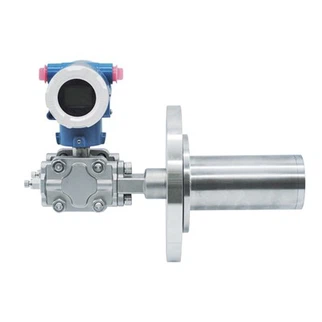
Electromagnetic flowmeter is a widely used flow measurement instrument in the industrial field. Its basic working principle is to measure the flow rate of conductive liquid media based on Faraday's electromagnetic induction principle. In practical applications, in order to accurately measure flow, it is necessary to adjust and optimize the main parameters of electromagnetic flow meters.
The main parameters of electromagnetic flow meters include electrode distance, magnetic circuit length, electrode inner diameter, and electrode angle. Among them, electrode distance refers to the distance between electrodes, which is closely related to measurement accuracy and should generally be determined based on the conductivity of the medium. The magnetic circuit length refers to the length of the magnetic circuit through which a liquid flows through a sensor. Optimizing it can improve the strength and stability of the electromagnetic field. The inner diameter of the electrode refers to the diameter of the liquid flow channel inside the electromagnetic flowmeter, and is also an important factor affecting the intensity of the electromagnetic field. Generally, the selection should be based on the flow range and viscosity. Finally, there is the electrode angle. This parameter also varies among different electromagnetic flow meters. Generally, the selection should be based on the application situation and flow range.
By adjusting and optimizing these parameters, the measurement accuracy of electromagnetic flow meters can be improved, and they can also adapt to flow measurement in various media. In addition, the calibration and maintenance of electromagnetic flow meters are also very important. During use, it should be regularly calibrated to ensure its accuracy, and attention should be paid to maintenance to promptly remove internal impurities and dirt.
In short, electromagnetic flow meters are a very important instrument device that can be widely used for fluid measurement in industries such as chemical, petroleum, power, and water conservancy. In actual use, it is necessary to adjust and optimize its main parameters to ensure measurement accuracy and stability. At the same time, it is also necessary to regularly calibrate and maintain it to extend its service life and ensure measurement accuracy.