

When it comes to measuring the density of liquids, a wide range of liquid density meters are available on the market. As a professional liquid density meter supplier, I am here to introduce you to the different types of liquid density meters, their working principles, advantages, and applications.
Hydrostatic Pressure Liquid Density Meters
Hydrostatic pressure liquid density meters operate based on the principle that the pressure exerted by a liquid column is directly proportional to its density and the height of the column. These meters typically consist of a pressure sensor submerged in the liquid at a fixed depth. The pressure measured by the sensor is then used to calculate the liquid density.
One of the key advantages of hydrostatic pressure liquid density meters is their simplicity and reliability. They are relatively easy to install and maintain, making them a popular choice for many industrial applications. Additionally, they can provide continuous density measurements, which are essential for process control in industries such as chemical, food and beverage, and oil and gas.
However, hydrostatic pressure liquid density meters have some limitations. They are sensitive to changes in temperature and pressure, which can affect the accuracy of the measurements. To compensate for these effects, temperature and pressure sensors are often integrated into the system. Another limitation is that they require a sufficient liquid depth for accurate measurements, which may not be feasible in some applications.
Vibrating Element Liquid Density Meters
Vibrating element liquid density meters work on the principle that the natural frequency of a vibrating element changes when it is immersed in a liquid. The density of the liquid can be determined by measuring this change in frequency. These meters typically use a vibrating tube or fork as the sensing element.
One of the main advantages of vibrating element liquid density meters is their high accuracy and fast response time. They can provide precise density measurements even in dynamic processes. They are also relatively insensitive to changes in temperature and pressure, making them suitable for a wide range of applications.
Vibrating element liquid density meters are commonly used in industries where high-precision density measurements are required, such as pharmaceutical, biotechnology, and petrochemical. However, they are generally more expensive than hydrostatic pressure liquid density meters and may require more complex installation and calibration procedures.
Coriolis Liquid Density Meters
Coriolis liquid density meters utilize the Coriolis effect, which is the deflection of a moving object due to the rotation of the Earth. In a Coriolis density meter, a tube is made to vibrate, and when a liquid flows through the tube, the Coriolis force causes a phase shift between the inlet and outlet of the tube. This phase shift is proportional to the mass flow rate and density of the liquid.
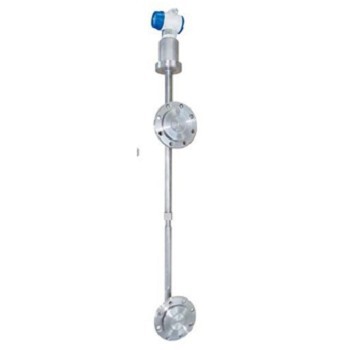

Coriolis liquid density meters offer several advantages. They can measure both density and mass flow rate simultaneously, providing a comprehensive solution for process control. They have high accuracy and are not affected by changes in viscosity, temperature, or pressure. They are also suitable for measuring the density of a wide range of liquids, including corrosive and abrasive fluids.
However, Coriolis liquid density meters are relatively expensive and may require a larger installation space. They are also more complex to operate and maintain compared to other types of density meters.
Differential Pressure (DP) Type Liquid Density Meters
DP Type Liquid Density Transmitter is a type of differential pressure-based density meter. It measures the density of a liquid by comparing the pressure difference between two points in the liquid column. The pressure difference is related to the density of the liquid and the height difference between the two points.
DP type liquid density meters are known for their robustness and reliability. They can be used in harsh industrial environments and are suitable for measuring the density of liquids with high viscosity or containing solids. They are also relatively cost-effective compared to some other types of density meters.
Liquid Density Meter and Online Liquid Density Meter are also part of the DP type density meter family, which can provide continuous online density measurements for process monitoring and control.
Ultrasonic Liquid Density Meters
Ultrasonic liquid density meters use ultrasonic waves to measure the density of a liquid. The speed of sound in a liquid is related to its density, and by measuring the time it takes for an ultrasonic wave to travel through the liquid, the density can be calculated.
One of the advantages of ultrasonic liquid density meters is that they are non-invasive, which means they do not come into direct contact with the liquid. This makes them suitable for measuring the density of corrosive or hygienic liquids. They are also relatively easy to install and can be used in applications where other types of density meters may not be suitable.
However, ultrasonic liquid density meters are sensitive to changes in temperature and the presence of bubbles or particles in the liquid, which can affect the accuracy of the measurements. They also require a clear path for the ultrasonic waves, which may be a limitation in some applications.
Selection Considerations
When selecting a liquid density meter, several factors need to be considered. The first factor is the accuracy requirements of the application. If high precision is required, vibrating element or Coriolis density meters may be the best choice. If a lower level of accuracy is acceptable, hydrostatic pressure or DP type density meters may be more suitable.
The nature of the liquid being measured is also an important consideration. For corrosive or abrasive liquids, materials that are resistant to corrosion and wear need to be selected. For liquids with high viscosity or containing solids, density meters that can handle such conditions should be chosen.
The operating conditions, such as temperature, pressure, and flow rate, also play a role in the selection. Some density meters are more sensitive to changes in these conditions than others. The installation requirements, including space availability and ease of installation, should also be taken into account.
Conclusion
In conclusion, there are several types of liquid density meters available, each with its own working principle, advantages, and limitations. As a liquid density meter supplier, we can offer a wide range of density meters to meet the diverse needs of different industries. Whether you need a high-precision density meter for a pharmaceutical application or a robust density meter for an industrial process, we have the right solution for you.
If you are interested in learning more about our liquid density meters or would like to discuss your specific requirements, please feel free to contact us for a procurement negotiation. We are committed to providing you with the best products and services to ensure the success of your projects.
References
- "Process Instruments and Controls Handbook" by Bela G. Liptak
- "Measurement, Instrumentation, and Sensors Handbook" by Jacob Fraden


