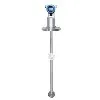
Hey there! As a supplier of the 3051DP Transmitter, I often get asked about the pressure - induced error of this nifty device. So, I thought I'd sit down and write a blog to shed some light on this topic.
First off, let's talk about what the 3051DP Transmitter is. It's a super useful tool in the industrial world. You can find it being used in all sorts of applications, from monitoring fluid levels in tanks to measuring the pressure difference across filters. The DP Pressure Level Transmitter and Smart Differential Pressure Transmitter are part of the same family, offering different features to meet various needs.
Now, onto the main topic: pressure - induced error. Pressure - induced error is basically the deviation in the output of the transmitter that occurs due to changes in the pressure applied to it. It's important to understand this because any error can lead to inaccurate measurements, and in industrial settings, inaccurate measurements can spell trouble.
There are a few factors that can cause pressure - induced error in the 3051DP Transmitter. One of the primary factors is overpressure. When the transmitter is exposed to a pressure higher than its rated maximum, it can cause mechanical stress on the sensing elements. This stress can lead to a shift in the calibration of the transmitter, resulting in an error in the output. For example, if the 3051DP is rated for a maximum pressure of 100 psi and it's suddenly exposed to 150 psi, the internal components might get distorted, and the readings will no longer be accurate.
Another factor is static pressure. Static pressure is the pressure that acts uniformly on the transmitter. Even though the 3051DP is designed to handle static pressure, excessive static pressure can still cause issues. The diaphragm inside the transmitter, which is responsible for sensing the pressure difference, can be affected by static pressure. If the static pressure is too high, it can cause the diaphragm to deflect more than it should, leading to an error in the measurement of the differential pressure.
Temperature also plays a role in pressure - induced error. Temperature changes can cause the materials inside the transmitter to expand or contract. This expansion and contraction can affect the mechanical properties of the sensing elements, leading to errors. For instance, if the temperature suddenly increases, the diaphragm might expand, altering its sensitivity and causing the output to deviate from the actual value.
So, how can we deal with pressure - induced error? Well, one way is through proper installation. Make sure the transmitter is installed in an environment where it won't be exposed to excessive pressure or temperature fluctuations. It's also important to follow the manufacturer's guidelines for installation. For example, the transmitter should be mounted in a way that it's protected from physical shocks and vibrations, which can also contribute to errors.
Calibration is another crucial step. Regular calibration can help identify and correct any pressure - induced errors. By comparing the output of the transmitter with a known standard, we can adjust the calibration settings to ensure accurate measurements. Most 3051DP Transmitters come with built - in calibration features, making it relatively easy to perform the calibration process.
As a supplier, we take pride in providing high - quality Pressure Transmitter Made in China. Our 3051DP Transmitters are designed with advanced technology to minimize pressure - induced error. We use high - quality materials for the sensing elements, which are more resistant to mechanical stress and temperature changes. This helps ensure that our transmitters provide accurate and reliable measurements even in challenging environments.
We also offer comprehensive technical support to our customers. If you're experiencing issues with pressure - induced error or any other problems with our transmitters, our team of experts is always ready to help. We can assist with troubleshooting, calibration, and even provide advice on proper installation and maintenance.
In conclusion, understanding pressure - induced error is essential for anyone using the 3051DP Transmitter. By being aware of the factors that cause it and taking the necessary steps to prevent and correct it, you can ensure that your measurements are accurate and reliable.
If you're in the market for a high - quality 3051DP Transmitter or have any questions about pressure - induced error, don't hesitate to reach out. We're here to help you find the best solution for your industrial needs. Whether you're looking for a DP Pressure Level Transmitter, a Smart Differential Pressure Transmitter, or a Pressure Transmitter Made in China, we've got you covered. Let's start a conversation about your requirements and see how we can work together to make your operations more efficient and accurate.
References


- Industrial Instrumentation Handbook: Covers general knowledge about pressure transmitters and their properties.
- 3051DP Transmitter User Manual: Provides specific information about the operation and potential errors of the 3051DP Transmitter.