Hey there! As a supplier of concentration meters, I often get asked about how our turbidity - based concentration meters work. So, let's dig into the measurement principle of these nifty devices.
First off, what the heck is turbidity? Turbidity is a measure of how cloudy or murky a liquid is. It's caused by the presence of suspended particles in the liquid, like sediment, bacteria, or other tiny bits. The more particles there are, the higher the turbidity.
Our turbidity - based concentration meters use this idea to figure out the concentration of substances in a liquid. The basic principle behind it is the interaction between light and the suspended particles in the liquid.
Here's a step - by - step breakdown of how it all goes down.
1. Light Source
We have a light source in our concentration meters. Usually, it's an LED or a laser. This light is sent into the liquid sample. The type of light used can vary depending on the application. For example, if we're dealing with a liquid that has a lot of color, we might choose a light wavelength that's less affected by that color.
2. Light Scattering
When the light hits the suspended particles in the liquid, it gets scattered. This scattering happens because the particles are in the path of the light beam. The amount of scattering depends on a few things. One of the main factors is the size and number of the particles. Larger particles tend to scatter light more than smaller ones. Also, the more particles there are in the liquid, the more light will be scattered.
3. Detector
We have a detector in the meter that's placed at a specific angle from the light source. This detector is designed to measure the amount of scattered light. The angle at which the detector is placed is crucial. Different angles can give us different information about the particles in the liquid. For example, a forward - scattering detector (placed at a small angle from the light source) can be more sensitive to larger particles, while a side - scattering detector (placed at a 90 - degree angle) can give us a good overall picture of the particle concentration.
4. Signal Processing
Once the detector measures the scattered light, it sends an electrical signal to the meter's signal - processing unit. This unit then analyzes the signal and converts it into a concentration value. It does this by using a calibration curve.


5. Calibration Curve
The calibration curve is super important. Before we can use the concentration meter to measure the actual concentration of a substance in a liquid, we need to create this curve. We do this by taking a series of samples with known concentrations of the substance we're interested in. We measure the scattered - light signal for each of these samples and then plot the results on a graph. The graph shows the relationship between the scattered - light signal and the concentration of the substance. Once we have this curve, we can use it to figure out the concentration of an unknown sample just by measuring its scattered - light signal.
Now, let's talk about some of the advantages of using turbidity - based concentration meters.
One big advantage is that they're non - invasive. That means we don't have to take a sample out of the liquid and put it in a separate container for measurement. We can just insert the meter into the liquid, and it can do its job right there. This is great for applications where we need to continuously monitor the concentration of a substance in a flowing liquid, like in a water - treatment plant.
Another advantage is that they're relatively fast. They can give us a measurement in a matter of seconds, which is much quicker than some other types of concentration - measurement methods.
However, there are also some limitations. For example, turbidity - based concentration meters can be affected by the color of the liquid. If the liquid is very dark or has a strong color, it can absorb some of the light, which can make the measurement less accurate. Also, the size and shape of the particles can affect the measurement. If the particles in the liquid are all different sizes and shapes, it can be more difficult to get an accurate concentration reading.
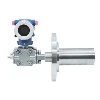
We offer different types of concentration meters that use the turbidity principle. For example, we have the Online Concentration Transmitter. This is great for continuous monitoring in industrial processes. It can be connected to a control system, so you can keep an eye on the concentration of a substance in real - time.
We also have the Drinking Concentration Meter. This is specifically designed for measuring the concentration of substances in drinking water. It's very accurate and can help ensure that the water we drink is safe.
And then there's the Fork Type Concentration Meter. This type of meter is easy to install and can be used in a variety of applications, like in food and beverage production.
If you're in the market for a concentration meter, whether it's for an industrial process, water treatment, or something else, we're here to help. Our team of experts can work with you to figure out which type of meter is best for your specific needs. We can also provide you with all the support you need, from installation to maintenance.
So, if you're interested in learning more about our concentration meters or want to start a purchase negotiation, don't hesitate to reach out. We're always happy to have a chat and see how we can help you get the right concentration - measurement solution for your business.
References
- "Principles of Turbidity Measurement" - A technical guide on turbidity measurement techniques.
- "Industrial Concentration Measurement" - A book that covers different methods of measuring concentration in industrial settings.