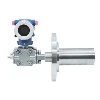
Hey everyone! As a supplier of Coriolis flowmeters, I often get asked about the maximum pressure these nifty devices can handle. So, let's dig into it and shed some light on this crucial aspect of Coriolis flowmeters.
First off, what the heck is a Coriolis flowmeter? If you're not too familiar, a Coriolis flowmeter is an incredibly useful device used to measure the mass flow rate of fluids in pipes. It works based on the Coriolis effect, which is pretty cool. When a fluid flows through a vibrating tube in the flowmeter, the Coriolis force causes the tube to twist, and this twist is proportional to the mass flow rate of the fluid. You can learn more about them on this page: Coriolis Flowmeter.
Now, getting back to the question at hand - the maximum pressure a Coriolis flowmeter can withstand. It's not a one - size - fits - all answer because it depends on several factors.
Material of the Flowmeter
One of the main factors is the material the flowmeter is made of. Different materials have different strength properties and can handle different levels of pressure. For example, stainless steel is a commonly used material for Coriolis flowmeters. It's strong and resistant to corrosion, making it suitable for a wide range of applications. Flowmeters made of high - grade stainless steel can typically withstand relatively high pressures. Maybe up to 1000 bar or even more in some industrial - grade models.


On the other hand, if a flowmeter is made of a more lightweight or less sturdy material, like certain types of plastic, it won't be able to handle as much pressure. These might be used in low - pressure or more specialized applications where corrosion resistance isn't a big concern, but they'll max out at much lower pressures, say around 10 - 20 bar.
Design and Construction
The design of the Coriolis flowmeter also plays a huge role in determining its pressure - handling capacity. Flowmeters with thicker walls and a more robust structural design are generally better equipped to handle high pressures. For instance, some of our High Accuracy Flowmeter models are designed with extra reinforcement in the areas that are most affected by pressure. The way the flow tubes are shaped and supported within the device can also influence how much pressure it can stand.
Flowmeters with a simple, well - engineered design often have better pressure - handling capabilities compared to those with a more complex or delicate structure. A complex design might introduce weak points or areas where stress can concentrate, leading to failure under high pressure.
Application Requirements
Another key consideration is the specific application the flowmeter is intended for. In some industries, like oil and gas, the fluid being measured is often under extremely high pressure. Coriolis flowmeters used in these applications need to be built to handle those high pressures. For example, in offshore oil drilling operations, the pressure in the pipelines can be hundreds of bar. So, flowmeters used in such scenarios are specifically designed and tested to withstand these extreme conditions.
Conversely, in a food and beverage production plant, the pressures are usually much lower. You're dealing with things like milk, juices, or other liquid ingredients that aren't subjected to high pressures. In these cases, a flowmeter with a lower maximum pressure rating can get the job done just fine. You can learn more about our general mass flow measurement solutions here: Mass Flowmeter.
Testing and Certification
Before any flowmeter is released on the market, it goes through rigorous testing to determine its maximum pressure rating. Manufacturers use specialized equipment to apply increasing pressure to the flowmeter until it fails or reaches its safe - operating limit. This information is then used to assign a maximum pressure rating to the device.
There are also various industry standards and certifications that ensure the flowmeter meets certain safety and performance requirements. For example, standards from organizations like the American Society of Mechanical Engineers (ASME) or the International Organization for Standardization (ISO) provide guidelines on how pressure testing should be done and what the acceptable limits are.
Tips for Working with High - Pressure Coriolis Flowmeters
If you're working in an application where high pressures are a factor, here are a few tips to keep in mind when using a Coriolis flowmeter:
- Regular Inspections: It's essential to regularly inspect the flowmeter for any signs of wear and tear, especially around the areas that are under the most stress from pressure. Look for cracks, leaks, or any deformation that could indicate a problem.
- Proper Installation: Make sure the flowmeter is installed correctly according to the manufacturer's instructions. Incorrect installation can lead to uneven pressure distribution and potentially cause the flowmeter to fail prematurely.
- Monitoring Pressure: Keep a close eye on the pressure in the system. Install pressure sensors or gauges near the flowmeter to monitor the pressure levels in real - time. This way, you can detect any sudden spikes or abnormal pressure changes that could damage the flowmeter.
Conclusion
So, to sum it up, the maximum pressure a Coriolis flowmeter can withstand is a complex topic that depends on factors like the material, design, application requirements, and testing. As a supplier, we're committed to providing high - quality Coriolis flowmeters that are suitable for a wide range of pressure conditions. Whether you're in a low - pressure application or need a flowmeter for high - pressure industrial use, we've got options for you.
If you're in the market for a Coriolis flowmeter and have questions about pressure ratings or any other aspects, feel free to reach out. We're here to help you find the perfect flowmeter solution for your needs and discuss the purchasing details. Let's start a conversation about how we can meet your flow measurement requirements!
References
- ASME Boiler and Pressure Vessel Code.
- ISO standards related to flow measurement devices.