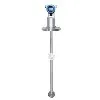
As a well - established supplier of 3051 Transmitters, I often encounter inquiries from customers regarding the materials of the sensors within these transmitters. In this blog, I will delve into the details of the sensor materials used in 3051 Transmitters, explaining their properties, advantages, and how they contribute to the overall performance of the device.
The Core Role of Sensors in 3051 Transmitters
Before we explore the sensor materials, it's essential to understand the role of sensors in 3051 Transmitters. These transmitters are widely used in industrial applications for measuring pressure, differential pressure, and level. The sensor is the heart of the transmitter, converting physical pressure or differential pressure into an electrical signal that can be further processed and transmitted. The accuracy, reliability, and durability of the sensor directly impact the performance of the entire transmitter.
Common Sensor Materials in 3051 Transmitters
1. Silicon
Silicon is one of the most commonly used materials for sensors in 3051 Transmitters. It has several remarkable properties that make it an ideal choice.


- High Sensitivity: Silicon sensors can detect very small changes in pressure. This high sensitivity allows for precise measurement of pressure variations, which is crucial in many industrial processes where even minor pressure differences can have a significant impact on the operation.
- Good Linearity: The relationship between the applied pressure and the output electrical signal of a silicon sensor is highly linear. This linearity simplifies the calibration process and ensures that the measured values are accurate and reliable.
- Miniaturization: Silicon can be easily fabricated into small, integrated structures. This enables the production of compact sensors, which is beneficial for applications where space is limited. For example, in some advanced industrial control systems, where multiple sensors need to be installed in a confined area, the small size of silicon sensors is a great advantage.
However, silicon also has some limitations. It is sensitive to temperature changes, which can affect its measurement accuracy. To compensate for this, advanced temperature compensation techniques are often employed in 3051 Transmitters with silicon sensors.
2. Ceramic
Ceramic is another important sensor material used in 3051 Transmitters.
- Chemical Resistance: Ceramic sensors are highly resistant to chemical corrosion. They can withstand exposure to a wide range of chemicals, including acids, alkalis, and solvents. This makes them suitable for use in harsh chemical environments, such as in the chemical processing industry or wastewater treatment plants.
- Mechanical Stability: Ceramic has excellent mechanical stability, which means it can maintain its shape and properties under high pressure and mechanical stress. This ensures the long - term reliability of the sensor, reducing the need for frequent replacement.
- Wide Temperature Range: Ceramic sensors can operate over a relatively wide temperature range. They are less affected by temperature variations compared to silicon sensors, which makes them a good choice for applications with fluctuating temperatures.
On the downside, ceramic sensors may have slightly lower sensitivity compared to silicon sensors. But in applications where chemical resistance and mechanical stability are the primary concerns, the trade - off is often acceptable.
3. Metal
Some 3051 Transmitters use metal sensors, typically made of stainless steel or other alloy materials.
- High - Pressure Resistance: Metal sensors are capable of withstanding extremely high pressures. They are commonly used in applications such as oil and gas exploration, where the pressure can reach very high levels.
- Robustness: Metal sensors are very robust and can endure harsh mechanical environments, including vibrations, shocks, and impacts. This makes them suitable for use in heavy - duty industrial applications, such as in mining or construction.
However, metal sensors may be more expensive to manufacture compared to silicon or ceramic sensors. Also, they may have a relatively lower sensitivity for measuring small pressure changes.
Impact of Sensor Materials on Transmitter Performance
The choice of sensor material has a profound impact on the performance of 3051 Transmitters.
- Accuracy: As mentioned earlier, different materials have different levels of sensitivity and linearity. For applications that require high - precision measurement, such as in pharmaceutical manufacturing or semiconductor production, silicon sensors may be preferred due to their high sensitivity and linearity.
- Reliability: In harsh environments, the reliability of the sensor is of utmost importance. Ceramic and metal sensors, with their chemical resistance and mechanical stability, are more suitable for such applications. For example, in offshore oil platforms, where the sensors are exposed to saltwater and high - pressure conditions, metal sensors can provide long - term reliable operation.
- Cost - Effectiveness: The cost of the sensor material also plays a role in the overall cost - effectiveness of the transmitter. Silicon sensors are generally more cost - effective for applications that do not require extreme durability or chemical resistance. On the other hand, if the application demands high - pressure resistance and long - term reliability in harsh environments, the higher cost of metal or ceramic sensors may be justified.
Applications of 3051 Transmitters Based on Sensor Materials
- Process Industry: In the process industry, such as in the production of food, beverages, and pharmaceuticals, 3051 Transmitters with silicon sensors are commonly used. The high sensitivity and accuracy of silicon sensors are essential for ensuring the quality and consistency of the products. For example, in a dairy processing plant, precise pressure measurement is required to control the pasteurization process.
- Chemical Industry: The chemical industry often uses 3051 Transmitters with ceramic sensors. The chemical resistance of ceramic sensors allows them to operate safely in the presence of corrosive chemicals. For instance, in a petrochemical refinery, ceramic sensors can be used to measure the pressure of various chemical substances without being damaged by corrosion.
- Oil and Gas Industry: In the oil and gas industry, where high - pressure and harsh environmental conditions are common, 3051 Transmitters with metal sensors are widely used. These sensors can withstand the high pressures encountered in oil wells and pipelines, as well as the mechanical stress caused by drilling and pumping operations.
Conclusion and Call to Action
In conclusion, the choice of sensor material in 3051 Transmitters depends on the specific requirements of the application. Whether it's the high sensitivity of silicon, the chemical resistance of ceramic, or the high - pressure resistance of metal, each material has its own unique advantages.
If you are looking for high - quality 3051 Transmitters, we are your reliable supplier. We offer a wide range of transmitters with different sensor materials to meet your diverse needs. Whether you need a Smart Differential Pressure Transmitter for precise pressure measurement, a Pressure Transmitter Made in China that combines quality and cost - effectiveness, or a DP Pressure Level Transmitter for level measurement, we have the right solution for you.
If you have any questions or would like to discuss your specific requirements, please feel free to contact us. Our professional team is ready to assist you in making the best choice for your application.
References
- "Industrial Pressure Measurement Technology" - A comprehensive book on pressure measurement techniques and sensor materials.
- Technical documents from leading sensor manufacturers, which provide detailed information on the properties and applications of different sensor materials.