

Hey there! As a supplier of Ultrasonic Level Meters, I often get asked about various technical aspects of these nifty devices. One question that pops up quite a bit is, "What is the hysteresis of an Ultrasonic Level Meter?" Well, let's dive right in and break it down.
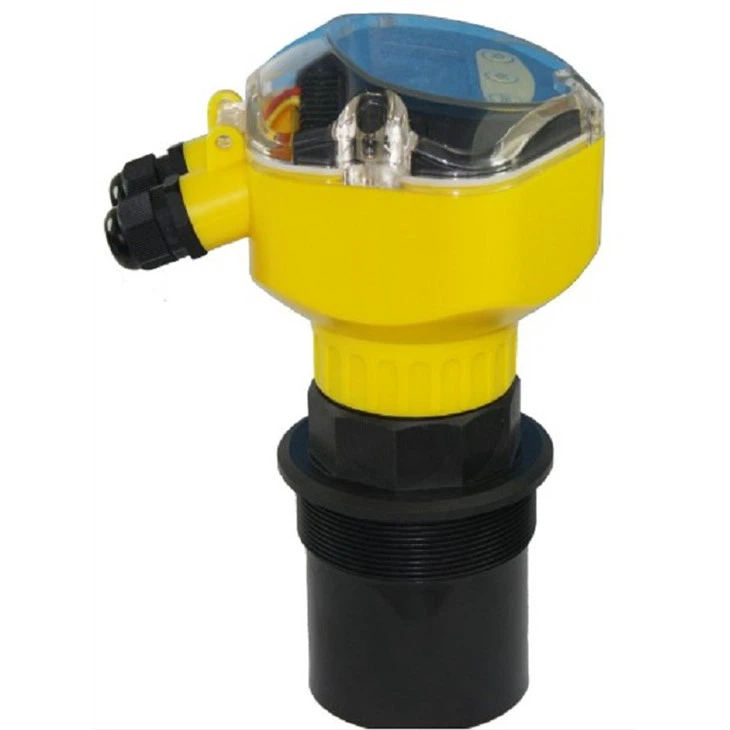
First off, let's talk about what an Ultrasonic Level Meter is. An Ultrasonic Level Meter is a device used to measure the level of liquids or solids in a tank or container. It works by emitting ultrasonic waves that bounce off the surface of the material being measured and then calculating the distance based on the time it takes for the waves to return. It's a non - intrusive and reliable way to measure levels, and it's widely used in industries like water treatment, chemical processing, and food and beverage production.

Now, onto hysteresis. Hysteresis is a phenomenon that occurs in many types of measuring instruments, including Ultrasonic Level Meters. In simple terms, hysteresis refers to the difference in the output of a measuring device when the input is increased compared to when it's decreased. Let me give you an example to make it clearer.
Suppose you have an Ultrasonic Level Meter installed in a tank filled with water. You start filling the tank, and as the water level rises, the meter measures the level and gives you a reading. Now, you stop filling the tank and start draining the water. As the water level goes down, you might expect the meter to give you the exact same readings at the same levels as when the tank was being filled. But that's not always the case. There could be a difference in the readings, and that difference is what we call hysteresis.
There are a few reasons why hysteresis can occur in an Ultrasonic Level Meter. One of the main reasons is the physical properties of the material being measured. Different materials have different acoustic properties, which can affect how the ultrasonic waves travel through them. For example, if the material is viscous or has a lot of bubbles, it can cause the waves to scatter or absorb more energy, leading to inaccurate readings.
Another factor is the environment in which the meter is installed. Temperature, humidity, and air pressure can all have an impact on the performance of the Ultrasonic Level Meter. For instance, changes in temperature can cause the speed of sound to change, which in turn can affect the measurement of the distance between the meter and the surface of the material.
Mechanical factors can also play a role. If the meter is not installed properly or if there is any vibration or movement in the tank, it can cause the readings to fluctuate and result in hysteresis. Additionally, the electronics inside the meter can also contribute to hysteresis. Over time, the components can wear out or become damaged, leading to inconsistent performance.
So, why is hysteresis a problem? Well, if the hysteresis in an Ultrasonic Level Meter is too large, it can lead to inaccurate measurements. This can be a big deal in industries where precise level measurements are crucial. For example, in a chemical processing plant, an inaccurate level measurement could result in over - filling or under - filling of a tank, which could lead to safety hazards or product quality issues.
As a supplier, we take hysteresis very seriously. We design our Ultrasonic Level Meters to minimize hysteresis as much as possible. We use high - quality components and advanced signal processing algorithms to ensure accurate and consistent measurements. We also provide detailed installation and maintenance instructions to help our customers get the best performance out of their meters.
When you're choosing an Ultrasonic Level Meter, it's important to look at the hysteresis specifications. Most manufacturers will provide information about the maximum hysteresis of their meters in the product datasheet. You should look for a meter with a low hysteresis value, as this indicates better accuracy and reliability.
To reduce hysteresis in an Ultrasonic Level Meter, there are a few things you can do. First, make sure the meter is installed correctly according to the manufacturer's instructions. This includes mounting it at the right height and angle, and ensuring that there is no interference from other objects or equipment.
Regular maintenance is also essential. Clean the sensor regularly to remove any dirt or debris that could affect the performance of the meter. Check the connections and cables to make sure they are secure and in good condition.
Calibration is another important step. You should calibrate the meter regularly to ensure that it is giving accurate readings. Calibration involves comparing the readings of the meter with a known standard and adjusting the settings if necessary.
In conclusion, hysteresis is an important concept to understand when it comes to Ultrasonic Level Meters. It can affect the accuracy and reliability of the measurements, but with the right design, installation, and maintenance, it can be minimized. As a supplier, we're committed to providing our customers with high - quality Ultrasonic Level Meters that offer accurate and consistent performance.
If you're in the market for an Ultrasonic Level Meter or if you have any questions about hysteresis or any other aspect of our products, don't hesitate to reach out. We're here to help you find the right solution for your level measurement needs. Whether you're a small business or a large industrial operation, we have the expertise and the products to meet your requirements. So, let's start a conversation and see how we can work together to get you the best results.
References
- "Ultrasonic Level Measurement Handbook", Various Industry Publications
- Manufacturer's Datasheets for Ultrasonic Level Meters


