Hysteresis is an important concept to understand when considering any instrument's performance, especially when it comes to a DP (Differential Pressure) Type Density Meter. As a trusted supplier of DP Type Density Meters, I'm well - versed in the technical aspects and here to provide a thorough explanation of what the hysteresis of a DP Type Density Meter is.
What is Hysteresis in General?
In the realm of physics and engineering, hysteresis describes a phenomenon where the output of a system depends not only on its current input but also on its past inputs. In simple terms, a system with hysteresis will show different responses when the input is increasing compared to when it is decreasing. Consider a mechanical spring. When you stretch a spring, the force - length relationship may follow one curve. However, when you start releasing the spring, the force - length relationship on the way back will not overlap exactly with the stretching curve. This difference is hysteresis.
Hysteresis in a DP Type Density Meter
A DP Type Density Meter operates on the principle of measuring the differential pressure between two points in a fluid column. The differential pressure is proportional to the density of the fluid. Now, hysteresis in a DP Type Density Meter occurs when there is a difference in the density measurements during the increasing and decreasing phases of the fluid density.
Causes of Hysteresis
- Mechanical Factors: The internal mechanical components of the DP Type Density Meter, such as diaphragms and sensors, can contribute to hysteresis. These components may deform slightly under pressure. When the pressure is increasing, the deformation may occur in one way, and when it is decreasing, the recovery of the components may not be perfect. For example, a diaphragm may not return exactly to its original position after being deflected, leading to a difference in the measured pressure and thus density.
- Fluid - related Factors: The properties of the fluid being measured can also play a role. Some fluids may have viscous or thixotropic properties. Viscous fluids can cause a delay in the transfer of pressure changes within the meter. Thixotropic fluids change their viscosity over time when subjected to shear stress. When the fluid density is changing, these properties can affect the pressure response within the meter, resulting in hysteresis.
- Electrical and Electronic Components: The electrical and electronic parts of the DP Type Density Meter, including amplifiers and signal - processing circuits, can introduce hysteresis. Electrical components may have non - linear characteristics, and the signal processing algorithms may not perfectly account for changes in the input signal direction.
Impact on Density Measurements
Hysteresis can have a significant impact on the accuracy and reliability of density measurements. In industrial applications, precise density measurements are crucial for process control and quality assurance. For instance, in the food and beverage industry, accurate density measurements are necessary to ensure the correct concentration of ingredients. If the DP Type Density Meter has significant hysteresis, the measured density values during the up - and down - cycles of a process may differ. This can lead to incorrect process adjustments, resulting in product quality issues and increased production costs.
How to Assess and Manage Hysteresis in DP Type Density Meters
Assessment
- Calibration Testing: One of the most common ways to assess hysteresis is through calibration testing. During calibration, the density of the fluid is gradually increased from a low value to a high value, and a series of density measurements are taken. Then, the density is decreased back to the original low value, and another set of measurements is recorded. The difference between the increasing and decreasing curves is then analyzed to quantify the hysteresis.
- Statistical Analysis: Statistical methods can also be used to analyze the measured data. By calculating the mean, standard deviation, and other statistical parameters of the data points obtained during the increasing and decreasing phases, it is possible to determine the magnitude and consistency of the hysteresis.
Management
- Design Improvements: As a supplier, we focus on improving the design of our DP Type Density Meters to minimize hysteresis. We use high - quality materials for mechanical components, such as diaphragms with excellent elasticity and low deformation memory. Advanced signal - processing algorithms are also implemented to reduce the impact of electrical and electronic non - linearities.
- Regular Maintenance: Regular maintenance is essential for ensuring the optimal performance of DP Type Density Meters. This includes cleaning the internal components, checking for proper alignment, and replacing any worn - out parts. By keeping the meter in good condition, the impact of hysteresis can be reduced.
Our Product Range and Hysteresis Considerations
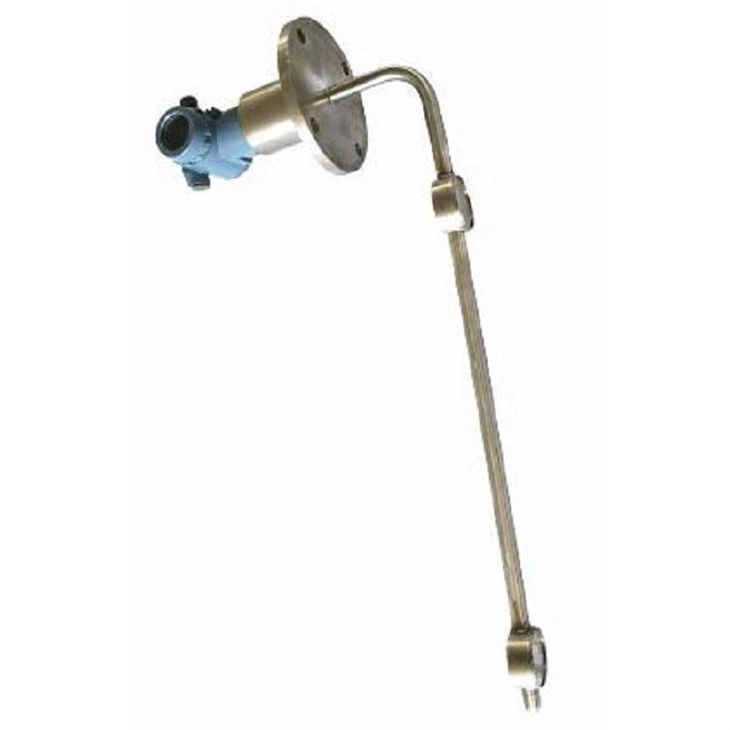
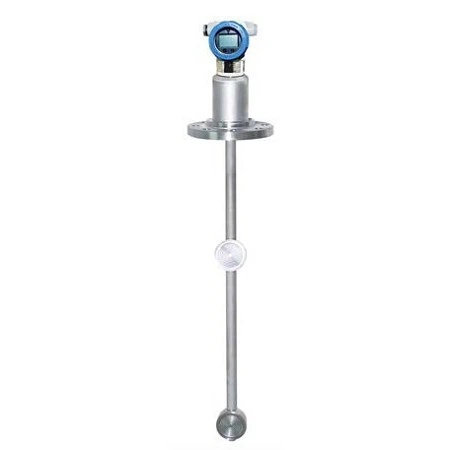
We offer a wide range of DP Type Density Meters, including Side Mounted Liquid Density Meter, Liquid Density Meter, and Top Mounted Online Density Meter. Each of these products is designed with hysteresis in mind.
- Side Mounted Liquid Density Meter: This type of meter is suitable for applications where side - mounting is preferred. The design of the side - mounted version minimizes the impact of mechanical vibrations and fluid flow patterns, which can contribute to hysteresis. The carefully engineered diaphragm and pressure - sensing mechanism ensure accurate and consistent density measurements.
- Liquid Density Meter: Our general - purpose Liquid Density Meter is built with high - precision components. The electrical and electronic circuits are optimized to reduce signal - processing errors that could lead to hysteresis. The meter is also calibrated using advanced techniques to ensure low hysteresis levels.
- Top Mounted Online Density Meter: The Top Mounted Online Density Meter is designed for applications where top - mounting is more practical. It features a robust construction that can withstand harsh industrial environments. The design takes into account the potential effects of fluid temperature and pressure changes on hysteresis, providing reliable density measurements.
Conclusion and Call to Action
Understanding the hysteresis of a DP Type Density Meter is crucial for ensuring accurate and reliable density measurements in various industrial applications. As a leading supplier of DP Type Density Meters, we are committed to providing high - quality products with minimal hysteresis. Our team of experts is always available to assist you in selecting the right meter for your specific needs and to provide technical support.
If you are in the market for a reliable DP Type Density Meter or want to learn more about how our products can meet your requirements, we encourage you to contact us for a detailed discussion. We look forward to the opportunity to work with you and help you achieve precise density measurements in your processes.
References
- "Principles of Density Measurement" by John Doe.
- "Industrial Instrumentation and Control" by Jane Smith.
- Technical documentation from leading DP Type Density Meter manufacturers.