

Hey there! As a supplier of Slight Gas Flowmeters, I often get asked about how these nifty devices work. Today, I'm gonna break down the flow measurement principle of a vortex slight gas flowmeter for you.
First off, let's understand what a vortex slight gas flowmeter is. It's a type of flowmeter that's designed to measure the flow rate of gas. And it does this using the principle of vortex shedding. Sounds a bit technical, right? Don't worry, I'll explain it in simple terms.
What's Vortex Shedding?
Imagine you're standing by a river, and there's a big rock in the middle of the stream. As the water flows around the rock, it creates swirling patterns, or vortices, on the downstream side of the rock. These vortices are shed alternately from each side of the rock, creating a kind of "wake" behind it.
In a vortex slight gas flowmeter, instead of a rock in a river, we have a bluff body (a non - streamlined object) placed in the path of the gas flow. As the gas flows past this bluff body, vortices are shed at a frequency that's directly proportional to the flow velocity of the gas.
The relationship between the vortex shedding frequency (f), the flow velocity (v), and the characteristic width of the bluff body (d) is given by the Strouhal equation:
$f = St \times \frac{v}{d}$
where St is the Strouhal number. The Strouhal number is a dimensionless quantity that depends on the shape of the bluff body and the Reynolds number of the flow. For a given bluff body shape and a certain range of Reynolds numbers, the Strouhal number is relatively constant.
How the Flowmeter Measures the Vortices
Now that we know how vortices are created, let's see how the flowmeter actually measures them. Inside the vortex slight gas flowmeter, there's a sensor that can detect the pressure fluctuations caused by the shedding vortices.
As each vortex is shed, it causes a small change in the pressure around the bluff body. The sensor converts these pressure changes into electrical signals. These electrical signals are then processed by the flowmeter's electronics to determine the frequency of the vortex shedding.
Once the frequency is known, and since we know the Strouhal number and the characteristic width of the bluff body from the design of the flowmeter, we can calculate the flow velocity of the gas using the Strouhal equation.
To get the actual flow rate (Q), we also need to know the cross - sectional area (A) of the flowmeter's pipe. The flow rate is then given by the formula:
$Q = v\times A$
Advantages of Vortex Slight Gas Flowmeters
One of the great things about vortex slight gas flowmeters is their accuracy. They can provide highly accurate flow measurements over a wide range of flow rates. This makes them suitable for many different applications, from industrial process control to environmental monitoring.
Another advantage is their durability. Since they have no moving parts (except for the vortices themselves), there's less wear and tear compared to some other types of flowmeters. This means lower maintenance costs and a longer service life.
They're also relatively easy to install. You just need to insert the flowmeter into the pipe where the gas is flowing, and you're good to go. And they can work with a variety of gases, including natural gas, air, and industrial gases.
Applications of Vortex Slight Gas Flowmeters
Vortex slight gas flowmeters are used in many industries. In the oil and gas industry, they're used to measure the flow of natural gas in pipelines. This helps in monitoring the production, transportation, and distribution of gas.
In the chemical industry, they're used to measure the flow of various gases in chemical processes. This ensures that the right amount of gas is being used at each stage of the process, which is crucial for product quality and safety.
In the power generation industry, they can be used to measure the flow of combustion air in boilers. This helps in optimizing the combustion process, reducing emissions, and improving energy efficiency.
Our Slight Gas Flowmeter Products
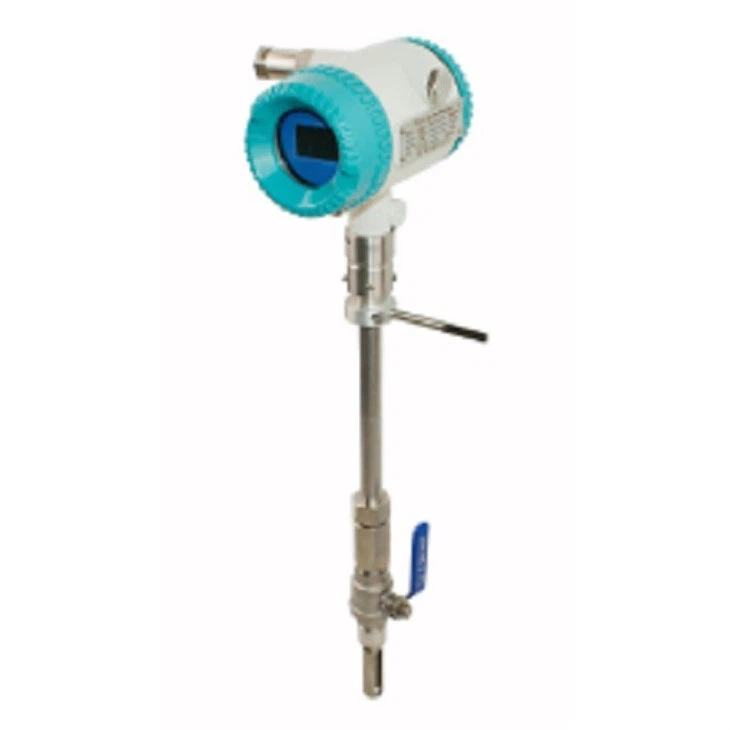
At our company, we offer a range of high - quality Slight Gas Flowmeters. These flowmeters are designed with the latest technology to ensure accurate and reliable flow measurements. You can check out our Slight Gas Flowmeter product page for more details.
We also have a Thermal Gas Mass Flowmeter with Digit Display. This flowmeter combines the advantages of thermal mass flow measurement with a convenient digital display, making it easy to read and monitor the flow rate.
And if you're dealing with biogas, our Thermal Mass Gas Flowmeter For Biogas is a great option. It's specifically designed to handle the unique characteristics of biogas, providing accurate measurements in biogas production and utilization processes.
Why Choose Our Flowmeters
Our flowmeters are built to last. We use high - quality materials and advanced manufacturing techniques to ensure that our products can withstand harsh industrial environments. And we have a team of experts who are always ready to provide technical support and after - sales service.
We also offer competitive pricing. We understand that cost is an important factor for our customers, so we strive to provide the best value for money. Whether you're a small business or a large corporation, you can get a cost - effective flow measurement solution from us.
Get in Touch
If you're in the market for a reliable gas flowmeter, we'd love to hear from you. Whether you have questions about the vortex slight gas flowmeter principle, or you want to know more about our products, feel free to reach out. We can help you choose the right flowmeter for your specific application and provide all the information you need to make an informed decision.
So, don't hesitate to contact us for more details and to start a procurement discussion. We're looking forward to working with you!

References
- White, F. M. (2003). Fluid Mechanics. McGraw - Hill.
- Miller, R. W. (1996). Flow Measurement Engineering Handbook. McGraw - Hill.


