

As a supplier of Mass Flowmeters, I've witnessed firsthand the diverse needs and inquiries from customers when it comes to flow measurement. One of the most common questions I encounter is about the difference between direct and indirect mass flowmeters. In this blog, I'll delve into the details of these two types of flowmeters, highlighting their working principles, advantages, disadvantages, and typical applications.
Direct Mass Flowmeters
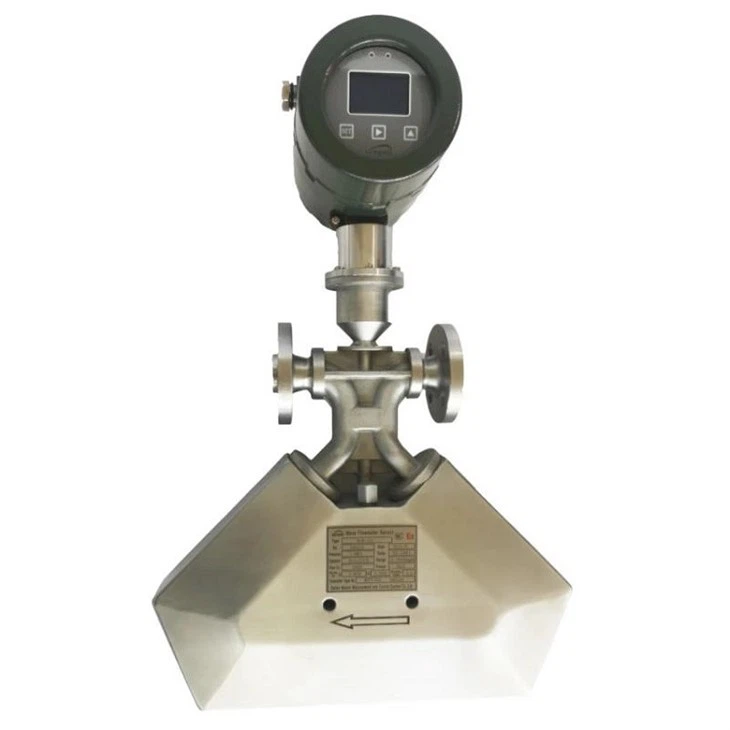
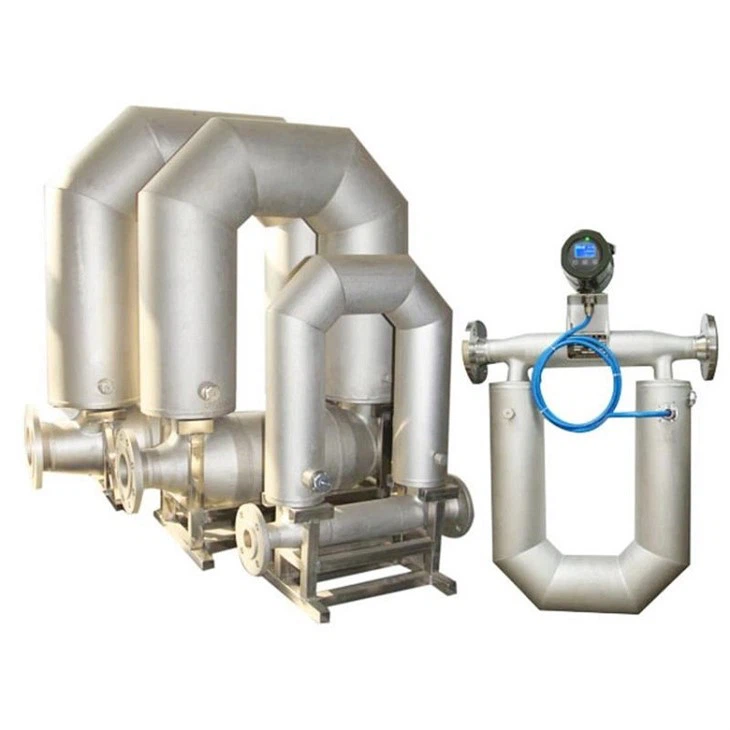
Direct mass flowmeters measure mass flow directly, without the need for additional calculations based on other parameters such as density or volume. They provide a direct reading of the mass flow rate, which is the mass of the fluid passing through the meter per unit of time. One of the most well - known types of direct mass flowmeters is the Coriolis Mass Flowmeter.
Coriolis Mass Flowmeter
The Coriolis Mass Flowmeter operates on the principle of the Coriolis effect. When a fluid flows through a vibrating tube, the Coriolis force causes the tube to twist. The amount of twist is directly proportional to the mass flow rate of the fluid.
Advantages:
- High Accuracy: Coriolis Mass Flowmeters are known for their high accuracy, often achieving an accuracy of ±0.1% to ±0.2%. This makes them suitable for applications where precise mass flow measurement is crucial, such as in the pharmaceutical and food industries. You can find more information about Coriolis Mass Flowmeter for Drinking.
- Density Measurement: In addition to measuring mass flow, Coriolis meters can also measure the density of the fluid. This dual functionality is beneficial in applications where both mass flow and density information are required.
- Wide Range of Fluids: They can handle a wide range of fluids, including liquids, gases, and slurries.
Disadvantages:
- Cost: Coriolis Mass Flowmeters tend to be more expensive compared to some other types of flowmeters. This can be a limiting factor for cost - sensitive applications.
- Size and Installation: They can be relatively large and require specific installation requirements, such as straight pipe runs before and after the meter.
Typical Applications:
- Chemical Industry: Used for measuring the mass flow of various chemicals in production processes to ensure accurate dosing and quality control.
- Food and Beverage Industry: Ideal for measuring the mass flow of ingredients in food and beverage production, such as sugar, milk, and juices.
Indirect Mass Flowmeters
Indirect mass flowmeters measure other properties of the fluid, such as volume flow and density, and then calculate the mass flow rate. There are several types of indirect mass flowmeters, including differential pressure flowmeters and thermal mass flowmeters.
Differential Pressure Flowmeters
Differential pressure flowmeters work based on the principle that the pressure drop across a constriction in a pipe is related to the flow rate of the fluid. By measuring the differential pressure and knowing the density of the fluid, the mass flow rate can be calculated.
Advantages:
- Cost - Effective: Differential pressure flowmeters are generally more cost - effective compared to direct mass flowmeters. They are a popular choice for applications where cost is a major consideration.
- Well - Established Technology: The technology has been around for a long time, and there is a wealth of knowledge and experience in their design, installation, and operation.
Disadvantages:
- Accuracy: Their accuracy is typically lower compared to direct mass flowmeters, usually in the range of ±1% to ±3%.
- Requires Density Information: To calculate the mass flow rate, the density of the fluid needs to be known accurately. Any errors in density measurement can lead to errors in mass flow calculation.
Typical Applications:
- HVAC Systems: Used for measuring the flow of air in heating, ventilation, and air - conditioning systems to ensure proper airflow and energy efficiency.
- Water Treatment Plants: For measuring the flow of water in water treatment processes.
Thermal Mass Flowmeters
Thermal mass flowmeters measure the mass flow rate of gases by measuring the heat transfer from a heated element to the gas. The rate of heat transfer is related to the mass flow rate of the gas.
Advantages:
- Direct Gas Mass Flow Measurement: They can directly measure the mass flow rate of gases without the need for additional density measurements.
- High Sensitivity: Thermal mass flowmeters are highly sensitive and can measure low flow rates accurately.
Disadvantages:
- Limited to Gases: They are mainly used for measuring the flow of gases and are not suitable for liquid flow measurement.
- Sensitivity to Temperature and Pressure Changes: Changes in temperature and pressure can affect the performance of thermal mass flowmeters, and compensation may be required to maintain accuracy.
Typical Applications:
- Industrial Gas Applications: Used for measuring the mass flow of gases in industrial processes, such as natural gas in power plants and compressed air in manufacturing facilities.
Comparison between Direct and Indirect Mass Flowmeters
- Accuracy: Direct mass flowmeters, such as Coriolis Mass Flowmeters, generally offer higher accuracy compared to indirect mass flowmeters. If your application requires precise mass flow measurement, a direct mass flowmeter may be the better choice. For high - accuracy applications, you can explore High Accuracy Flowmeter.
- Cost: Indirect mass flowmeters are usually more cost - effective, making them a suitable option for applications where cost is a major concern.
- Complexity: Direct mass flowmeters are often more complex in terms of their design and operation. Indirect mass flowmeters, on the other hand, may be simpler and easier to install and maintain.
- Fluid Compatibility: Direct mass flowmeters, like Coriolis meters, can handle a wider range of fluids, including liquids, gases, and slurries. Some indirect mass flowmeters, such as thermal mass flowmeters, are limited to gas measurement.
Conclusion
In summary, both direct and indirect mass flowmeters have their own advantages and disadvantages, and the choice between them depends on various factors, such as accuracy requirements, cost, fluid type, and application. As a Mass Flowmeter supplier, we understand the importance of selecting the right flowmeter for your specific needs. Whether you need a high - accuracy direct mass flowmeter for a critical application or a cost - effective indirect mass flowmeter for a less demanding process, we can provide you with the appropriate solutions.
If you're interested in learning more about our Mass Flowmeters or need help in selecting the right flowmeter for your application, please don't hesitate to contact us. Our team of experts is ready to assist you in making an informed decision and ensuring that you get the best flow measurement solution for your business.
References
- Flow Measurement Handbook: Principles and Practice of Flow Measurement, by Richard W. Miller
- Instrumentation and Control Systems, by John C. Chiu


