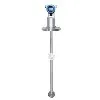
What is the cost of a gas flowmeter? Well, that's a question I get asked a lot as a gas flowmeter supplier. In this blog, I'm gonna break down the factors that influence the cost of a gas flowmeter and give you a better idea of what to expect when you're in the market for one.
First off, let's talk about the different types of gas flowmeters. There are several kinds out there, but one popular type is the Roots Flowmeter for Gas. Roots flowmeters work on the principle of positive displacement. They measure the volume of gas passing through by trapping it in compartments and then counting how many times these compartments are filled and emptied. This type of flowmeter is known for its high accuracy, especially for measuring low to medium flow rates of clean gases.
Another common type is the Gas Flowmeter. Gas flowmeters can use various technologies like thermal, ultrasonic, or differential pressure. Each technology has its own set of advantages and disadvantages, which in turn affect the cost. For example, thermal gas flowmeters are great for measuring the mass flow of gases and are relatively easy to install. But they might be more expensive compared to some other types because of the technology involved.
The Gas Roots Flowmeter is also a significant player in the market. It combines the features of a roots - type measurement mechanism with the ability to handle gas flows. These flowmeters are often used in industrial applications where accurate gas flow measurement is crucial.


Now, let's get into the factors that actually determine the cost of a gas flowmeter.
Accuracy Requirements
One of the biggest factors is the accuracy you need. If you're working in an industry where even a small error in gas flow measurement can lead to significant losses or safety issues, you'll probably need a high - accuracy flowmeter. High - accuracy flowmeters usually cost more because they require more precise manufacturing processes and better calibration. For instance, in a chemical plant where the exact amount of gas used in a reaction is critical, a flowmeter with an accuracy of ±0.5% or better might be necessary. On the other hand, if you're just doing some general monitoring where an accuracy of ±2 - 5% is acceptable, you can go for a more budget - friendly option.
Flow Range
The flow range you need to measure also plays a big role. If you have a wide flow range, say from very low flow rates to very high flow rates, you'll need a flowmeter that can handle that. Flowmeters designed for a wide flow range are typically more complex and thus more expensive. For example, in a natural gas distribution system, the flow rate can vary greatly depending on the time of day and the demand. A flowmeter that can accurately measure both the low - flow periods (like during the early morning) and the high - flow periods (during peak usage hours) will cost more than one designed for a narrow flow range.
Gas Type
The type of gas you're measuring matters too. Some gases are more corrosive or have different physical properties compared to others. If you're measuring a corrosive gas, you'll need a flowmeter made from materials that can withstand the corrosion. For example, measuring chlorine gas requires a flowmeter with corrosion - resistant materials like stainless steel or special coatings. These materials increase the cost of the flowmeter. Similarly, gases with high viscosity or those that contain particulate matter might require a flowmeter with special features to ensure accurate measurement, which also drives up the price.
Installation and Maintenance
The installation and maintenance requirements of a gas flowmeter can add to the overall cost. Some flowmeters are easy to install and require minimal maintenance, while others might need complex installation procedures and regular servicing. For example, ultrasonic flowmeters are often non - intrusive, which means they can be installed on the outside of the pipe without cutting into it. This makes the installation process quicker and less expensive. On the other hand, some differential pressure flowmeters might need a lot of piping modifications and precise alignment during installation, which can be time - consuming and costly.
Brand and Quality
Just like with any other product, the brand and quality of the gas flowmeter can affect the price. Well - known brands that have a reputation for reliability and high - quality products usually charge more. But in many cases, it's worth paying the extra money because you're getting a product that's been tested and proven over time. These brands also often offer better customer support and warranties, which can save you money in the long run if something goes wrong with the flowmeter.
So, what's the bottom line on the cost of a gas flowmeter? Well, it can range from a few hundred dollars for a basic, low - accuracy flowmeter to several thousand dollars or even more for a high - end, high - accuracy flowmeter with special features.
If you're in the market for a gas flowmeter, it's important to carefully consider your requirements. Don't just go for the cheapest option, but also don't overspend on features you don't really need. Take the time to evaluate your accuracy needs, flow range, gas type, and installation and maintenance capabilities.
If you have any questions or need help choosing the right gas flowmeter for your application, feel free to reach out. We're here to assist you in finding the best solution at a reasonable cost. Whether you're a small business looking for a simple gas flow monitoring solution or a large industrial facility in need of a high - performance flowmeter, we can work with you to meet your needs. Let's start a conversation and see how we can help you with your gas flow measurement requirements.
References
- Flow Measurement Handbook: Industrial Designs and Applications, by Richard W. Miller
- Gas Flow Measurement: Principles and Practice, by Ralph W. Miller