

The response time of a turbine flowmeter is a crucial parameter that significantly impacts its performance and suitability for various applications. As a reputable turbine flowmeter supplier, we understand the importance of this characteristic and are committed to providing in - depth insights into it.
Understanding Turbine Flowmeters
Turbine flowmeters operate on the principle that the flow of a fluid (either liquid or gas) causes a turbine rotor to spin. The rotational speed of the turbine is directly proportional to the fluid's velocity. A sensor detects the rotation of the turbine and converts it into an electrical signal, which can then be used to calculate the flow rate.
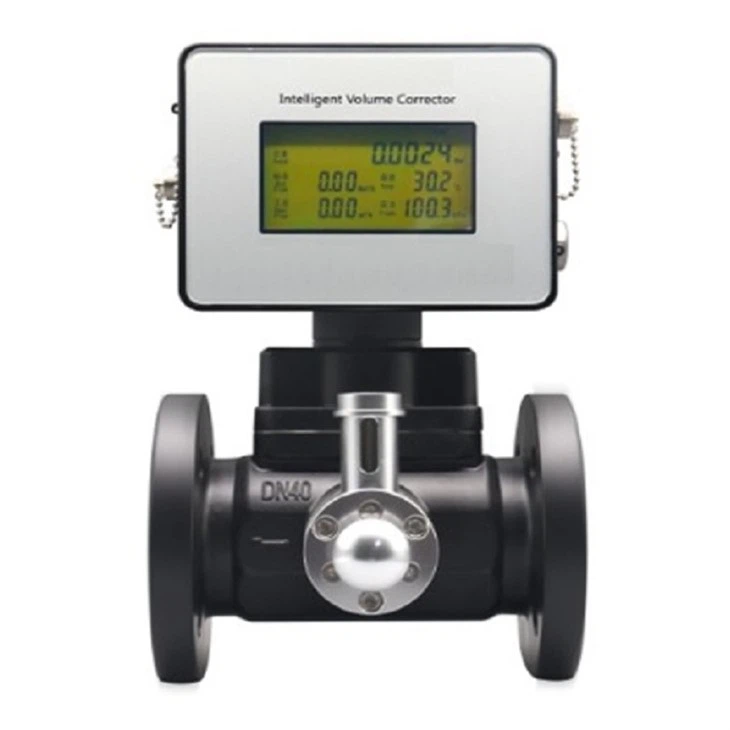
There are different types of turbine flowmeters available in the market, each designed to meet specific requirements. For instance, the Gas Turbine Flowmeter is specifically engineered for measuring the flow of gases. It is highly accurate and reliable in gas - related applications such as natural gas distribution, industrial gas processing, and more. The Natural Gas Turbine Flowmeter is a specialized version of the gas turbine flowmeter, optimized for natural gas measurement. It can handle the unique properties of natural gas, including its composition and pressure variations. The Tri - clamp Turbine Flowmeter is designed with a tri - clamp connection, which makes it easy to install and remove in systems where frequent cleaning or maintenance is required, such as in the food and beverage industry.
What is Response Time?
The response time of a turbine flowmeter refers to the time it takes for the flowmeter to detect a change in the fluid flow rate and produce a corresponding change in the output signal. In other words, it is the time lag between the actual change in the flow rate and the measurement system's ability to reflect that change accurately.
There are two main aspects to consider when discussing response time: the rise time and the fall time. The rise time is the time it takes for the output signal to increase from a low value to a specified high value (usually 90% of the final value) when there is an increase in the flow rate. Conversely, the fall time is the time it takes for the output signal to decrease from a high value to a specified low value (again, typically 90% of the initial value) when the flow rate decreases.
Factors Affecting Response Time
Several factors can influence the response time of a turbine flowmeter.
Turbine Design
The design of the turbine itself plays a significant role. A lighter and more streamlined turbine will have a lower moment of inertia. This means that it can accelerate and decelerate more quickly in response to changes in the fluid flow rate, resulting in a shorter response time. For example, turbines with fewer blades or blades with a more aerodynamic shape can respond faster to flow rate changes compared to turbines with a larger number of bulky blades.
Fluid Properties
The properties of the fluid being measured also have a major impact on the response time. Viscosity is one such property. High - viscosity fluids offer more resistance to the rotation of the turbine. As a result, the turbine takes longer to speed up or slow down when the flow rate changes, leading to a longer response time. Density is another important factor. Denser fluids can transfer more momentum to the turbine, but they may also require more energy to change the turbine's rotational speed, which can affect the response time.
Sensor Technology
The type of sensor used to detect the rotation of the turbine is crucial. Modern sensors, such as magnetic or optical sensors, can provide faster and more accurate detection of the turbine's rotation. Magnetic sensors, for example, can detect the changes in the magnetic field generated by the rotating turbine blades with high precision and at a high speed. In contrast, older or less - advanced sensor technologies may introduce delays in detecting the turbine's movement, thereby increasing the response time.
Flow Conditions
The flow conditions in the pipeline can also affect the response time. Turbulent flow can cause the turbine to experience erratic forces, which may make it more difficult for the turbine to respond quickly and accurately to flow rate changes. In laminar flow conditions, the turbine is more likely to have a smooth and predictable response, resulting in a shorter response time.
Importance of Response Time in Different Applications
The response time of a turbine flowmeter is of utmost importance in various industries and applications.
Industrial Process Control
In industrial processes, such as chemical manufacturing or power generation, precise control of the fluid flow rate is essential. A fast - responding turbine flowmeter allows for real - time adjustments to be made to the process. For example, in a chemical reactor, if the flow rate of a reactant needs to be increased suddenly to maintain the reaction rate, a turbine flowmeter with a short response time can quickly detect the change in the set - point and provide an accurate measurement, enabling the control system to adjust the flow accordingly.

Custody Transfer
In custody transfer applications, where the accurate measurement of fluid volume or mass is critical for financial transactions, a short response time is necessary. For instance, in natural gas custody transfer, any delay in detecting changes in the flow rate can lead to inaccurate billing. A turbine flowmeter with a fast response time ensures that the actual amount of gas transferred is accurately measured, protecting the interests of both the buyer and the seller.
Environmental Monitoring
In environmental monitoring applications, such as measuring the flow of wastewater or air pollutants, a fast - responding flowmeter can provide timely data. This data is crucial for making informed decisions regarding environmental protection and compliance. For example, if there is a sudden increase in the flow of pollutants into a water body, a turbine flowmeter with a short response time can quickly detect the change, allowing for immediate action to be taken to prevent further contamination.
Measuring and Improving Response Time
Measuring the response time of a turbine flowmeter typically involves subjecting the flowmeter to a step change in the flow rate and recording the time it takes for the output signal to reach a certain percentage of the final value. This can be done using specialized test equipment and software.
To improve the response time, several strategies can be employed. As mentioned earlier, optimizing the turbine design can have a significant impact. Using advanced materials to reduce the weight of the turbine and improve its aerodynamics can help. Upgrading the sensor technology to a more advanced and faster - responding type is also an effective way to shorten the response time. Additionally, ensuring proper installation and maintenance of the flowmeter, including minimizing the presence of air bubbles or debris in the fluid, can contribute to a better response.
Conclusion
In conclusion, the response time of a turbine flowmeter is a critical characteristic that affects its performance in a wide range of applications. As a turbine flowmeter supplier, we are dedicated to providing flowmeters with excellent response times. Our team of experts is constantly researching and developing new technologies to optimize the design of our turbines, select the most suitable sensors, and ensure that our flowmeters can meet the diverse needs of our customers.
If you are in need of a high - quality turbine flowmeter with a fast response time for your specific application, we invite you to contact us for a detailed discussion. Our technical support team can assist you in selecting the most appropriate flowmeter model and provide you with all the necessary information about its performance and features. We look forward to working with you to meet your flow measurement requirements.
References
- "Flow Measurement Handbook: Industrial Designs and Applications" by Richard W. Miller
- "Process Instrumentation and Control Handbook" by Bela G. Liptak


