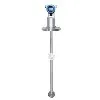
When it comes to ultrasonic flowmeters, one of the key aspects that often gets overlooked is the power supply. As a supplier of ultrasonic flowmeters, I've seen firsthand how crucial it is to choose the right power option for your specific needs. In this blog post, I'll break down the different power supply options available for ultrasonic flowmeters and help you figure out which one is the best fit for you.
Battery Power
Let's start with battery power. This is a popular choice for many users, especially those who need a portable solution. Battery-powered ultrasonic flowmeters are great for on-the-go applications, like field testing or temporary installations. They offer the flexibility to be used in areas where there's no access to mains electricity.
One of the main advantages of battery power is its portability. Take our Handhold Ultrasonic Flowmeter for example. It's designed to be lightweight and easy to carry around, making it perfect for technicians who need to measure flow rates at different locations. With a good set of batteries, you can get several hours of continuous use, which is usually more than enough for most field jobs.
However, there are also some drawbacks to battery power. The most obvious one is the limited runtime. Once the batteries run out, you'll need to replace them or recharge them, depending on the type of batteries used. This can be a hassle, especially if you're in the middle of a long-term measurement. Also, the performance of batteries can be affected by temperature. In extremely cold or hot conditions, the battery life may be significantly reduced.
Mains Power
Mains power, on the other hand, provides a continuous and reliable source of energy. If your ultrasonic flowmeter is going to be installed in a fixed location, like a factory or a water treatment plant, mains power is probably the way to go. It eliminates the need to worry about battery replacement or recharging, and you can be sure that the flowmeter will keep running as long as there's electricity available.
Our Split Type Open Channel Flowmeter is often used in industrial settings where a stable power supply is essential. It can be easily connected to the mains electricity, and with proper wiring and protection, it can operate smoothly for years without any power-related issues.
The main advantage of mains power is its reliability. You don't have to deal with the uncertainties of battery life, and you can focus on getting accurate flow measurements. However, the installation of a mains-powered flowmeter can be more complicated. You'll need to have the appropriate electrical infrastructure in place, and in some cases, you may need to hire a professional electrician to handle the wiring. Also, in the event of a power outage, the flowmeter will stop working unless you have a backup power system.
Solar Power
Solar power is an increasingly popular option for ultrasonic flowmeters, especially in remote or off-grid locations. It's a clean and renewable energy source that can help reduce your carbon footprint. Solar-powered flowmeters work by converting sunlight into electricity using solar panels. The electricity is then stored in a battery, which can be used to power the flowmeter when there's no sunlight.
Our TUF-2000M Ultrasonic Flowmeter can be configured to run on solar power. This makes it ideal for applications in rural areas, agricultural fields, or other locations where access to mains electricity is limited. With a properly sized solar panel and battery, the flowmeter can operate continuously, even during periods of low sunlight.
The biggest advantage of solar power is its sustainability. It doesn't produce any emissions or pollution, and it can save you money on energy costs in the long run. However, the initial investment for a solar power system can be quite high. You'll need to purchase the solar panels, batteries, and other components, and the installation can be complex. Also, the performance of a solar-powered flowmeter depends on the amount of sunlight available. In cloudy or rainy weather, the power output may be reduced.
DC Power
DC power is another option that's commonly used for ultrasonic flowmeters. It can be provided by a variety of sources, such as a battery, a solar panel, or a power supply unit. DC power is often preferred for applications where a low voltage and stable power source is required.
One of the benefits of DC power is its compatibility with other electronic devices. Many ultrasonic flowmeters can be easily integrated with data loggers, sensors, and other equipment that also run on DC power. This makes it easier to create a complete monitoring system.
However, like battery power, DC power also has its limitations. The power output may be limited, especially if you're using a small battery or a low-capacity power supply. Also, you'll need to ensure that the DC power source is properly regulated to prevent damage to the flowmeter.
Choosing the Right Power Supply
So, how do you choose the right power supply for your ultrasonic flowmeter? Well, it really depends on your specific requirements. Here are some factors to consider:
Application
Think about where and how the flowmeter will be used. If it's for portable applications, battery power or solar power may be the best choice. If it's for a fixed installation in a location with reliable mains electricity, mains power is probably the most practical option.
Runtime
Consider how long you need the flowmeter to run continuously. If you need long-term, uninterrupted measurement, mains power or a combination of solar power and battery backup may be necessary.
Environment
The operating environment can also have a big impact on the power supply. In extreme temperatures, battery performance may be affected, so you may want to choose a power option that's less sensitive to temperature, like mains power.


Cost
Cost is always a factor. Battery power may be cheaper upfront, but you'll need to factor in the cost of battery replacement or recharging over time. Mains power may require a higher initial investment for installation, but it can save you money in the long run. Solar power has a high initial cost but can provide free energy in the long term.
Conclusion
In conclusion, there are several power supply options available for ultrasonic flowmeters, each with its own advantages and disadvantages. As a supplier, we understand that choosing the right power supply is crucial for the proper functioning of the flowmeter. Whether you need a portable solution for field work or a reliable power source for a fixed installation, we can help you find the best power option for your needs.
If you're interested in purchasing an ultrasonic flowmeter or have any questions about power supply options, don't hesitate to reach out to us. We're here to assist you in making the right choice and ensuring that you get the most out of your flow measurement system.
References
- "Flow Measurement Handbook: Industrial Designs and Applications" by Richard W. Miller
- "Ultrasonic Flowmeters: Principles and Applications" by various authors