Hey there! As a supplier of mass flowmeters, I've seen my fair share of issues that can pop up when these devices are in use. One of the most common and tricky problems is electromagnetic interference (EMI). In this blog, I'm gonna break down what EMI is, how it affects mass flowmeters, and what we can do about it.
First off, let's talk about what electromagnetic interference actually is. EMI is basically the disruption that occurs when an electromagnetic field from one source interferes with the normal operation of another electronic device. There are all kinds of sources of EMI, like power lines, motors, radio transmitters, and even other electronic equipment. These sources can generate electromagnetic waves that can mess with the signals in mass flowmeters.
So, how does EMI impact mass flowmeters? Well, mass flowmeters work by measuring the flow of a fluid or gas. They use various techniques to do this, but most rely on electrical signals to detect and process the flow data. When EMI comes into the picture, it can introduce noise into these electrical signals. This noise can cause inaccurate readings, making it seem like the flow rate is different from what it actually is.
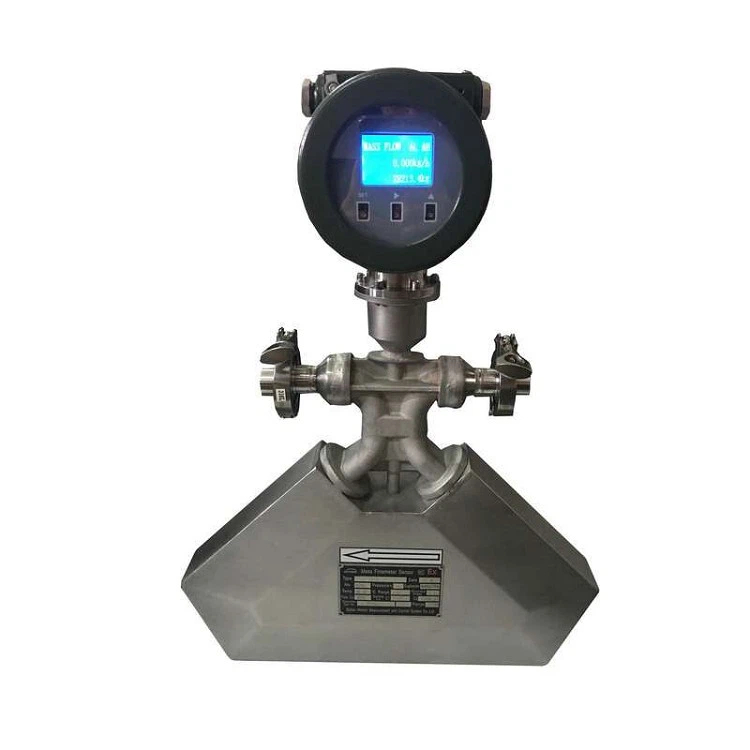
For example, let's say you're using a Coriolis Mass Flowmeter for Drinking to measure the flow of water in a drinking water supply system. If there's a lot of EMI in the area, the meter might give you readings that are either too high or too low. This can be a big problem, especially in industries where accurate flow measurement is crucial for things like quality control, process optimization, and safety.
Another issue is that EMI can sometimes cause the mass flowmeter to malfunction completely. The interference can disrupt the internal electronics of the meter, leading to errors, freezes, or even permanent damage. This can result in costly downtime for your operations and the need to replace or repair the meter.
Now, you might be wondering what causes EMI around mass flowmeters. There are several factors at play. One common cause is poor grounding. If the mass flowmeter isn't properly grounded, it can act like an antenna, picking up electromagnetic waves from the surrounding environment. This is why it's so important to make sure that all electrical connections and grounding systems are installed correctly.
Electrical equipment in the vicinity of the mass flowmeter can also be a source of EMI. Motors, generators, and other high - power devices can generate strong electromagnetic fields. If the mass flowmeter is placed too close to these devices, it's more likely to be affected by the interference.
Radio frequency interference (RFI) is another type of EMI that can be a problem. RFI can come from radio stations, cell phones, and Wi - Fi routers. These wireless devices emit electromagnetic waves in the radio frequency range, which can interfere with the signals in the mass flowmeter.
So, what can we do to deal with EMI issues? Well, there are several solutions. One of the most effective ways is to use shielding. Shielding involves enclosing the mass flowmeter or its components in a conductive material, like metal. This material acts as a barrier, blocking the electromagnetic waves from reaching the internal electronics of the meter.
Proper installation is also key. When installing a mass flowmeter, it's important to keep it away from sources of EMI. This means avoiding placing it near motors, power lines, and other high - power electrical equipment. You should also make sure that the meter is installed in a location where it's less likely to be exposed to RFI, such as away from wireless access points.
Using filters can also help. Filters can be installed in the electrical circuits of the mass flowmeter to remove the unwanted noise caused by EMI. These filters work by allowing only the desired frequency range of the electrical signals to pass through, while blocking the frequencies associated with the interference.
At our company, we understand the importance of dealing with EMI issues. That's why we offer high - quality mass flowmeters, like our High Accuracy Flowmeter and Coriolis Flowmeter, that are designed to be more resistant to EMI. Our engineers have spent a lot of time researching and developing these products to ensure that they can provide accurate and reliable measurements even in challenging electromagnetic environments.
If you're facing EMI issues with your current mass flowmeters or if you're in the market for a new one, we'd love to help. Our team of experts can provide you with advice on the best mass flowmeter for your specific application, as well as guidance on how to install and maintain it to minimize EMI problems.
Don't let EMI ruin your flow measurement accuracy. Contact us today to discuss your needs and find out how our mass flowmeters can help you overcome these challenges. Whether you're in the food and beverage industry, pharmaceuticals, or any other field that requires precise flow measurement, we've got the solutions you need.
In conclusion, electromagnetic interference is a real problem for mass flowmeters, but it's not something that can't be managed. By understanding the causes of EMI, taking preventive measures, and using high - quality, EMI - resistant mass flowmeters, you can ensure that your flow measurement systems operate accurately and reliably.

References
- "Electromagnetic Compatibility in Industrial Electronics" - A technical guide on dealing with EMI in industrial settings.
- "Flow Measurement Handbook" - A comprehensive resource on flow measurement techniques and the impact of interference.