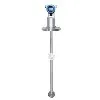
As a supplier of Roots Flowmeters, I've witnessed firsthand the growing demand for accurate and reliable flow measurement solutions across various industries. In this blog post, I'll delve into the numerous advantages that Roots Flowmeters offer over other types of flowmeters, highlighting why they are an excellent choice for many applications.
High Accuracy and Repeatability
One of the most significant advantages of Roots Flowmeters is their high level of accuracy and repeatability. These flowmeters operate on the principle of positive displacement, which means they directly measure the volume of fluid passing through them. This method provides a highly accurate measurement, typically within ±0.5% to ±1% of the measured value.
In comparison, other flowmeters such as turbine flowmeters or electromagnetic flowmeters may have lower accuracy levels, especially in applications with varying flow rates or fluid properties. The repeatability of Roots Flowmeters is also exceptional, ensuring consistent and reliable measurements over time. This is crucial in industries where precise flow measurement is essential, such as the oil and gas, chemical, and food and beverage industries.
Wide Rangeability
Roots Flowmeters offer a wide rangeability, which refers to the ratio between the maximum and minimum flow rates that the flowmeter can accurately measure. A high rangeability is desirable because it allows the flowmeter to handle a wide variety of flow conditions without sacrificing accuracy.
Roots Flowmeters typically have a rangeability of 10:1 to 20:1, which is significantly higher than many other types of flowmeters. This means that they can accurately measure both low and high flow rates, making them suitable for applications where the flow rate may vary significantly. For example, in a gas distribution system, the flow rate may vary depending on the time of day, the demand from customers, and the pressure in the system. A Roots Flowmeter can handle these variations and provide accurate measurements at all times.
Low Pressure Drop
Another advantage of Roots Flowmeters is their low pressure drop. Pressure drop is the difference in pressure between the inlet and outlet of the flowmeter, and it is an important consideration in many applications because it can affect the efficiency of the system.


Roots Flowmeters have a relatively low pressure drop compared to other types of flowmeters, such as orifice plates or venturi meters. This is because they have a simple design with few moving parts, which reduces the resistance to flow. A low pressure drop means that less energy is required to pump the fluid through the flowmeter, resulting in lower operating costs and increased efficiency.
Resistance to Viscosity and Density Changes
Roots Flowmeters are relatively insensitive to changes in fluid viscosity and density. Viscosity is a measure of the fluid's resistance to flow, and density is a measure of the mass per unit volume of the fluid. Changes in viscosity and density can affect the accuracy of many types of flowmeters, but Roots Flowmeters are less affected because they operate on the principle of positive displacement.
In applications where the fluid viscosity or density may vary, such as in the chemical or food and beverage industries, a Roots Flowmeter can provide more accurate and reliable measurements than other types of flowmeters. This is because the positive displacement principle ensures that the flowmeter measures the actual volume of fluid passing through it, regardless of the fluid's viscosity or density.
Compatibility with a Wide Range of Fluids
Roots Flowmeters are compatible with a wide range of fluids, including gases and liquids. They can be used to measure the flow of natural gas, propane, air, water, oil, and many other fluids. This versatility makes them a popular choice in many industries, including the oil and gas, chemical, and food and beverage industries.
In addition, Roots Flowmeters can be designed to handle a wide range of operating conditions, including high pressures and temperatures. This makes them suitable for use in harsh environments where other types of flowmeters may not be able to operate effectively.
Easy Installation and Maintenance
Roots Flowmeters are relatively easy to install and maintain. They have a simple design with few moving parts, which makes them less prone to breakdowns and reduces the need for frequent maintenance. In addition, many Roots Flowmeters are designed to be installed in a horizontal or vertical position, which provides flexibility in the installation process.
Maintenance of Roots Flowmeters typically involves regular cleaning and inspection to ensure that the flowmeter is operating properly. The moving parts of the flowmeter may need to be lubricated periodically, but this is a relatively simple procedure. Overall, the ease of installation and maintenance of Roots Flowmeters makes them a cost-effective choice for many applications.
Conclusion
In conclusion, Roots Flowmeters offer numerous advantages over other types of flowmeters, including high accuracy and repeatability, wide rangeability, low pressure drop, resistance to viscosity and density changes, compatibility with a wide range of fluids, and easy installation and maintenance. These advantages make Roots Flowmeters an excellent choice for many applications in various industries.
If you're in the market for a reliable and accurate flow measurement solution, I encourage you to consider a Roots Flowmeter. Our company offers a wide range of Roots Flowmeter for Gas and Gas Roots Flowmeter products that are designed to meet the needs of different applications. You can also explore our Gas Flowmeter options for more information.
If you have any questions or would like to discuss your specific requirements, please don't hesitate to contact us. We're here to help you find the best flow measurement solution for your needs.
References
- "Flow Measurement Handbook: Industrial Designs and Applications" by Ralph W. Miller
- "Process Instrumentation and Control Handbook" by Bela G. Liptak