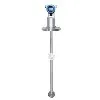
Installing an ultrasonic level meter in a pentagonal tank requires a comprehensive understanding of both the device and the tank's unique geometry. As a supplier of Ultrasonic Level Meter, I've gathered valuable insights over the years that I'm excited to share with you. This guide will walk you through the entire installation process, ensuring that you can achieve accurate and reliable level measurements in your pentagonal tank.
Pre - installation Preparation
Before you start the actual installation, there are several crucial steps to take. First, thoroughly inspect the pentagonal tank. Check for any signs of damage, corrosion, or irregularities on the inner and outer surfaces. This is important because any imperfections could affect the accuracy of the ultrasonic level meter readings. For example, if there are large dents or protrusions inside the tank, they may cause false echoes, leading to incorrect level measurements.
Next, measure the dimensions of the pentagonal tank precisely. You need to know the height, the lengths of each side, and the angles between the sides. These measurements will help you determine the best location for installing the ultrasonic level meter. You can use a measuring tape and a protractor for this task. Make sure to record all the measurements accurately.
It's also essential to understand the nature of the liquid or material that will be stored in the tank. Different substances have different acoustic properties, which can affect how the ultrasonic waves travel through them. For instance, liquids with high viscosity or those containing a lot of suspended solids may absorb or scatter the ultrasonic waves more than clear liquids. This information will help you choose the appropriate settings for the ultrasonic level meter.
Selecting the Installation Location
Choosing the right location for the ultrasonic level meter is critical for accurate measurements. In a pentagonal tank, the ideal location is usually at the center of the tank's top surface. This is because it provides an equal distance to all the sides of the pentagon, minimizing the chances of interference from the tank walls. However, if the tank has internal structures such as baffles or agitators, you may need to adjust the installation location.
Avoid installing the meter near any openings, such as vents or filling ports. These openings can cause air turbulence, which may disrupt the ultrasonic waves and lead to inaccurate readings. Also, keep the meter away from areas where there is a high risk of splashing or dripping, as this can damage the device.
Once you've identified the general location, mark it on the tank's top surface. Use a marker or a piece of tape to ensure that you can easily find the spot during the installation process.
Mounting the Ultrasonic Level Meter
Now that you've selected the installation location, it's time to mount the ultrasonic level meter. First, make sure that you have all the necessary mounting hardware, such as brackets, screws, and washers. The mounting hardware should be suitable for the material of the tank and the weight of the meter.
If the tank is made of metal, you can use magnetic brackets for easy installation. Simply attach the magnetic bracket to the tank's top surface at the marked location, and then mount the ultrasonic level meter onto the bracket. If the tank is made of non - magnetic material, you may need to drill holes in the tank and use screws to secure the bracket.
When mounting the meter, ensure that it is level and perpendicular to the surface of the liquid in the tank. You can use a spirit level to check the alignment. An incorrectly mounted meter may produce inaccurate readings due to the misalignment of the ultrasonic waves.
Wiring the Ultrasonic Level Meter
After mounting the meter, the next step is to wire it properly. First, refer to the user manual of the ultrasonic level meter to understand the wiring diagram. The meter usually has several terminals for power supply, signal output, and ground.
Connect the power supply wires to the appropriate terminals on the meter. Make sure to use the correct voltage and polarity. Incorrect power supply can damage the meter or cause it to malfunction.
Next, connect the signal output wires to the control system or the monitoring device. The signal output can be in the form of a 4 - 20 mA current loop, a digital signal, or a wireless signal, depending on the model of the meter. Follow the instructions in the user manual to ensure a proper connection.
Finally, connect the ground wire to a reliable ground point. Grounding is important to protect the meter from electrical interference and to ensure the safety of the installation.
Calibrating the Ultrasonic Level Meter
Calibration is a crucial step to ensure the accuracy of the ultrasonic level meter. After wiring the meter, power it on and allow it to warm up for a few minutes. Then, follow the calibration procedure outlined in the user manual.
The calibration process usually involves setting the zero point and the span point. The zero point corresponds to the empty level of the tank, and the span point corresponds to the full level of the tank. To set the zero point, make sure the tank is empty and then adjust the meter's settings until it reads zero. To set the span point, fill the tank to its maximum level and adjust the settings until the meter reads the correct level.


During the calibration process, it's important to take multiple measurements and average them to reduce errors. You may also need to repeat the calibration process a few times to ensure the accuracy of the readings.
Testing and Troubleshooting
Once the installation and calibration are complete, it's time to test the ultrasonic level meter. Fill the tank with a small amount of liquid and check the meter's readings. Compare the readings with the actual level of the liquid in the tank. If there is a significant difference, there may be a problem with the installation or calibration.
If the readings are inaccurate, check the following:
- Mounting: Make sure the meter is properly mounted and level. Any misalignment can cause incorrect readings.
- Wiring: Check all the wiring connections to ensure they are secure and properly connected. Loose or incorrect wiring can lead to signal loss or interference.
- Calibration: Review the calibration process and make sure it was done correctly. You may need to repeat the calibration if necessary.
- Tank conditions: Check for any changes in the tank conditions, such as the presence of foam, vapors, or turbulence. These factors can affect the accuracy of the ultrasonic level meter readings.
Maintenance and Long - term Use
To ensure the long - term performance of the ultrasonic level meter, regular maintenance is required. Clean the transducer of the meter periodically to remove any dirt, debris, or build - up. This will help to maintain the sensitivity of the ultrasonic waves.
Inspect the wiring and mounting hardware regularly for any signs of damage or wear. Replace any damaged parts immediately to prevent further problems.
Keep the meter away from extreme temperatures, humidity, and corrosive environments. If the meter is installed in a harsh environment, consider using a protective enclosure to extend its lifespan.
Contact for Purchase and Consultation
If you're interested in purchasing an ultrasonic level meter for your pentagonal tank or have any questions about the installation process, please feel free to reach out to us. Our team of experts is always ready to assist you with your needs. Whether you need further advice on installation, calibration, or maintenance, we're here to provide you with the best solutions.
References
- Manufacturer's user manual of the ultrasonic level meter
- Industry standards for level measurement in industrial tanks
- Technical papers on ultrasonic level measurement technology