

Hey there! I'm a supplier of Ultrasonic Level Meter, and today I wanna chat about how air density change affects these nifty devices.
Basics of Ultrasonic Level Meters
First off, let's quickly go over how an ultrasonic level meter works. It sends out ultrasonic waves from a transducer. These waves travel through the air and hit the surface of the liquid or solid material whose level we're trying to measure. Then, they bounce back to the transducer. By measuring the time it takes for the waves to make this round - trip, the meter can calculate the distance to the surface and thus determine the level.
The Role of Air in Ultrasonic Wave Propagation
Air is the medium through which the ultrasonic waves travel. And air density plays a crucial role in this process. You see, the speed of ultrasonic waves in air is directly related to the air density. The denser the air, the slower the ultrasonic waves travel. This is because in a denser medium, the molecules are closer together. So, the ultrasonic waves have more interactions with the air molecules as they move through, which slows them down.
How Air Density Changes
Air density doesn't stay constant; it changes due to several factors. Temperature is a big one. When the temperature rises, air molecules gain energy and spread out. This makes the air less dense. Conversely, when it gets colder, the air molecules lose energy and come closer together, increasing the air density.
Pressure also affects air density. Higher pressure squeezes the air molecules closer, resulting in higher density. At high - altitude locations where the atmospheric pressure is lower, the air is less dense compared to sea - level areas.
Humidity is another factor. Water vapor is less dense than dry air. So, as the humidity increases, the overall air density decreases because more of the less - dense water vapor is present in the air.
Impact on Ultrasonic Level Meter Readings
Now, let's talk about how these air density changes mess with the readings of an ultrasonic level meter. Since the meter calculates the level based on the time it takes for the ultrasonic waves to travel to the surface and back, any change in the wave speed due to air density will lead to inaccurate readings.
If the air density increases (say, due to a drop in temperature or an increase in pressure), the ultrasonic waves slow down. But the meter assumes a constant wave speed when calculating the distance. So, it will think the waves took longer to travel because the surface is farther away than it actually is. This results in an over - estimation of the distance and an incorrect level reading.
On the flip side, when the air density decreases (like when the temperature rises or humidity goes up), the ultrasonic waves speed up. The meter will then think the waves reached the surface and back faster, so it will underestimate the distance and give an incorrect level reading.
Real - World Examples
Let's look at some real - world scenarios. Imagine a storage tank in a factory. During the day, when the temperature is high, the air inside the tank is less dense. The ultrasonic level meter might show a lower level than the actual level because the waves are traveling faster. At night, when it gets cold, the air density increases, and the meter could show a higher level than what's really there.
In a coastal area where humidity can vary a lot, a sudden increase in humidity can cause the air density to drop. This will lead to inaccurate readings on the ultrasonic level meter, which could be a problem if the level measurement is critical for a process.
Coping with Air Density Changes
As a supplier, we're well aware of these issues, and we've come up with some solutions. One approach is to use temperature and pressure sensors in conjunction with the ultrasonic level meter. These sensors can measure the temperature and pressure of the air around the meter. The meter can then adjust the assumed wave speed based on the measured values of temperature and pressure to correct for the air density changes.
Another option is to use compensation algorithms. These algorithms take into account the relationship between air density, temperature, pressure, and humidity. By inputting the relevant data, the meter can calculate a more accurate wave speed and thus provide more reliable level readings.
Importance of Accurate Readings
Accurate level measurements are super important in many industries. In the chemical industry, precise level readings are crucial for maintaining the right amount of chemicals in a reaction vessel. An incorrect reading could lead to an over - or under - supply of chemicals, which can affect the quality of the final product or even cause safety hazards.
In the water treatment industry, knowing the exact water level in tanks is essential for proper operation. If the level is misjudged, it could lead to overflow or under - filling, both of which can disrupt the treatment process.
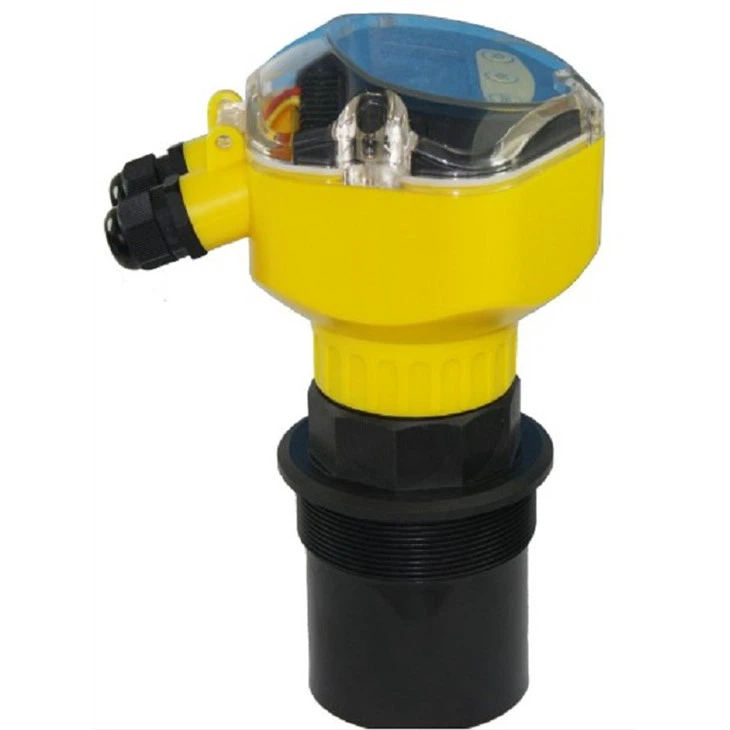

Our Offer as a Supplier
We understand that dealing with air density changes and ensuring accurate level measurements is a headache for many of our customers. That's why we're committed to providing high - quality Ultrasonic Level Meters that are equipped with the latest technology to handle these issues.
Our meters are designed with built - in temperature and pressure sensors and advanced compensation algorithms. This means you can get reliable and accurate level readings even in environments where air density is constantly changing.
If you're in the market for an ultrasonic level meter and want to ensure you're getting a product that can handle air density variations, we'd love to have a chat with you. Whether you're in the food and beverage industry, oil and gas, or any other sector that requires precise level measurements, we can offer you the right solution.
So, don't hesitate to reach out to us for more information or to discuss your specific requirements. We're here to help you make the best choice for your level measurement needs.
References
- "Ultrasonic Sensors: Theory and Applications" by some well - known author in the field.
- Industry research reports on level measurement technologies.


