Density is a fundamental physical property that plays a crucial role in various industries, from chemical processing to food and beverage production. Measuring the density of liquids accurately is essential for quality control, process optimization, and ensuring product consistency. As a trusted Liquid Density Meter supplier, we understand the importance of precise density measurement and the diverse needs of our customers. In this blog post, we will explore how a liquid density meter measures density in different units and the significance of these measurements in various applications.
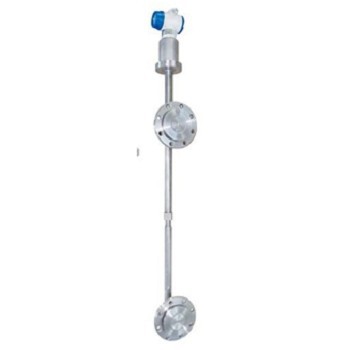

How Liquid Density Meters Work
Before delving into the units of measurement, it's important to understand how liquid density meters operate. There are several types of density meters available on the market, each utilizing different principles to measure density. Some of the most common types include:
- Vibrating Element Density Meters: These meters use a vibrating element, such as a tube or fork, that is immersed in the liquid. The frequency of vibration changes depending on the density of the liquid, allowing the meter to calculate the density accurately.
- U-Tube Density Meters: U-tube density meters work by measuring the resonant frequency of a U-shaped tube filled with the liquid. The density of the liquid affects the resonant frequency, which is then used to determine the density.
- Hydrostatic Pressure Density Meters: These meters measure the hydrostatic pressure exerted by the liquid at a specific depth. The pressure is directly proportional to the density of the liquid, allowing the meter to calculate the density based on the pressure reading.
Regardless of the type of density meter used, the basic principle remains the same: the meter measures a physical property that is related to the density of the liquid and then converts this measurement into a density value.
Units of Density Measurement
Density is typically expressed in units of mass per unit volume. The most common units of density measurement include:
- Kilograms per Cubic Meter (kg/m³): This is the SI unit of density and is widely used in scientific and engineering applications. It represents the mass of a substance in kilograms divided by its volume in cubic meters.
- Grams per Cubic Centimeter (g/cm³): This unit is commonly used in chemistry and materials science. It is equivalent to 1000 kg/m³ and represents the mass of a substance in grams divided by its volume in cubic centimeters.
- Pounds per Cubic Foot (lb/ft³): This unit is commonly used in the United States and other countries that use the imperial system of measurement. It represents the mass of a substance in pounds divided by its volume in cubic feet.
- Specific Gravity: Specific gravity is a dimensionless quantity that compares the density of a substance to the density of a reference substance, usually water at a specific temperature. It is often used in industries such as petroleum and brewing to express the relative density of a liquid.
Converting Between Density Units
Converting between different units of density measurement is relatively straightforward. To convert from one unit to another, you simply need to use the appropriate conversion factor. For example, to convert from kg/m³ to g/cm³, you divide the density value in kg/m³ by 1000. To convert from g/cm³ to lb/ft³, you multiply the density value in g/cm³ by 62.43.
Most modern liquid density meters are capable of displaying density values in multiple units, allowing users to choose the unit that is most convenient for their application. This flexibility makes it easier for users to work with density measurements in different contexts and ensures that the density values are presented in a format that is easily understandable.
Importance of Measuring Density in Different Units
Measuring density in different units is important for several reasons. Firstly, different industries and applications may use different units of measurement. For example, the chemical industry may use kg/m³ or g/cm³, while the food and beverage industry may use specific gravity or degrees Brix (a measure of sugar content based on specific gravity). By being able to measure density in different units, our liquid density meters can be used in a wide range of industries and applications, providing our customers with greater flexibility and versatility.
Secondly, measuring density in different units allows for easy comparison of density values across different substances and materials. For example, if you are comparing the density of two different liquids, it is important to use the same unit of measurement to ensure that the comparison is accurate. By being able to measure density in multiple units, our liquid density meters make it easier for users to compare density values and make informed decisions.
Finally, measuring density in different units is important for international trade and communication. Different countries may use different units of measurement, and being able to provide density values in the appropriate unit can help to avoid confusion and ensure that the information is understood correctly. Our liquid density meters are designed to be compatible with a wide range of units, making them suitable for use in international markets.
Applications of Liquid Density Meters
Liquid density meters are used in a wide range of industries and applications, including:
- Chemical Processing: In the chemical industry, density measurement is used for quality control, process optimization, and product development. For example, density measurement can be used to monitor the concentration of a chemical solution, ensure the consistency of a product, and detect impurities or contaminants.
- Food and Beverage Production: In the food and beverage industry, density measurement is used to control the quality and consistency of products such as beer, wine, soft drinks, and dairy products. For example, density measurement can be used to determine the sugar content of a beverage, monitor the fermentation process, and ensure the correct viscosity of a product.
- Petroleum and Oil Industry: In the petroleum and oil industry, density measurement is used for a variety of purposes, including determining the quality and composition of crude oil, monitoring the refining process, and measuring the density of fuels and lubricants.
- Pharmaceutical Industry: In the pharmaceutical industry, density measurement is used for quality control, formulation development, and process optimization. For example, density measurement can be used to ensure the correct concentration of a drug solution, monitor the dissolution rate of a tablet, and detect impurities or contaminants.
Our Liquid Density Meter Products
As a leading Liquid Density Meter supplier, we offer a wide range of density meters to meet the diverse needs of our customers. Our products include:
- Online Density Transmitter: Our online density transmitters are designed for continuous, real-time density measurement in industrial processes. They are available in a variety of configurations and can be customized to meet the specific requirements of your application.
- Slurry Density Meter: Our slurry density meters are specifically designed for measuring the density of slurries and suspensions. They are rugged, reliable, and accurate, making them ideal for use in harsh industrial environments.
- Side Mounted Liquid Density Meter: Our side mounted liquid density meters are easy to install and maintain, making them a popular choice for many applications. They are available in a variety of sizes and can be used to measure the density of liquids in tanks, pipelines, and other vessels.
All of our liquid density meters are manufactured to the highest quality standards and are backed by our comprehensive technical support and after-sales service. We are committed to providing our customers with the best possible products and services, and we are always happy to help you find the right density meter for your application.
Contact Us for More Information
If you are interested in learning more about our liquid density meters or would like to discuss your specific requirements, please contact us today. Our team of experts will be happy to answer your questions and provide you with more information about our products and services. We look forward to working with you to meet your density measurement needs.
References
- ASTM International. (2021). Standard Test Methods for Density, Relative Density (Specific Gravity), or API Gravity of Crude Petroleum and Liquid Petroleum Products by Hydrometer Method. ASTM D1298-12b (Reapproved 2021).
- Haynes, W. M. (Ed.). (2016). CRC Handbook of Chemistry and Physics (97th ed.). CRC Press.
- NIST. (2021). Guide for the Use of the International System of Units (SI). NIST Special Publication 811 (2021 Edition).