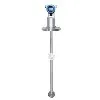
High accuracy flowmeters play a crucial role in various industries, especially when it comes to handling corrosive chemicals. As a leading supplier of High Accuracy Flowmeter, we understand the challenges and requirements associated with measuring the flow of corrosive substances accurately. In this blog post, we will explore how high accuracy flowmeters manage to handle corrosive chemicals effectively.
Understanding Corrosive Chemicals
Corrosive chemicals are substances that have the potential to damage or destroy materials through chemical reactions. These chemicals can be acids, bases, salts, or other reactive compounds. Industries such as chemical processing, pharmaceuticals, food and beverage, and water treatment often deal with corrosive chemicals in their operations. Measuring the flow of these substances accurately is essential for process control, quality assurance, and safety.
Challenges in Measuring Corrosive Chemicals
Measuring the flow of corrosive chemicals presents several challenges. First, the corrosive nature of the chemicals can damage the internal components of the flowmeter, leading to inaccurate measurements or even complete failure. Second, the chemical properties of the substances, such as viscosity, density, and conductivity, can vary widely, making it difficult to find a flowmeter that can provide accurate readings across different conditions. Third, the presence of solids or bubbles in the flow can also affect the accuracy of the measurements.
How High Accuracy Flowmeters Overcome These Challenges
High accuracy flowmeters are designed to address the challenges associated with measuring corrosive chemicals. Here are some of the ways they do it:
Material Selection
One of the key factors in handling corrosive chemicals is the selection of the right materials for the flowmeter. Our high accuracy flowmeters are constructed using materials that are resistant to corrosion, such as stainless steel, titanium, and special alloys. These materials can withstand the harsh chemical environment and ensure the long-term reliability of the flowmeter. For example, Coriolis Flowmeter sensors are often made of stainless steel or titanium, which are highly resistant to corrosion from acids and bases.
Sealing and Isolation
To prevent the corrosive chemicals from coming into contact with the internal components of the flowmeter, proper sealing and isolation techniques are used. Our flowmeters are equipped with high-quality seals and gaskets that can withstand the pressure and temperature of the process. In addition, some flowmeters use a lining or coating on the internal surfaces to provide an extra layer of protection against corrosion.
Advanced Measurement Technologies
High accuracy flowmeters utilize advanced measurement technologies that can provide accurate readings even in challenging conditions. For example, Coriolis flowmeters measure the mass flow rate of the fluid by detecting the Coriolis effect, which is independent of the fluid's density, viscosity, and conductivity. This makes them suitable for measuring a wide range of corrosive chemicals. Another example is the Mass Flowmeter, which can measure the mass flow rate directly, eliminating the need for density compensation.
Self-Calibration and Diagnostic Features
To ensure the accuracy of the measurements, our high accuracy flowmeters are equipped with self-calibration and diagnostic features. These features allow the flowmeter to automatically adjust its settings based on the changes in the process conditions and detect any potential problems before they cause significant errors. For example, some flowmeters can perform regular self-checks to verify the accuracy of the sensors and alert the operator if any issues are detected.
Applications of High Accuracy Flowmeters in Corrosive Chemical Handling
High accuracy flowmeters are widely used in various industries for handling corrosive chemicals. Here are some examples:


Chemical Processing
In the chemical processing industry, high accuracy flowmeters are used to measure the flow of corrosive chemicals such as acids, bases, and solvents. These measurements are essential for controlling the chemical reactions, ensuring the quality of the products, and preventing environmental pollution.
Pharmaceuticals
In the pharmaceutical industry, high accuracy flowmeters are used to measure the flow of corrosive chemicals during the manufacturing process. Accurate flow measurement is critical for ensuring the consistency and quality of the pharmaceutical products.
Food and Beverage
In the food and beverage industry, high accuracy flowmeters are used to measure the flow of corrosive chemicals such as cleaning agents and sanitizers. These measurements are important for maintaining the hygiene and safety of the production environment.
Water Treatment
In the water treatment industry, high accuracy flowmeters are used to measure the flow of corrosive chemicals such as chlorine and sulfuric acid. These chemicals are used for disinfection and pH adjustment, and accurate flow measurement is essential for ensuring the effectiveness of the treatment process.
Conclusion
High accuracy flowmeters are essential tools for handling corrosive chemicals in various industries. By using the right materials, advanced measurement technologies, and self-calibration and diagnostic features, these flowmeters can provide accurate and reliable measurements even in challenging conditions. As a supplier of High Accuracy Flowmeter, we are committed to providing our customers with the best solutions for their flow measurement needs. If you are looking for a high accuracy flowmeter for handling corrosive chemicals, please contact us to discuss your requirements. We will be happy to assist you in finding the right flowmeter for your application.
References
- "Flow Measurement Handbook: Industrial Designs and Applications" by Richard W. Miller.
- "Coriolis Flowmeters: Fundamentals and Applications" by Richard A. Baker.
- "Mass Flow Measurement: Principles and Practice" by David W. Spitzer.