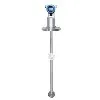
As a supplier of the 3051 Transmitter, I often encounter various questions from customers regarding its performance in different environments. One of the frequently asked questions is whether the 3051 Transmitter can work in a vacuum environment. In this blog, I will delve into this topic, exploring the technical aspects, potential challenges, and practical applications of using the 3051 Transmitter in such conditions.
Understanding the 3051 Transmitter
Before discussing its performance in a vacuum environment, let's first understand what the 3051 Transmitter is. The 3051 Transmitter is a high - precision pressure measurement device widely used in industrial processes. It can measure differential pressure, gauge pressure, and absolute pressure with high accuracy and reliability. The transmitter is designed to convert pressure signals into electrical signals, which can be further processed and monitored by control systems.


The 3051 Transmitter is known for its advanced sensor technology, robust construction, and wide range of applications. It is commonly used in industries such as oil and gas, chemical, power generation, and water treatment, where accurate pressure measurement is crucial for process control and safety.
Working Principles of the 3051 Transmitter
The 3051 Transmitter operates based on the principle of capacitance change. Inside the transmitter, there is a sensing diaphragm that deflects under the influence of pressure. This deflection causes a change in the capacitance between the diaphragm and the fixed electrodes. The electronics in the transmitter measure this capacitance change and convert it into an electrical signal proportional to the applied pressure.
Can the 3051 Transmitter Work in a Vacuum Environment?
The short answer is yes, the 3051 Transmitter can work in a vacuum environment, but with some considerations.
Absolute Pressure Measurement
When measuring in a vacuum environment, the 3051 Transmitter can be configured for absolute pressure measurement. Absolute pressure is measured relative to a perfect vacuum. The transmitter's sensor is designed to detect the pressure difference between the process pressure and a reference vacuum within the sensor itself. This allows the transmitter to accurately measure pressures below atmospheric pressure, which is typical in vacuum applications.
For example, in a vacuum distillation process in the chemical industry, the 3051 Transmitter can be used to monitor the pressure inside the distillation column. By accurately measuring the absolute pressure, operators can control the distillation process more precisely, ensuring the quality of the final product.
Technical Challenges
However, there are some technical challenges associated with using the 3051 Transmitter in a vacuum environment.
Sensor Sensitivity: In a vacuum, the pressure differences are relatively small compared to normal atmospheric or high - pressure applications. This requires the sensor to have high sensitivity to detect these small pressure changes accurately. The 3051 Transmitter is designed with high - precision sensors that can meet this requirement, but it is important to select the appropriate range for the specific vacuum application.
Outgassing: In a vacuum environment, materials can release gases, a phenomenon known as outgassing. Outgassing can affect the performance of the transmitter by introducing additional pressure or contaminating the sensor. To mitigate this issue, the 3051 Transmitter is constructed using materials with low outgassing rates. Additionally, proper cleaning and degassing procedures are followed during the manufacturing process to minimize the impact of outgassing.
Temperature Effects: Temperature can also have a significant impact on the performance of the transmitter in a vacuum environment. In a vacuum, heat transfer is mainly through radiation, which can lead to temperature variations within the transmitter. The 3051 Transmitter is equipped with temperature compensation technology to ensure accurate pressure measurement over a wide temperature range.
Applications in Vacuum Environments
The 3051 Transmitter has a wide range of applications in vacuum environments.
Vacuum Packaging
In the food and pharmaceutical industries, vacuum packaging is used to extend the shelf life of products. The 3051 Transmitter can be used to monitor the vacuum level inside the packaging machines. By maintaining the correct vacuum pressure, the quality and safety of the packaged products can be ensured.
Semiconductor Manufacturing
In semiconductor manufacturing, many processes are carried out in a vacuum environment. The 3051 Transmitter is used to measure the pressure in vacuum chambers during processes such as chemical vapor deposition (CVD) and physical vapor deposition (PVD). Accurate pressure measurement is essential for controlling the deposition rate and film quality, which directly affects the performance of the semiconductor devices.
Space Simulation
In space research and development, the 3051 Transmitter can be used in space simulation chambers to simulate the vacuum conditions of space. This allows engineers to test the performance of spacecraft components and systems under realistic space conditions.
Advantages of Using the 3051 Transmitter in Vacuum Environments
- High Accuracy: The 3051 Transmitter offers high - accuracy pressure measurement, which is crucial for precise process control in vacuum applications.
- Reliability: With its robust construction and advanced technology, the transmitter can operate reliably in harsh vacuum environments.
- Wide Range of Options: The transmitter is available in different models and configurations, allowing users to select the most suitable one for their specific vacuum application.
Comparison with Other Transmitters
Compared to other pressure transmitters, the 3051 Transmitter has several advantages when it comes to vacuum applications.
- Advanced Sensor Technology: The capacitance - based sensor technology used in the 3051 Transmitter provides higher sensitivity and accuracy compared to some other types of sensors.
- Low Outgassing Materials: The use of low - outgassing materials in the construction of the transmitter reduces the impact of outgassing on performance, which is a significant advantage in vacuum environments.
- Temperature Compensation: The built - in temperature compensation technology ensures accurate pressure measurement even in the presence of temperature variations, which is common in vacuum applications.
Ensuring Optimal Performance in Vacuum Environments
To ensure the optimal performance of the 3051 Transmitter in a vacuum environment, the following steps should be taken:
- Proper Installation: The transmitter should be installed correctly, following the manufacturer's guidelines. This includes ensuring proper sealing to prevent air leakage and proper orientation to avoid any mechanical stress on the sensor.
- Regular Calibration: Regular calibration is essential to maintain the accuracy of the transmitter. In a vacuum environment, the calibration should be carried out under the same or similar vacuum conditions to ensure accurate measurement.
- Monitoring and Maintenance: Continuous monitoring of the transmitter's performance and regular maintenance can help detect and address any potential issues before they affect the process.
Conclusion
In conclusion, the 3051 Transmitter can work effectively in a vacuum environment. Its advanced technology, high accuracy, and reliability make it a suitable choice for a wide range of vacuum applications. However, it is important to consider the technical challenges associated with vacuum environments and take appropriate measures to ensure optimal performance.
If you are looking for a reliable pressure measurement solution for your vacuum application, the 3051 Transmitter is an excellent choice. Our company, as a professional supplier of the 3051 Transmitter, can provide you with high - quality products and comprehensive technical support. We also offer a wide range of DP Pressure Level Transmitter and Pressure Transmitter Made in China to meet your specific needs.
If you have any questions or would like to discuss your pressure measurement requirements, please feel free to contact us. We are committed to providing you with the best solutions and services.
References
- Emerson Electric Co., "3051 Pressure Transmitter Product Manual"
- Industrial Pressure Measurement Handbook, Second Edition, by David W. Spitzer