

In the realm of industrial automation and process control, the integration of different devices is a common and crucial practice to enhance efficiency, accuracy, and overall system performance. One such integration that often comes into question is whether an Ultrasonic Level Meter can be integrated with a Programmable Logic Controller (PLC) system. As a supplier of Ultrasonic Level Meters, I am well - versed in the intricacies of this topic and will delve into the details in this blog post.
Understanding the Basics: Ultrasonic Level Meters and PLCs
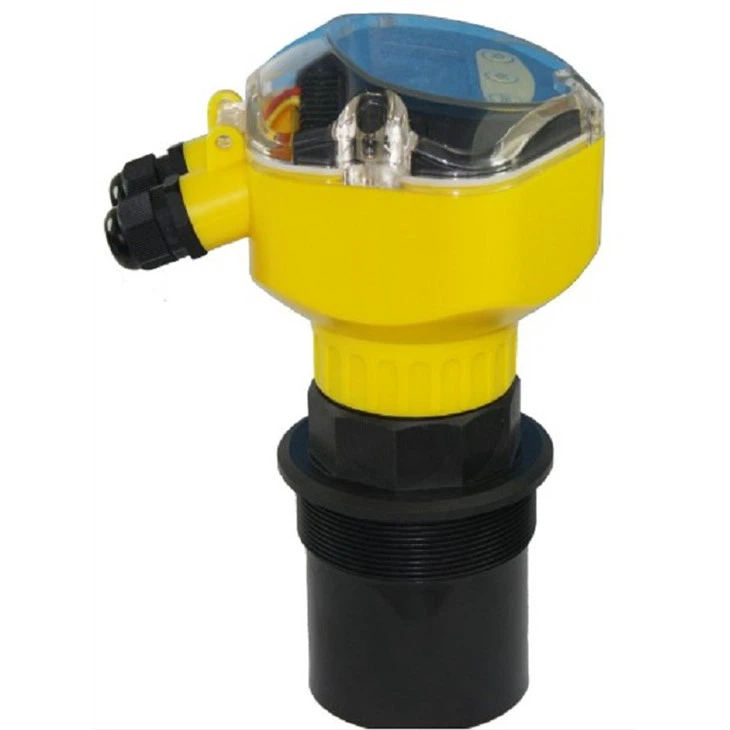
Before we discuss the integration, it's essential to understand what an Ultrasonic Level Meter and a PLC are. An Ultrasonic Level Meter is a device that uses ultrasonic waves to measure the level of a liquid, solid, or slurry in a tank or container. It emits ultrasonic pulses towards the surface of the material, and by measuring the time it takes for the echoes to return, it can calculate the distance to the surface, thus determining the level.
On the other hand, a Programmable Logic Controller (PLC) is an industrial computer used to automate various industrial processes. It can receive input signals from sensors, process this data according to a pre - programmed logic, and then send output signals to control devices such as motors, valves, and pumps. PLCs are known for their reliability, flexibility, and ease of programming, making them a staple in industrial control systems.
Compatibility and Communication Protocols
The first step in integrating an Ultrasonic Level Meter with a PLC system is to ensure compatibility. Most modern Ultrasonic Level Meters are designed with multiple communication interfaces to facilitate integration with different control systems, including PLCs. Common communication protocols used by Ultrasonic Level Meters include 4 - 20 mA analog output, Modbus RTU, Profibus, and Ethernet/IP.
The 4 - 20 mA analog output is one of the simplest and most widely used methods of communication. In this setup, the Ultrasonic Level Meter converts the measured level into a corresponding current signal within the 4 - 20 mA range. The PLC can then read this current signal through an analog input module, process the data, and use it for further control operations. For example, if the level in a tank reaches a certain high level, the PLC can send a signal to close an inlet valve.
Modbus RTU is a digital communication protocol that allows for more advanced data transfer between devices. It uses a master - slave architecture, where the PLC acts as the master and the Ultrasonic Level Meter acts as the slave. The PLC can query the Ultrasonic Level Meter for various parameters such as the measured level, temperature compensation values, and device status. Modbus RTU is relatively easy to implement and is supported by a large number of industrial sensors and controllers.
Profibus and Ethernet/IP are high - speed communication protocols commonly used in industrial automation networks. They offer faster data transfer rates, more complex data handling capabilities, and better network management features compared to 4 - 20 mA and Modbus RTU. If your application requires real - time data monitoring and high - speed control, these protocols may be more suitable. However, they also require more advanced configuration and may be more expensive to implement.
Benefits of Integrating an Ultrasonic Level Meter with a PLC System
There are several benefits to integrating an Ultrasonic Level Meter with a PLC system. Firstly, it allows for centralized control and monitoring. Instead of having separate devices for level measurement and control, the PLC can collect data from the Ultrasonic Level Meter and other sensors, and then make decisions based on the overall system status. This simplifies the control process and reduces the number of components in the system, leading to lower costs and easier maintenance.
Secondly, the integration enables more accurate and reliable control. The PLC can use the data from the Ultrasonic Level Meter to implement advanced control algorithms, such as PID control. PID control can automatically adjust the output of control devices to maintain the level in a tank within a desired range, compensating for factors such as inflow and outflow rates. This helps to improve the quality of the process and reduce waste.

Thirdly, it provides better data logging and analysis capabilities. The PLC can store the data from the Ultrasonic Level Meter over time, allowing for trend analysis and performance evaluation. This data can be used to identify potential problems, optimize the process, and make informed decisions about equipment maintenance and replacement.
Challenges and Considerations
While the integration of an Ultrasonic Level Meter with a PLC system offers many benefits, there are also some challenges and considerations. One of the main challenges is signal interference. Ultrasonic signals can be affected by factors such as air turbulence, dust, and temperature variations, which can lead to inaccurate level measurements. To mitigate this, the Ultrasonic Level Meter should be properly installed and calibrated, and the PLC should be configured to handle signal filtering and compensation.
Another consideration is the electrical compatibility between the Ultrasonic Level Meter and the PLC. The power supply, signal levels, and grounding of the two devices should be carefully matched to avoid electrical problems such as short - circuits and electromagnetic interference.
In addition, the programming and configuration of the PLC are crucial for successful integration. The PLC programmer needs to understand the communication protocol used by the Ultrasonic Level Meter and write the appropriate code to read and process the data. This requires a certain level of technical expertise and familiarity with industrial control systems.
Case Studies
To illustrate the successful integration of an Ultrasonic Level Meter with a PLC system, let's look at a few case studies. In a chemical manufacturing plant, an Ultrasonic Level Meter was integrated with a PLC system to monitor and control the level of reactants in a storage tank. The 4 - 20 mA output of the Ultrasonic Level Meter was connected to the analog input module of the PLC. The PLC was programmed to open and close the inlet and outlet valves based on the measured level, ensuring that the tank was neither over - filled nor emptied. This not only improved the safety of the process but also increased the efficiency of the production line.
In a wastewater treatment plant, an Ultrasonic Level Meter was integrated with a PLC system using the Modbus RTU protocol. The PLC was able to collect detailed data from the Ultrasonic Level Meter, including the level of wastewater in the tanks, the temperature, and the device status. Based on this data, the PLC could control the operation of the pumps and aerators, optimizing the treatment process and reducing energy consumption.
Conclusion and Call to Action
In conclusion, an Ultrasonic Level Meter can be successfully integrated with a PLC system, offering numerous benefits in terms of control, accuracy, and data management. With the right communication protocols, proper installation, and appropriate programming, the integration can enhance the performance of industrial processes and improve overall efficiency.
If you are interested in integrating an Ultrasonic Level Meter with your PLC system or want to learn more about our Ultrasonic Level Meter products, please feel free to contact us. We have a team of experts who can provide you with professional advice and support to ensure a successful integration.
References
- "Industrial Automation Handbook", John Wiley & Sons
- "Ultrasonic Sensor Technology: Principles and Applications", Springer
- "Programmable Logic Controllers: Principles and Applications", Pearson Education


