

Can a Vortex Flowmeter be used in a low - flow environment?
In the field of industrial flow measurement, the choice of flowmeter is crucial as it directly impacts the accuracy and efficiency of various processes. One commonly used type of flowmeter is the vortex flowmeter. However, a frequently asked question is whether a vortex flowmeter can be effectively used in a low - flow environment. As a supplier of vortex flowmeters, I will delve into this topic and provide in - depth insights.
How Vortex Flowmeters Work
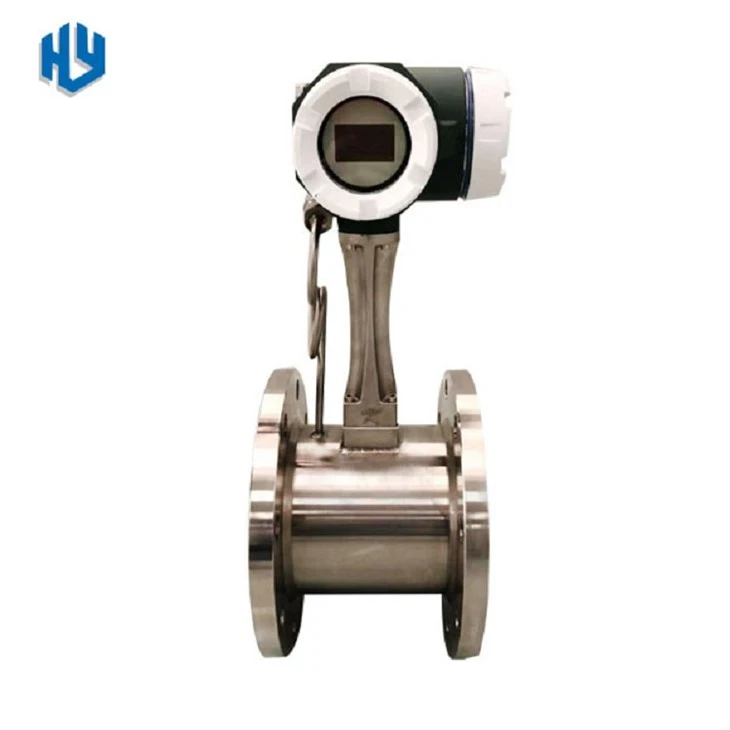
Before discussing its applicability in low - flow environments, it's essential to understand how vortex flowmeters operate. Vortex flowmeters work based on the principle of the von Kármán vortex street. When a fluid flows past a bluff body (also known as a shedder bar) placed in the flow path, alternating vortices are shed on either side of the bluff body. The frequency of these vortex shedding is directly proportional to the flow velocity of the fluid. By measuring this frequency, the flow rate of the fluid can be determined.

Advantages of Vortex Flowmeters in General
Vortex flowmeters have several advantages that make them popular in industrial applications. They have no moving parts, which means less wear and tear, resulting in lower maintenance requirements. They can measure a wide range of fluids, including liquids, gases, and steam. Moreover, they offer good accuracy over a relatively wide flow range and are relatively insensitive to changes in fluid properties such as density, viscosity, and temperature within certain limits.
Challenges in Low - Flow Environments
However, using a vortex flowmeter in a low - flow environment presents several challenges. The primary issue is related to the minimum detectable flow rate. At low flow velocities, the frequency of vortex shedding becomes very low. When the flow rate drops below a certain threshold, the vortex shedding may become unstable or even stop altogether. This makes it difficult for the flowmeter to accurately measure the flow rate.
Another challenge is the signal - to - noise ratio. In low - flow situations, the signal generated by the vortex shedding is weak. External factors such as pipeline vibrations, electrical interference, and fluid turbulence can easily mask the weak vortex signal, leading to inaccurate measurements.
Solutions and Adaptations for Low - Flow Applications
Despite these challenges, there are ways to use vortex flowmeters in low - flow environments. One approach is to use a smaller - sized vortex flowmeter. A smaller pipe diameter will increase the flow velocity for a given flow rate. By reducing the pipe size, the flow velocity through the flowmeter can be increased to a level where the vortex shedding is stable and detectable.
Advanced signal processing techniques can also be employed. Modern vortex flowmeters are equipped with sophisticated electronics that can filter out noise and enhance the weak vortex signals. These signal processing algorithms can improve the accuracy of measurements in low - flow conditions.
Some vortex flowmeters are designed with special bluff body geometries. These geometries are optimized to generate stable vortex shedding even at low flow rates. They can enhance the sensitivity of the flowmeter and improve its performance in low - flow environments.
Real - World Applications in Low - Flow Situations
There are real - world scenarios where vortex flowmeters are successfully used in low - flow environments. In some chemical processes, small amounts of additives need to be accurately metered into the main process stream. Vortex flowmeters can be used to measure these low - flow rates of additives with the appropriate adaptations.
In laboratory settings, where precise measurement of low - flow gases or liquids is required, vortex flowmeters can also be a viable option. With proper calibration and signal processing, they can provide reliable measurements for research and development purposes.
Comparison with Other Flowmeters in Low - Flow Conditions
When considering low - flow applications, it's also important to compare vortex flowmeters with other types of flowmeters. For example, positive displacement flowmeters are known for their high accuracy in low - flow situations. They work by trapping and measuring discrete volumes of fluid. However, they have moving parts, which may require more maintenance compared to vortex flowmeters.
Coriolis flowmeters are another option. They measure the mass flow rate based on the Coriolis effect. They offer high accuracy and can handle a wide range of flow rates, including low - flow conditions. But they are generally more expensive than vortex flowmeters.
Our Vortex Flowmeter Offerings for Low - Flow
As a supplier of vortex flowmeters, we offer a range of products suitable for low - flow environments. Our Steam Flowmeter is designed with advanced features to ensure accurate measurement of steam flow even at low rates. It has a robust signal processing system that can effectively filter out noise and detect weak vortex signals.
Our Temperature And Pressure Compensate Flowmeter and Temperature And Pressure Compensate Vortex Flowmeter are also well - suited for low - flow applications. These flowmeters can compensate for changes in temperature and pressure, which is especially important in low - flow situations where small changes in these parameters can have a relatively large impact on the flow measurement.
Conclusion
In conclusion, while using a vortex flowmeter in a low - flow environment presents challenges, it is possible with the right adaptations and technologies. By using smaller - sized flowmeters, advanced signal processing, and optimized bluff body geometries, vortex flowmeters can provide accurate and reliable measurements in low - flow situations. Our range of vortex flowmeters, including steam flowmeters and those with temperature and pressure compensation, are designed to meet the demands of low - flow applications.
If you are looking for a reliable flowmeter solution for your low - flow requirements, we invite you to contact us for a detailed discussion. Our team of experts can help you select the most suitable flowmeter for your specific application and provide you with professional advice on installation, calibration, and maintenance.
References
- "Flow Measurement Handbook: Industrial Designs and Applications" by Ralph W. Miller
- "Instrumentation, Measurement, and Analysis" by B. C. Nakra and K. K. Chaudhry
- Technical literature from major vortex flowmeter manufacturers


