As a supplier of liquid density meters, I often get asked a bunch of questions about what our meters can and can't measure. One question that's come up a lot lately is, "Can a liquid density meter measure the density of liquid flavors and fragrances?" Well, let's dive into this topic and find out.


First off, let's talk a bit about what liquid density meters are and how they work. A liquid density meter is a device that measures the density of a liquid. Density is basically how much mass is packed into a certain volume. Different liquids have different densities because of their unique molecular structures and compositions.
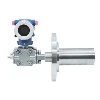
There are various types of liquid density meters out there. For example, we have the Slurry Density Meter. This type is usually designed to handle slurries, which are mixtures of solids and liquids. Then there's the Side Mounted Liquid Density Meter, which can be conveniently mounted on the side of a tank or a pipeline for easy measurement. And the DP Type Liquid Density Transmitter measures density by differential pressure. Each of these types has its own advantages and is suitable for different kinds of applications.
Now, let's get to the main question: Can these meters measure the density of liquid flavors and fragrances? The short answer is yes, they can. Liquid flavors and fragrances are still liquids, after all, and they have a specific density. However, there are a few things to keep in mind.
Liquid flavors and fragrances often have complex chemical compositions. They can be made up of a mix of different essential oils, solvents, and other additives. This complexity can pose some challenges when it comes to density measurement. For instance, different components in the flavor or fragrance may have different densities, and if these components separate or interact in unusual ways, it can affect the overall density reading.
Another factor is the viscosity of liquid flavors and fragrances. Some of these liquids can be quite thick or sticky, which can also impact the measurement. High - viscosity liquids may not flow easily through the density meter, causing inaccurate readings. But don't worry, our density meters are designed to handle a wide range of viscosities. For example, the DP Type Liquid Density Transmitter is quite robust and can give reliable results even with moderately viscous liquids.
Temperature is also a crucial factor. Density is highly dependent on temperature. As the temperature changes, the density of a liquid will change too. Liquid flavors and fragrances are no exception. When measuring their density, it's important to either control the temperature or use a density meter that can compensate for temperature variations. Our density meters are equipped with temperature sensors and compensation algorithms to ensure accurate readings across different temperatures.
One of the advantages of using our liquid density meters to measure the density of liquid flavors and fragrances is quality control. In the flavor and fragrance industry, consistent product quality is key. By accurately measuring the density, manufacturers can ensure that each batch of their product has the same composition and quality. For example, if the density of a particular flavor is lower than the standard, it might indicate that there's too much solvent or that some of the essential oils are missing.
In addition to quality control, density measurement can also help in the production process. It can be used to monitor the mixing of different ingredients. If the density of the mixture is off - target during the mixing process, it can trigger an alarm, allowing operators to adjust the process in time.
Moreover, our liquid density meters are easy to install and maintain. They can be integrated into existing production lines with minimal disruption. And with regular calibration, they can provide accurate measurements for a long time.
So, if you're in the business of producing or using liquid flavors and fragrances, a liquid density meter from us can be a valuable tool. Whether you need to ensure product quality, optimize the production process, or simply want to have more control over your liquid mixtures, our meters can meet your needs.
If you're interested in learning more about our liquid density meters or want to see if they're the right fit for your specific application, don't hesitate to reach out. We're here to answer all your questions and help you make the best decision. You can start a conversation with us to discuss your requirements and get a quote. We look forward to hearing from you and working together to enhance your production process.
References:
- Textbooks on fluid mechanics and instrumentation for density measurement.
- Industry reports on quality control in the flavor and fragrance industry.