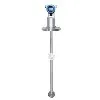
In the realm of industrial process control, differential pressure (DP) transmitters play a pivotal role in measuring the difference in pressure between two points. They are widely used in various applications such as flow measurement, level detection, and density determination. However, one common question that often arises is whether a DP transmitter can be used in a pulsating flow environment. As a leading supplier of DP transmitters, we are well - versed in this topic and will delve into it in detail.
Understanding Pulsating Flow
Pulsating flow is a type of fluid flow where the velocity and pressure of the fluid vary periodically over time. This can be caused by a variety of factors, including the operation of reciprocating pumps, compressors, or positive displacement pumps. In a pulsating flow, the pressure at any given point in the pipeline fluctuates rapidly between high and low values.
The characteristics of pulsating flow can pose significant challenges for measurement devices. The rapid pressure changes can lead to inaccurate readings, increased wear and tear on the measuring equipment, and in some cases, even damage to the device.


How DP Transmitters Work
Before discussing the suitability of DP transmitters in pulsating flow, it's essential to understand how they operate. A DP transmitter measures the difference in pressure between two points in a fluid system. It typically consists of a sensing element that converts the pressure difference into an electrical signal, which is then processed and transmitted to a control system.
The most common types of sensing elements used in DP transmitters are diaphragm - based sensors. When there is a pressure difference across the diaphragm, it deflects, and this deflection is measured and converted into an output signal. The output is usually a 4 - 20 mA current signal, which is proportional to the measured pressure difference. For example, our Smart Differential Pressure Transmitter 4 - 20mA is designed to provide accurate and reliable measurements in a wide range of industrial applications.
Challenges of Using DP Transmitters in Pulsating Flow
When a DP transmitter is exposed to pulsating flow, several issues can arise:
Inaccurate Readings
The rapid pressure fluctuations in a pulsating flow can cause the sensing element of the DP transmitter to oscillate. This oscillation can lead to inaccurate measurements as the transmitter may not be able to respond quickly enough to the changing pressure. The output signal may show significant fluctuations, making it difficult to obtain a stable and reliable reading of the actual pressure difference.
Mechanical Stress
The continuous movement of the sensing element due to the pulsating pressure can cause mechanical stress on the diaphragm and other internal components of the DP transmitter. Over time, this stress can lead to fatigue and damage to the sensing element, reducing the lifespan of the transmitter.
Signal Noise
Pulsating flow can introduce a significant amount of noise into the output signal of the DP transmitter. This noise can interfere with the control system's ability to accurately interpret the measured data, leading to improper control actions and potentially affecting the overall performance of the process.
Solutions for Using DP Transmitters in Pulsating Flow
Despite the challenges, there are several solutions that can be employed to use DP transmitters effectively in pulsating flow environments:
Dampening Devices
One of the most common solutions is to use dampening devices such as snubbers or restrictors. These devices are installed in the pressure lines leading to the DP transmitter and help to smooth out the pressure fluctuations. By reducing the amplitude of the pressure pulses, the dampening devices allow the DP transmitter to obtain more stable and accurate measurements.
Signal Filtering
Another approach is to use signal filtering techniques. Many modern DP transmitters, like our 3051 Differential Pressure Transmitter, are equipped with built - in signal filtering capabilities. These filters can be adjusted to remove the high - frequency noise caused by the pulsating flow, leaving only the low - frequency component that represents the actual pressure difference.
Proper Installation
Proper installation of the DP transmitter is also crucial. The transmitter should be installed in a location where the pulsating effects are minimized. For example, it should be placed as far away as possible from the source of the pulsation, such as a pump or compressor. Additionally, the pressure lines should be properly sized and routed to avoid any unnecessary bends or restrictions that could exacerbate the pulsation.
Case Studies
To illustrate the effectiveness of these solutions, let's consider a few case studies.
In a chemical processing plant, a reciprocating pump was causing pulsating flow in a pipeline. The initial installation of a DP transmitter without any dampening or filtering resulted in highly inaccurate flow measurements. After installing a snubber in the pressure lines and adjusting the signal filtering settings on the DP transmitter, the measurements became much more stable and accurate. The plant was able to optimize its process control and improve product quality.
In another case, a food and beverage company was using a DP transmitter to measure the level in a tank with a pulsating flow caused by a positive displacement pump. By re - positioning the DP transmitter and using a restrictor to dampen the pressure fluctuations, the company was able to obtain reliable level measurements and prevent over - filling or under - filling of the tank.
Our Product Portfolio for Pulsating Flow Applications
As a leading supplier of DP transmitters, we offer a range of products that are suitable for use in pulsating flow environments. Our Smart Pressure Transmitter is designed with advanced signal processing capabilities and can be easily configured to handle pulsating flow conditions. It features a robust sensing element that can withstand the mechanical stress caused by pressure fluctuations, ensuring long - term reliability.
In addition, our transmitters are equipped with user - adjustable filtering options, allowing customers to fine - tune the performance of the transmitter based on the specific characteristics of the pulsating flow. We also provide comprehensive technical support to help our customers select the right products and implement the appropriate solutions for their applications.
Conclusion
In conclusion, while using a DP transmitter in a pulsating flow environment presents challenges, it is possible to overcome these challenges with the right approach. By using dampening devices, signal filtering techniques, and proper installation practices, DP transmitters can be effectively used to obtain accurate and reliable measurements in pulsating flow.
If you are facing challenges with measuring pressure in a pulsating flow application, our team of experts is ready to assist you. We can help you select the most suitable DP transmitter from our product portfolio and provide guidance on the best installation and configuration practices. Contact us to start a discussion about your specific requirements and explore how our DP transmitters can improve the performance of your process.
References
- "Industrial Instrumentation and Control Systems" by William D. Stanley
- "Flow Measurement Handbook" by Richard W. Miller