

What is the sensitivity adjustment of an Ultrasonic Level Meter?
As a supplier of Ultrasonic Level Meters, I've encountered numerous inquiries from customers regarding the sensitivity adjustment of these devices. In this blog post, I'll delve into what sensitivity adjustment means for an Ultrasonic Level Meter, why it's crucial, and how it impacts the overall performance of the instrument.
Understanding the Basics of an Ultrasonic Level Meter
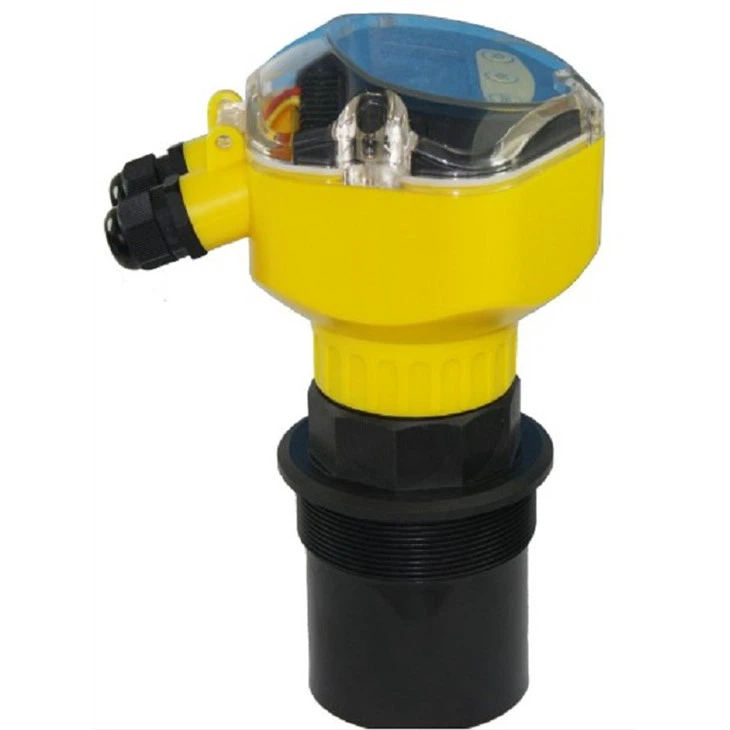
Before we jump into sensitivity adjustment, let's briefly understand how an Ultrasonic Level Meter works. An Ultrasonic Level Meter operates on the principle of ultrasonic waves. It emits high - frequency sound waves towards the surface of the material (liquid or solid) whose level is to be measured. These waves travel through the air and bounce back when they hit the surface. The time taken for the waves to return is measured, and based on the known speed of sound in air, the distance between the sensor and the surface is calculated. This distance is then used to determine the level of the material in the tank or container.
What is Sensitivity Adjustment?
Sensitivity adjustment in an Ultrasonic Level Meter refers to the process of fine - tuning the device's ability to detect and process the reflected ultrasonic waves. It determines how well the meter can pick up weak signals and distinguish them from background noise.
The sensitivity of the meter is typically adjusted by modifying the gain of the receiver circuit. A higher gain setting amplifies the received signals more, making it easier for the meter to detect weak reflections. On the other hand, a lower gain setting reduces the amplification, which can be useful in situations where there is a lot of noise or strong reflections that could otherwise saturate the receiver.
Why is Sensitivity Adjustment Important?
1. Accurate Measurement
One of the primary reasons for sensitivity adjustment is to ensure accurate level measurements. In some applications, the surface of the material being measured may be rough, causing the ultrasonic waves to scatter. This results in weaker reflected signals. By increasing the sensitivity, the meter can still detect these weak signals and provide an accurate measurement.
Conversely, in applications where the surface is very smooth and the reflections are strong, a high - sensitivity setting may cause the receiver to saturate. This can lead to inaccurate measurements or false readings. Adjusting the sensitivity to an appropriate level helps to avoid such issues.
2. Noise Reduction
In industrial environments, there are often sources of noise that can interfere with the ultrasonic signals. These sources can include machinery vibrations, other ultrasonic devices, or electrical interference. By adjusting the sensitivity, we can filter out some of this noise. A lower sensitivity setting can ignore weak noise signals, while still detecting the strong reflected signals from the material surface.
3. Adaptability to Different Materials
Different materials have different acoustic properties, which affect how they reflect ultrasonic waves. For example, liquids with a high viscosity or foamy surfaces may absorb or scatter ultrasonic waves more than clear liquids. Solids with irregular shapes or porous structures can also cause variations in the reflected signals. Sensitivity adjustment allows the Ultrasonic Level Meter to be adapted to these different materials, ensuring reliable measurements in a wide range of applications.
How to Adjust the Sensitivity of an Ultrasonic Level Meter
The process of adjusting the sensitivity can vary depending on the model of the Ultrasonic Level Meter. However, most modern meters offer a user - friendly interface for making these adjustments.
1. Manual Adjustment
Some meters have a physical control, such as a potentiometer or a set of buttons, that allows the user to manually adjust the sensitivity. The user can increase or decrease the gain setting in small increments and observe the effect on the measured level. This method requires some trial and error, but it gives the user direct control over the adjustment process.
2. Automatic Adjustment
Many advanced Ultrasonic Level Meters are equipped with automatic sensitivity adjustment features. These meters use algorithms to analyze the received signals and adjust the gain in real - time. The automatic adjustment can adapt to changes in the measurement environment, such as variations in the material level, temperature, or the presence of noise.
Impact of Sensitivity Adjustment on the Performance of the Ultrasonic Level Meter
1. Measurement Range
The sensitivity adjustment can affect the measurement range of the Ultrasonic Level Meter. A higher sensitivity setting can extend the range in which the meter can detect weak signals, allowing it to measure levels in deeper tanks or containers. However, this may also increase the susceptibility to noise, which can reduce the accuracy of the measurements.
2. Response Time
The response time of the meter can also be influenced by the sensitivity adjustment. A higher sensitivity setting may result in a faster response time, as the meter can detect the reflected signals more quickly. However, if the sensitivity is set too high, the meter may respond to noise signals, leading to false readings and a less stable measurement.
3. Signal - to - Noise Ratio
The signal - to - noise ratio (SNR) is a critical factor in the performance of an Ultrasonic Level Meter. A good SNR means that the reflected signals are much stronger than the background noise. Sensitivity adjustment can improve the SNR by amplifying the signals and filtering out the noise. A higher SNR leads to more accurate and reliable measurements.
Case Studies: Sensitivity Adjustment in Real - World Applications
1. Chemical Storage Tanks
In a chemical plant, Ultrasonic Level Meters are used to monitor the levels of various chemicals in storage tanks. Some of these chemicals have foamy surfaces, which scatter the ultrasonic waves. By increasing the sensitivity of the meters, the operators were able to accurately measure the levels of these chemicals, even with the presence of foam.
2. Food Processing Industry
In a food processing facility, Ultrasonic Level Meters are used to measure the levels of liquids such as milk and fruit juices. These liquids may have different viscosities and surface characteristics. The sensitivity adjustment feature of the meters allowed the facility to adapt to these variations and ensure accurate level measurements throughout the production process.
Conclusion
Sensitivity adjustment is a crucial aspect of using an Ultrasonic Level Meter effectively. It plays a vital role in ensuring accurate measurements, reducing noise, and adapting to different materials and measurement environments. As a supplier of Ultrasonic Level Meters, we understand the importance of providing our customers with meters that offer flexible and easy - to - use sensitivity adjustment features.
If you're in the market for an Ultrasonic Level Meter or have any questions about sensitivity adjustment, we're here to help. Our team of experts can provide you with detailed information and guidance on choosing the right meter for your application and adjusting its sensitivity for optimal performance. Contact us to start a conversation about your level measurement needs and explore how our Ultrasonic Level Meters can meet your requirements.

References
- "Ultrasonic Level Measurement: Principles and Applications" - Industrial Measurement Handbook
- "Advanced Signal Processing Techniques for Ultrasonic Level Meters" - Journal of Instrumentation and Measurement


