

The power consumption of a mass flowmeter is a crucial factor that impacts its overall performance, operational cost, and suitability for different applications. As a mass flowmeter supplier, understanding the intricacies of power consumption helps us guide our customers to make informed decisions when selecting the right device for their needs.
Factors Affecting Power Consumption
Several factors contribute to the power consumption of a mass flowmeter. One of the primary factors is the type of technology used in the flowmeter. There are different types of mass flowmeters, such as Coriolis mass flowmeters, thermal mass flowmeters, and differential pressure mass flowmeters. Each type has its own unique power requirements.
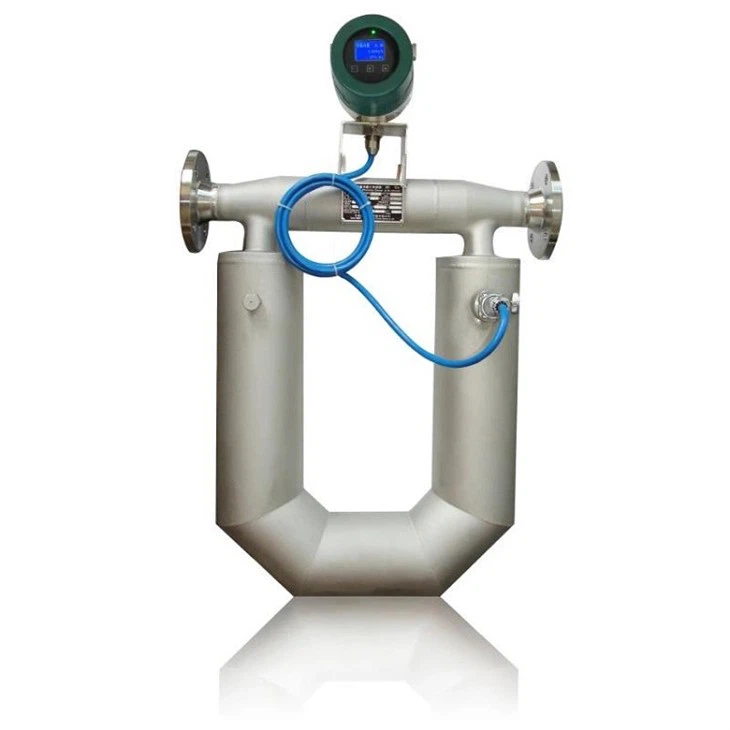
Coriolis mass flowmeters are known for their high accuracy and ability to measure mass flow directly. They operate based on the Coriolis effect, where a vibrating tube is used to measure the mass flow rate of a fluid. These meters typically require more power compared to other types because of the energy needed to maintain the vibration of the tubes. The power consumption can vary depending on the size of the meter, the fluid being measured, and the operating conditions. For more information on Coriolis mass flowmeters suitable for drinking applications, you can visit Coriolis Mass Flowmeter for Drinking.
Thermal mass flowmeters, on the other hand, measure mass flow by detecting the heat transfer from a heated element to the flowing fluid. They generally consume less power than Coriolis mass flowmeters because they do not require mechanical vibrations. However, the power consumption can still be affected by factors such as the flow rate, the temperature of the fluid, and the sensitivity of the sensor.
Differential pressure mass flowmeters work by measuring the pressure difference across a constriction in the flow path. These meters usually have relatively low power consumption, especially when compared to Coriolis mass flowmeters. However, they may require additional power for auxiliary components such as pressure sensors and transmitters.
Another factor that affects power consumption is the size of the mass flowmeter. Larger meters typically require more power to operate because they have larger components and need to handle higher flow rates. The material of the meter can also play a role, as some materials may require more energy to heat or cool during operation.
The operating conditions, such as the temperature and pressure of the fluid, can also impact power consumption. For example, in high-temperature applications, the flowmeter may need to consume more power to maintain its internal components at a stable operating temperature. Similarly, in high-pressure applications, the meter may require more power to withstand the pressure and ensure accurate measurements.
Power Consumption and Energy Efficiency
In today's energy-conscious world, energy efficiency is a key consideration for many industries. A mass flowmeter with low power consumption can help reduce operational costs and minimize the environmental impact. As a mass flowmeter supplier, we are committed to providing our customers with energy-efficient solutions.
We offer a range of mass flowmeters that are designed to optimize power consumption without compromising on accuracy and performance. Our Mass Flowmeter products are engineered using advanced technologies that ensure efficient operation while consuming less power. For example, our Coriolis mass flowmeters are equipped with intelligent control systems that adjust the power consumption based on the actual flow rate and operating conditions. This allows the meter to operate at its most efficient level, reducing energy waste.
In addition to the design of the flowmeter itself, we also provide our customers with guidance on how to optimize the installation and operation of the meter to further reduce power consumption. For example, proper insulation of the meter and its piping can help minimize heat loss, which in turn reduces the energy required to maintain the operating temperature. Regular maintenance and calibration of the flowmeter can also ensure that it is operating at its peak efficiency, reducing power consumption over time.
Power Consumption and Application Suitability
The power consumption of a mass flowmeter can also influence its suitability for different applications. In some applications, such as remote or off-grid locations, power availability may be limited. In these cases, a mass flowmeter with low power consumption is essential. Our High Accuracy Flowmeter series includes models that are specifically designed for low-power operation, making them ideal for applications where power is scarce.

In other applications, such as industrial processes where continuous monitoring is required, the power consumption of the flowmeter needs to be carefully considered to ensure that it does not become a significant cost factor. We work closely with our customers to understand their specific application requirements and recommend the most suitable mass flowmeter based on factors such as power consumption, accuracy, and reliability.
Conclusion
The power consumption of a mass flowmeter is a complex issue that is influenced by several factors, including the type of technology, the size of the meter, the operating conditions, and the application requirements. As a mass flowmeter supplier, we understand the importance of power consumption in today's energy-conscious world. We are dedicated to providing our customers with high-quality, energy-efficient mass flowmeters that meet their specific needs.
If you are in the market for a mass flowmeter and have questions about power consumption or any other aspect of our products, we encourage you to contact us for a detailed discussion. Our team of experts is ready to assist you in selecting the right mass flowmeter for your application and guiding you through the procurement process.
References
- "Flow Measurement Handbook: Industrial Designs and Applications" by Richard W. Miller
- "Mass Flow Measurement: Principles and Applications" by Robert A. Meyers


