

Hey there! As a supplier of Slight Gas Flowmeters, I often get asked about what the measuring element in these nifty devices is made of. So, I thought I'd take a deep dive into this topic and share all the juicy details with you.
First off, let's talk about why the measuring element is such a big deal. The measuring element is the heart and soul of a Slight Gas Flowmeter. It's the part that actually interacts with the gas flow and figures out how much gas is passing through the meter. Without a reliable measuring element, the flowmeter wouldn't be able to give accurate readings, and that's a no - no in industries where precision matters.
One of the most common materials used for the measuring element in a slight gas flowmeter is platinum. Platinum is an amazing material for this job for several reasons. For starters, it has excellent electrical conductivity. This property allows the measuring element to quickly and accurately detect changes in the gas flow. When gas flows over the platinum element, it causes a change in temperature, which in turn changes the electrical resistance of the platinum. By measuring this change in resistance, the flowmeter can calculate the mass flow rate of the gas.
Another great thing about platinum is its high melting point. Gas flowmeters often operate in environments where temperatures can get pretty high. Platinum can withstand these high temperatures without deforming or losing its electrical properties. This means that the measuring element can keep working accurately even in tough conditions. Plus, platinum is highly resistant to corrosion. In many industrial applications, the gas being measured might contain corrosive substances. Platinum's resistance to corrosion ensures that the measuring element has a long lifespan and doesn't need to be replaced too often.
However, platinum is quite expensive. So, in some cases, manufacturers might use other materials that are more cost - effective while still providing good performance. One such material is nickel. Nickel also has good electrical conductivity and is relatively resistant to corrosion. It can be used to make the measuring element in situations where the cost is a major concern, and the operating conditions aren't extremely harsh.
Some flowmeters might use thin - film sensors made of materials like silicon. Silicon thin - film sensors are lightweight and can be fabricated with high precision. They can be designed to have very specific electrical properties, which makes them suitable for measuring different types of gas flows. These sensors are often used in Thermal Mass Gas Flowmeter For Biogas. Biogas has unique characteristics, and silicon thin - film sensors can be optimized to accurately measure the flow of biogas.
Now, let's talk about how the measuring element is incorporated into the flowmeter. In a typical slight gas flowmeter, the measuring element is placed inside a tube or a channel through which the gas flows. The flowmeter is designed in such a way that the gas flow is evenly distributed around the measuring element. This ensures that the readings are accurate and consistent.
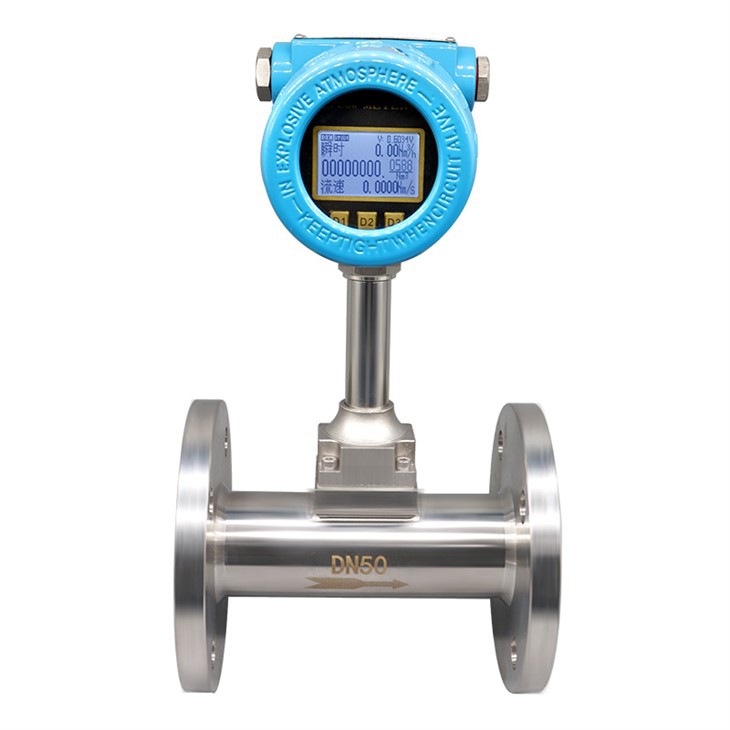

There are also different types of measuring principles that use these materials. One common principle is the thermal dispersion principle. In a thermal dispersion flowmeter, the measuring element consists of two temperature sensors. One sensor is heated, and the other is used as a reference. As the gas flows over the heated sensor, it carries away heat, causing a temperature difference between the two sensors. By measuring this temperature difference, the flowmeter can determine the mass flow rate of the gas.
In Thermal Gas Mass Flowmeter with Digit Display, the measuring element's data is processed and then displayed on a digital screen. This makes it easy for operators to read and record the flow rate. The digital display can also show other important information, such as the total volume of gas that has passed through the meter over a certain period.
When it comes to choosing the right material for the measuring element, it really depends on the specific application. If you're dealing with high - temperature, corrosive gases, platinum might be the best choice. But if cost is a major factor and the gas is relatively clean and at a moderate temperature, nickel or silicon thin - film sensors could be more suitable.
As a supplier of slight gas flowmeters, we understand that every customer has different needs. That's why we offer a wide range of flowmeters with different measuring elements to meet those needs. Whether you're in the biogas industry, chemical processing, or any other field that requires accurate gas flow measurement, we've got you covered.
If you're interested in learning more about our Slight Gas Flowmeters or have any questions about the measuring element materials, don't hesitate to reach out. We're always happy to have a chat and help you find the perfect flowmeter for your application. Whether you're a small business just starting out or a large industrial company, we can work with you to provide the best solution for your gas flow measurement needs. So, why not get in touch and start a conversation about how we can help you improve your processes with our high - quality flowmeters?
References:
- "Flow Measurement Handbook: Industrial Designs and Applications" by Richard W. Miller
- "Thermal Mass Flowmeters: Principles and Applications" by various industry experts


